[In-Depth Look] Hopes for the Korea Sports Council President Who Will Open Another 100 Years

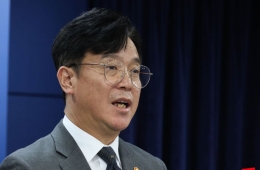
Jung Kyu-young, President of the Studying Athletes Exercising Students Association / Photo by Hyunmin Kim kimhyun81@
View original imageThe election for the 41st President of the Korean Sport & Olympic Committee will be held on January 18 next year. Among the candidates who applied on the 28th and 29th of this month, a leader will emerge who will represent South Korea in the international sports community and establish a model that integrates grassroots sports with elite sports. This year marked the 100th anniversary of the founding of the Joseon Sports Council (1920), the predecessor of the Korean Sport & Olympic Committee. The new president carries the heavy responsibility of opening another 100 years for Korean sports.
Over the past 100 years, our sports have produced national heroes and given pride and strength to the people, but recently there have also been unfortunate incidents and accidents that have been labeled as 'deep-rooted evils.' The new president of the Korean Sport & Olympic Committee faces the task of eradicating these corruptions and transforming the sports world, which has been centered on a small number of elite athletes, into grassroots sports for all citizens. A leader capable of solving this is needed.
As we prepare for a new 100 years with the 41st president, I hope the perception that 'sports is education' will be firmly established. The most important educational tool until around the age of 12, when the human brain is in its most critical growth period, is communication with peers and adults. The most effective way to realize this is through sports. Also, physical education is the subject that can teach youth fair sportsmanship and the law-abiding spirit of following rules. Improving public health through consistent exercise and reducing massive health insurance expenditures are also possible through grassroots sports.
I hope the new president will also pay attention to creating infrastructure that allows sports education to be reflected in university admissions. There is a need to actively introduce the 'student-athlete' system, which American universities aim for, adapted to domestic circumstances. Instead of professional athletes called 'specialized athletes,' students who focus on academics can develop their talents by training in specific sports at public education institutions and local sports clubs, and receive additional points in university admissions to help their entrance.
Student-athletes can accumulate points by participating in competitions organized by sports organizations under the Korean Sport & Olympic Committee, become national representatives, enter universities that match their achievements to major in their desired fields, participate in international competitions while balancing study and sports, and after graduation, find employment, start businesses, or open professional practices. Such a system is necessary. If a system is established where student-athletes balance study and sports and are selected as national representatives in each sport, we will easily see cases where those aspiring to be lawyers, designers, financiers, and other professions participate in world championships or the Olympics.
If the student-athlete model is established, corruption in the sports world will decrease, and retired athletes will find it easier to settle as members of society. First, if local sports clubs are revitalized, athletes who devoted their youth to sports but failed to win Olympic medals or struggled with employment will have opportunities to demonstrate their talents.
Monopolizing sports equipment for coercive sales, embezzling athletes' training and competition expenses, or bribing to enter as specialized athletes can also be eradicated. For student-athletes, sports are not a dead-end path. Therefore, there is no need to tolerate corruption witnessed directly or indirectly to ask for jobs from seniors who played sports for a living or to build and maintain connections in the sports world.
This system must ultimately start from the essence that sports is the most important subject in education, and the government's goal of a 'studying athlete, exercising student' model must be established as soon as possible to realize this. Ahead of the Korean Sport & Olympic Committee presidential election, it is also important to carefully consider which candidate understands and has experience with these values. The president of the Korean Sport & Olympic Committee is not a politician. They must be a leader equipped with professional knowledge and experience to design the next 100 years of our sports.
Jung Kyu-young, President of the '(Association) Studying Athlete Exercising Student'
Hot Picks Today
 "Stocks Are Not Taxed, but Annual Crypto Gains Over 2.5 Million Won to Be Taxed Next Year... Investors Push Back"
- "Don't Throw Away Coffee Grounds" Transformed into 'High-Grade Fuel' in Just 90 Seconds [Reading Science]
- Signed Without Viewing for 1.6 Billion Won... Jamsil and Seongbuk Jeonse Prices Jump 200 Million Won in a Month [Real Estate AtoZ]
- "Groups of 5 or More Now Restricted"... Unrelenting Running Craze Leaves Citizens and Police Exhausted
- "Even With a 90 Million Won Salary and Bonuses, It Doesn’t Feel Like Much"... A Latecomer Rookie Who Beat 70 to 1 Odds [Scientists Are Disappearing] ③
© The Asia Business Daily(www.asiae.co.kr). All rights reserved.