Is a Sea Cucumber Boom Coming to Busan Gijang Sea? First Seed Production "Doing Well"
Gijang-gun Uses Broodstock Caught by Haenyeo to Induce Spawning, Harvest, and Settlement Stages for Rapid Growth
October Release of Juvenile Sea Cucumbers... Achieving Both Income Increase and Coastal Ecosystem Maintenance

The seed production stage of sea cucumbers being tested and researched in Gijang-gun, Busan.
View original image[Asia Economy Yeongnam Reporting Headquarters Reporter Kim Yong-woo] Busan Gijang-gun has embarked on sea cucumber seed production research for the first time this year, and production is currently progressing smoothly. Release operations are also expected to take place along the Gijang coast in October.
The Gijang Seaweed Breeding Convergence Research Center announced on the 27th that it has started sea cucumber seed production research for the first time this year to increase fishermen's income and coastal resource replenishment through the release of juvenile sea cucumber seeds.
In June, with the help of female divers from the Gijang-dong fishing village, the research center secured mature mother individuals, raised them in indoor tanks, and then collected seeds.
The sea cucumber seeds, which have passed through the planktonic larval and settlement stages and are now in the 13th week of seeding, are currently about 3 cm in size and weigh 1 g on average, showing smooth growth.
The research center plans to release the juvenile sea cucumbers, grown indoors to sizes between 1 and 7 g, into the village fishing grounds along the Gijang coastal waters in October after undergoing aquatic animal disease inspections.
Sea cucumbers, distributed along the entire coastline of Korea, are called the ginseng of the sea. They are rich in saponins, which are good for restoring energy, and contain abundant calcium and iron. They are easily digestible and low in calories, making them popular as a diet food.
They also play a useful role as cleaners of the sea by feeding on organic matter.
Sea cucumbers are sedentary species living in rock crevices or sandy bottoms. They have low mobility after release and high survival rates, making them a preferred species for fishermen to release.
They grow quickly and can be commercialized within 1 to 2 years after release. They are traded at 25,000 to 30,000 KRW per kilogram, which is expected to contribute to increasing the income of fishermen in Gijang-gun.
Hot Picks Today
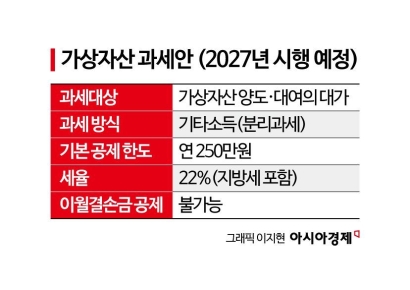 "Stocks Are Not Taxed, but Annual Crypto Gains Over 2.5 Million Won to Be Taxed Next Year... Investors Push Back"
- "Not Jealous of Winning the Lottery"... Entire Village Stunned as 200 Million Won Jackpot of Wild Ginseng Cluster Discovered at Jirisan
- "Even With a 90 Million Won Salary and Bonuses, It Doesn’t Feel Like Much"... A Latecomer Rookie Who Beat 70 to 1 Odds [Scientists Are Disappearing] ③
- "Rather Than Endure a 1.5 Million KRW Stipend, I'd Rather Earn 500 Million in the U.S." Top Talent from SNU and KAIST Are Leaving [Scientists Are Disappearing] ①
- "How Did an Employee Who Loved Samsung End Up Like This?"... Past Video of Samsung Electronics Union Chairman Resurfaces
A research center official evaluated, “By securing a manual for the sea cucumber seed production system, the research center can now independently control production volume. By releasing sea cucumber seeds preferred by fishermen into the village fishing grounds along the Gijang coast, we have achieved two goals: restoring the ecosystem and enhancing fishing competitiveness.”
© The Asia Business Daily(www.asiae.co.kr). All rights reserved.







