South Korea Ranks 17th as a Good Country to Live... Youth Say 'Not So Sure'
South Korea Ranks 17th in Best Countries to Live... Highest Since 2014
Youth Say "Job and Housing Struggles, It's Hard... No Future in Sight" Sigh
Experts Say "Current 20s Hit Hardest by COVID-19... Government and Social Support Needed"

This year, South Korea ranked 17th among 163 countries worldwide as a "best country to live in." Photo by Yonhap News
View original image[Asia Economy Reporter Kim Suwan] Although South Korea ranked 17th in the world as a "good country to live in," the suffering of young people appears to be worsening day by day. This is because the COVID-19 pandemic has shocked industries across the board, leading companies to reduce or completely halt hiring, resulting in an increasing number of young people who have not even had the chance to find employment.
In particular, the number of young people who feel that they have no future is growing due to ongoing employment difficulties and rising housing prices.
According to the results of the "2020 Social Progress Index (SPI)" survey by the U.S. Social Progress Imperative, cited by Deloitte Korea Group on the 15th, South Korea scored 89.06 points (out of 100), ranking 17th among 163 countries as a "good country to live in." This is a six-step rise from 23rd place last year.
The SPI evaluates 12 detailed categories excluding economic factors such as GDP growth rate. South Korea was ranked △19th in nutrition and medical support △22nd in water and sanitation △32nd in housing environment △5th in personal safety under the basic human needs category.
In the well-being category, South Korea ranked △26th in access to basic knowledge △1st in access to information and communication △5th in health and welfare △80th in environmental quality. In the opportunity category, the rankings were △25th in personal rights △30th in personal freedom and choice △39th in inclusiveness △3rd in access to higher education. High scores were achieved in information and communication access, health and welfare, and higher education.
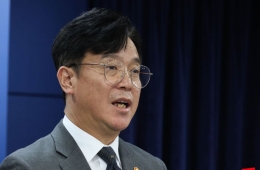
The Blue House evaluated the results as "meaningful." Kang Minseok, spokesperson for the Blue House, said at a briefing held at the Press Center on the afternoon of the 16th, "This is a report card showing South Korea as the 17th best country to live in," adding, "Although the prolonged COVID-19 pandemic and its resurgence have caused great hardship for the people, we have been moving step by step toward becoming a better country to live in."

The hardships faced by the youth are intensifying due to employment difficulties and rising housing prices. Photo by Yonhap News
View original imageOn the other hand, contrary to these results, the sighs of young people are growing deeper. The main causes seem to be intensified employment insecurity and the abandonment of dreams of home ownership due to rising housing prices.
In fact, many young people have never had a job and thus are not eligible for various benefits such as employment retention support or unemployment benefits in case of job loss. As a result, young people are in a welfare blind spot.
The employment difficulties are worsening amid the COVID-19 aftermath. According to the "May 2020 Supplementary Survey on Youth (ages 15-29) in the Economically Active Population Survey" released by Statistics Korea in July, the number of unemployed youth this year was 1.66 million, a 7.7% increase compared to 1.541 million in the same month last year.
Cases of companies postponing or canceling hiring are also increasing. According to a survey conducted by the Korea Economic Research Institute on the top 500 companies by sales on the 6th, 74.2% of large companies responded that they had not established new hiring plans for the second half of this year or would not hire anyone.
Along with employment difficulties, housing burdens are also increasing. Despite government real estate policies, Seoul apartment prices continue to rise. According to the weekly apartment price trend announced by the Korea Real Estate Agency on the 17th, Seoul (0.01%) recorded the same rate of increase as the previous week. In the Gangnam area, where ultra-high-priced apartments are concentrated, Seocho and Songpa districts remained flat, while Gangnam and Gangdong districts each saw a 0.01% increase. Notably, Seoul apartment jeonse (long-term lease) prices rose by 0.09% this week, marking the 64th consecutive week of increase.
The People's Solidarity for Participatory Democracy criticized the government's real estate policy, mentioning young people who find it difficult to own a home due to rising housing prices. At a press conference in June, Lee Chanjin, executive director of the organization, emphasized, "The current government promised in its New Year's address to bring housing prices back to pre-inauguration levels, but the reality is going in the opposite direction," adding, "Seoul apartment prices have surged more than 50% over the past three years."
He continued, "Amid economic recession and income reduction caused by COVID-19, ordinary citizens and young people are suffering, and the increasingly difficult-to-prepare jeonse and monthly rent deposits have become barriers even to marriage for young people," he pointed out.

Given this situation, young people are complaining that life is hard as there is no sign of improvement in job hunting and housing difficulties.
Job seeker Park (27) said, "I'm now past my mid-20s, but I can't see a future. People say South Korea is a good country to live in and that I should think positively, but how can I feel good when I can't even get a job?" He lamented, "In this situation, no matter how hard I try, it's hard to even get into a small company."
He added, "I barely get by doing part-time jobs, but I don't even sleep well at night because I don't know when I might be fired. I have to pay monthly rent and various utility bills with my part-time wages. My motivation disappeared a long time ago. I'm exhausted from this hamster wheel life," he appealed.
Some argue that the government should create various opportunities for young people. This is because many young people are in a situation where they cannot ask for help from their parents or close relatives due to the COVID-19 aftermath.
Experts suggest that the problems faced by young people in their 20s and 30s cannot be solved by individual efforts alone, and that government and social support, such as diversifying welfare systems, is urgently needed.
Kim Hyunsoo, director of the Seoul Suicide Prevention Center and a psychiatrist, said in an interview on YTN Radio's "Live Economy" under the theme "There is no welfare system for young people," "The employment difficulties are not because young people are incompetent, but because there are no jobs. Especially, those in their 20s are experiencing the highest unemployment due to COVID-19," analyzing, "Currently, youth unemployment is rising sharply, centered on irregular and unstable jobs. If society excludes them at this time, they feel isolated, as if they do not belong to this society, which causes significant psychological shock."
He continued, "Among those in serious situations such as attempts at extreme choices, 'housing crisis,' 'financial crisis,' and 'psychological crisis' are various crises, but the housing crisis had a significant impact," explaining, "When they hear stories like 'apartment prices are this or that,' or 'some friends in their 20s have a house thanks to their parents,' while they themselves cannot even pay monthly rent, the relative deprivation and despair due to different starting points greatly affect people in their 20s."
Hot Picks Today
 "Stocks Are Not Taxed, but Annual Crypto Gains Over 2.5 Million Won to Be Taxed Next Year... Investors Push Back"
- "Don't Throw Away Coffee Grounds" Transformed into 'High-Grade Fuel' in Just 90 Seconds [Reading Science]
- [Lee Jaemyung Administration 1 Year] 300,000 Benefit from Rural Basic Income, K-Food Hits 'All-Time High' Last Year
- "Groups of 5 or More Now Restricted"... Unrelenting Running Craze Leaves Citizens and Police Exhausted
- "Even With a 90 Million Won Salary and Bonuses, It Doesn’t Feel Like Much"... A Latecomer Rookie Who Beat 70 to 1 Odds [Scientists Are Disappearing] ③
He added, "Young people feel the huge differences when taking their first steps into society through these experiences," and suggested, "Society must reduce these social situations that cause relative deprivation so that young people can have hope and live passionately in their 20s. Society should prepare various welfare systems for young people."
© The Asia Business Daily(www.asiae.co.kr). All rights reserved.