The Fall of Once-Thriving Bank Funds... Only Accident-Free KB Increases by 2 Trillion Won in One Year
Commercial Banks' Private Equity Fund Sales Drop 30% in One Year
'Top Seller' Woori Also Loses Over 5 Trillion Won... Total 7 Trillion Won Disappears
Guideline Coordination Underway... New Deal Fund Expected to Revitalize Market

[Asia Economy Reporter Park Sun-mi] Due to the consecutive incidents of private equity fund (PEF) redemption suspensions involving overseas interest rate-linked derivative-linked funds (DLF), Lime, and Optimus, the scale of private equity fund sales by major commercial banks has shrunk by as much as 30% over the past year. Furthermore, with excessive compensation liabilities imposed on sellers, some banks are restricting PEF sales, and future performance is expected to decline even further.
According to the Korea Financial Investment Association and the financial sector as of the end of July this year, the proportion of private equity fund sales by banks stood at about 5.10%, down from 7.61% a year earlier. This contrasts with the securities industry's PEF sales proportion, which rose from 82.02% to 83.87% during the same period.
Among the five major banks, only KB increased by nearly 2 trillion won
The sales performance of the five major commercial banks showed a more distinct divide depending on whether they were involved in fund incidents. KB Kookmin Bank, which was unrelated to the PEF incidents, saw its PEF sales balance surge to 7.5 trillion won as of the end of July, nearly 2 trillion won more than 5.77 trillion won a year earlier.
Woori Bank, which was the top among the five banks with a PEF sales scale of 7.55 trillion won a year ago, shrank to 2.79 trillion won this year amid successive PEF incidents. Shinhan Bank also sharply declined from 4.81 trillion won a year ago to 3.15 trillion won currently. Hana Bank decreased from 3.83 trillion won to 2.23 trillion won, and NH Nonghyup Bank dropped from 840 billion won to 300 billion won. Excluding KB Kookmin Bank, the PEF sales scale of the other four banks evaporated by about 30%, or roughly 7 trillion won, over the past year.
Bank sector's PEF sales likely to take time to restart
Awaiting guidelines
It is expected that the bank sector will not be able to restart PEF sales anytime soon. This is because the financial authorities and banks have not yet finalized coordination on guidelines that strengthen internal controls when banks sell financial products like funds that do not guarantee principal. Although the suspension orders on PEF sales imposed by financial authorities on banks have expired, making fund sales technically possible, the absence of established guidelines has created a mood to postpone sales until after implementation within the year.
A bank official said, "PEF sales are possible, but headquarters has issued instructions not to sell yet," adding, "Once the 'Model Code on Internal Control for Banks' Sales of Non-Deposit Financial Products' is finalized, internal regulations will be revised accordingly, and PEF sales will begin." The official also lamented, "Given the current atmosphere where banks bear full responsibility if defaults occur, selling PEFs is a challenging task."
As distrust spreads over the funds sold by banks due to PEF incidents, the public fund market is also shrinking accordingly. Comparing the public fund sales balances by banks as of the end of last year and the first half of this year, only KB Kookmin Bank increased from 14.55 trillion won to 16.99 trillion won, and Shinhan Bank rose from 14.09 trillion won to 15.06 trillion won, while Hana Bank, Nonghyup Bank, and Woori Bank all experienced declines.
Public funds also 'stall'... Redemption suspensions appear in public funds as well
Will the New Deal Fund revive the bank fund sales market?
Although the decrease is not as large as with PEFs, a downward trend is emerging. In particular, redemption suspension incidents, which had been concentrated in PEFs, are spreading to some public funds, darkening the outlook for bank fund sales. The recent redemption suspension of the 'Kiwoom Global Alternative' fund, a public fund that indirectly invests in overseas asset managers' bond funds, has left major commercial banks that sold it uneasy.
Some expect that the bank fund sales market could revive with the government's push for New Deal Funds.
Hot Picks Today
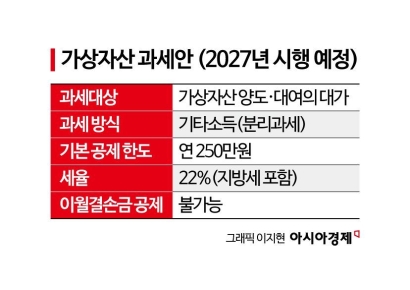 "Stocks Are Not Taxed, but Annual Crypto Gains Over 2.5 Million Won to Be Taxed Next Year... Investors Push Back"
- "Not Jealous of Winning the Lottery"... Entire Village Stunned as 200 Million Won Jackpot of Wild Ginseng Cluster Discovered at Jirisan
- "Even With a 90 Million Won Salary and Bonuses, It Doesn’t Feel Like Much"... A Latecomer Rookie Who Beat 70 to 1 Odds [Scientists Are Disappearing] ③
- "Rather Than Endure a 1.5 Million KRW Stipend, I'd Rather Earn 500 Million in the U.S." Top Talent from SNU and KAIST Are Leaving [Scientists Are Disappearing] ①
- "How Did an Employee Who Loved Samsung End Up Like This?"... Past Video of Samsung Electronics Union Chairman Resurfaces
Since various related products focusing on New Deal Funds are expected to flood the market, it is considered sufficient to regain the interest of customers who had previously shunned funds. However, since policy-type New Deal Funds also raise funds from general investors through a private indirect public offering method, similar incidents to those in PEFs could occur, which sellers need to consider. Banks that sold Lime Funds have already accepted unprecedented 100% compensation following recommendations from the Financial Supervisory Service, increasing their burden.
© The Asia Business Daily(www.asiae.co.kr). All rights reserved.







