64% of Global Companies Move to "Supply Chain Restructuring"
The highest exit region is China, and the highest inflow region is Southeast Asia
Active GVC restructuring regions are China>North America & Central and South America
Investment and M&A account for the largest share of GVC restructuring activities
[Asia Economy Reporter Kim Hyewon] It has been found that 64% of global companies have either completed or are planning to reorganize their supply chains, including relocating their business sites. Analysis shows that this has been actively carried out through inter-company investments or mergers and acquisitions (M&A) in China, North America, and Latin America.
KOTRA conducted a survey on the reorganization status of the Global Value Chain (GVC) targeting 246 companies in the materials, parts, and equipment sectors through 49 overseas trade offices worldwide. The proportion of companies reporting one or more GVC reorganization activities was 64%. GVC reorganization activities included those completed within the last five years, those currently underway, and those planned.
The regions where GVC reorganization was most active were China (45%), North America (35%), and Latin America (35%), in that order. The activities were predominantly inter-company investments and M&A. The main reasons cited were 'intensification of protectionism (27%)', 'technological high value-added (26%)', and 'utilization of emerging country consumer markets (26%)'. Reasons related to 'response to the spread of COVID-19 (20%)' were relatively low.
The patterns of GVC reorganization can be summarized into three: ▲ strengthening self-supply chains by emerging markets ▲ formation of new value chains surrounding China ▲ activation of inter-company investments and partnerships.

By region, China was the largest source of global companies leaving, while Southeast Asia was the largest destination for inflows.
In emerging markets such as Southeast Asia and Latin America, self-contained supply chains capable of handling parts procurement, product manufacturing, and sales/distribution locally are being established. Southeast Asia is emerging as a new production base in the electrical, electronics, and IT sectors, with local parts procurement expanding. New investments necessary for building local distribution networks are also active.
In Latin America, production and purchasing activities are being strengthened, centered on the automotive industry, based on the recently implemented regional trade agreement (USMCA). South Asia shows a high proportion of investments aimed at securing production bases, with purchasing and procurement functions also flowing into the region.
There is also a trend among automotive and electrical/electronics companies to relocate production lines from China to ASEAN and Latin America. The main cause is the increased tariff burden on Chinese products exported to the U.S. due to the U.S.-China trade dispute. ASEAN, with relatively lower production costs, is attracting many factories leaving China and is emerging as a new manufacturing hub.

Product development activities within China by global companies are expected to increase further. China ranks first globally (39%) in the proportion of planning and research and development (R&D) business functions inflow by country. Particularly in the future car and electrical/electronics industries, product development through joint ventures with Chinese companies is active.
In the era of the Fourth Industrial Revolution, alliances and collaborations among global companies to secure high value-added new technologies are also notable. Sixty percent of global companies aiming to develop advanced technology and design are either pursuing or planning strategic partnerships. Especially in the 'IT·SW (43%)' and 'automotive parts (34%)' sectors, global companies show strong interest in advanced technology cooperation with Korean companies.
There are concerns that if we do not respond efficiently to the GVC reorganization movement, difficulties in trade and investment activities will increase. Based on this survey, KOTRA suggested three directions: ▲ strengthening overseas expansion through proactive measures in response to GVC reorganization ▲ R&D collaboration with global companies ▲ strengthening the value chain ecosystem of our companies.

First, it is necessary to monitor the trends of global companies relocating from China to ASEAN. KOTRA is investigating demand and discovering projects so that our companies can actively be incorporated into the process of global companies forming new value chains in new regions. To strengthen this, marketing activities of the '54 Global Partnering (GP) focused overseas trade offices' will be increased, and a joint support system with related domestic and overseas organizations will be established. Additionally, collaboration demands between global company headquarters countries and emerging market branches will be monitored and shared with our companies.
Support is required to discover collaboration projects with global companies from the technology planning stage so that our companies can form technology alliances and joint production. Cooperation among related organizations such as government-funded research institutes is also necessary to enable our companies to quickly secure the technologies demanded by global companies.
It is a critical time to diversify the overseas expansion regions of our companies to prevent disruption of existing product supply and sales networks caused by GVC reorganization. The need to attract leading companies in new industries such as system semiconductors, bio-health, and future cars to Korea to secure additional supply sources for our companies has also increased. KOTRA plans to strengthen the value chain ecosystem by providing customized support for each project to strategic industry companies in materials, parts, and equipment that have entered overseas to return to Korea.
Hot Picks Today
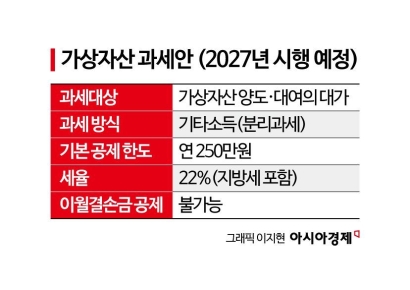 "Stocks Are Not Taxed, but Annual Crypto Gains Over 2.5 Million Won to Be Taxed Next Year... Investors Push Back"
- "Not Jealous of Winning the Lottery"... Entire Village Stunned as 200 Million Won Jackpot of Wild Ginseng Cluster Discovered at Jirisan
- "Even With a 90 Million Won Salary and Bonuses, It Doesn’t Feel Like Much"... A Latecomer Rookie Who Beat 70 to 1 Odds [Scientists Are Disappearing] ③
- "Rather Than Endure a 1.5 Million KRW Stipend, I'd Rather Earn 500 Million in the U.S." Top Talent from SNU and KAIST Are Leaving [Scientists Are Disappearing] ①
- "How Did an Employee Who Loved Samsung End Up Like This?"... Past Video of Samsung Electronics Union Chairman Resurfaces
Kwon Pyung-oh, President of KOTRA, said, "Korea has actively participated in the formation of GVCs and enjoyed the effect of increased exports, but with the rapid progress of GVC reorganization due to global nationalism, regionalization, and prolonged COVID-19, we stand at a crossroads of crisis and opportunity. KOTRA will also fulfill its role as a national trade and investment promotion agency by cooperating with the government so that our companies can respond agilely to changes."
© The Asia Business Daily(www.asiae.co.kr). All rights reserved.







