Financial Authorities Cautious of Strengthened 'Donghak Ants'

Financial Services Commission Chairman Eun Sung-soo is delivering opening remarks at a meeting with the securities industry held at the Korea Financial Investment Association in Yeouido, Seoul, on the 27th. Photo by Kim Hyun-min kimhyun81@
View original image[Asia Economy Reporter Park Jihwan] Following the six-month extension of the short-selling ban, financial authorities are continuously introducing policies aimed at retail investors, such as expanding retail investors' participation in short selling and implementing public offering allocation methods favorable to small investors. This reflects the growing influence of individual investors, who played a pivotal role as a stabilizing force in the stock market during the COVID-19 crash, known as the "Donghak Ant Movement."
According to the Financial Services Commission (FSC) and the Korea Financial Investment Association on the 1st, the FSC is working to change the public offering allocation method to benefit small investors. There have been ongoing criticisms that the allocation of shares in the public offering subscription market has been dominated by institutions or high-net-worth individuals with strong financial mobilization capabilities. Currently, individual investors deposit margin with securities firms and receive allocations of public offering shares based on the amount of margin deposited. Since the more margin deposited, the higher the subscription success rate, it has become a "money game," making it inevitable that small individual investors are marginalized as competition intensifies.
The FSC is considering revising the "Regulations on Securities Underwriting" to set half of the 20% of public offering shares allocated to general investors during the IPO process as a subscription segment for small individual investors with less than 50 million KRW, while the remainder would be allocated by lottery regardless of asset size. Additionally, for the unsubscribed portion of employee stock ownership subscriptions that are preferentially allocated during IPOs, efforts are underway to prioritize subscription opportunities for individual investors rather than institutional investors. On the 27th of last month, FSC Chairman Eun Sung-soo pointed out at a meeting with the securities industry that "the current public offering allocation method, where those who deposit more subscription margin receive more shares, favors high-net-worth individuals and needs improvement."
Chairman Eun also criticized the securities industry's margin loan interest rates, which have remained unchanged despite low interest rates. He stated, "While the Bank of Korea lowered the base rate by 0.75 percentage points this year, some securities firms have not adjusted their margin loan interest rates at all," adding, "It is only natural that individual investors point out the opacity and irrationality of this and demand improvements." The average margin loan interest rate for 31 to 60 days among 28 domestic securities firms is 7.72%. Some securities firms charge rates exceeding 9%. Even considering the relatively higher funding costs compared to banks, this is high compared to the average overdraft interest rate of 3.58% at 17 domestic banks.
Following the public call by the head of financial authorities to lower margin loan interest rates, securities firms promptly began reducing rates. Mirae Asset Daewoo was the first to announce on the 28th of last month that it would lower the margin loan interest rate for non-branch accounts (direct accounts) from 9.0% to 8.5%, effective from the 28th of this month. Samsung Securities, Korea Investment & Securities, and Kiwoom Securities are also reviewing interest rate adjustments. The FSC plans to form a task force (TF) with the securities industry within this month to devise improvement measures for the calculation of margin loan interest rates.
Earlier, financial authorities decided to extend the short-selling ban for an additional six months and also plan to explore ways to activate retail short selling from the perspective of expanding opportunities. Last year, individual investors accounted for only 1.1% of the 103.4936 trillion KRW short-selling transaction volume in the domestic stock market, while foreigners (62.8%) and institutions (36.1%) accounted for a combined 98.9%, prompting criticism of a "tilted playing field." The plan is to enhance securities firms' stock lending services for individual investors in the second half of the year to improve their accessibility to short selling.
Hot Picks Today
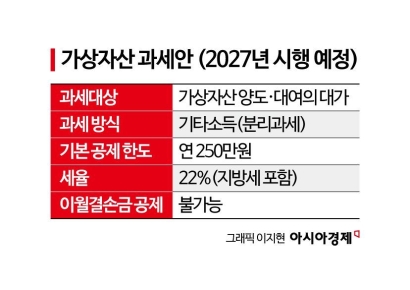 "Stocks Are Not Taxed, but Annual Crypto Gains Over 2.5 Million Won to Be Taxed Next Year... Investors Push Back"
- "Not Jealous of Winning the Lottery"... Entire Village Stunned as 200 Million Won Jackpot of Wild Ginseng Cluster Discovered at Jirisan
- "Even With a 90 Million Won Salary and Bonuses, It Doesn’t Feel Like Much"... A Latecomer Rookie Who Beat 70 to 1 Odds [Scientists Are Disappearing] ③
- "Rather Than Endure a 1.5 Million KRW Stipend, I'd Rather Earn 500 Million in the U.S." Top Talent from SNU and KAIST Are Leaving [Scientists Are Disappearing] ①
- "How Did an Employee Who Loved Samsung End Up Like This?"... Past Video of Samsung Electronics Union Chairman Resurfaces
The recent policy shift by financial authorities began with President Moon Jae-in's directive during discussions on the financial tax reform plan at the end of June, stating that "it should not be a method that shrinks the stock market or dampens the enthusiasm of individual investors." President Moon's remarks largely acknowledged the influence of retail investors, who served as a pillar of the domestic stock market this year, known as the Donghak Ant Movement. A financial authority official explained, "While it is difficult to say that political factors are completely disregarded, the recent policy direction is being pursued with a focus on expanding opportunities for individual investors."
© The Asia Business Daily(www.asiae.co.kr). All rights reserved.







