Government Ignores Economic Sector Complaints... 'Fair Economy 3 Laws' Pass Cabinet Meeting
Approval of the Cabinet Meeting on the Draft and Amendments of the Commercial Act, Fair Trade Act, and Financial Group Supervision Act
Government "Significantly Expands Institutional Foundation for Fair Economy"... Plans to Submit to National Assembly by the End of This Month
Economic Organizations "Need Careful Reconsideration"
![President Moon Jae-in is presiding over a video Cabinet meeting at the Yeomin Building of the Blue House on the morning of the 25th. [Image source=Yonhap News]](http://www.asiae.co.kr/news/img_view.htm?img=2020082510122042692_1598317940.jpg)
President Moon Jae-in is presiding over a video Cabinet meeting at the Yeomin Building of the Blue House on the morning of the 25th. [Image source=Yonhap News]
View original image[Sejong=Asia Economy Reporter Ju Sang-don] The so-called 'Fair Economy 3 Acts'?the Commercial Act, the Fair Trade Act, and the Financial Group Supervision Act?were passed at the Cabinet meeting on the 25th. Despite strong opposition from the business community regarding the 'separate appointment of audit committee members' and 'strengthened regulations on unfair profit-seeking behaviors by large business groups,' the government finalized the original bill without any amendments to the previously announced draft. Criticism is emerging mainly from economic organizations that the government is pushing forward the Fair Economy 3 Acts without considering the already weakened overall economy due to the COVID-19 pandemic.
On the same day, the government announced that the 3 Acts were approved at the Cabinet meeting presided over by President Moon Jae-in. A government official explained, "Only minor wording changes were made from the previously announced draft; the content remains unchanged."
The amendment to the Commercial Act includes ▲introduction of the multiple derivative lawsuit system ▲introduction of separate election of audit committee members and improvement of appointment and dismissal regulations. Under the current Commercial Act, if a subsidiary director causes damage to the subsidiary due to neglect of duty, there was no legal means for the parent company's shareholders to hold the subsidiary director accountable despite the damage to the parent company and its shareholders. Going forward, if a subsidiary director causes damage to the subsidiary due to neglect of duty, shareholders of the parent company holding at least 1% of the total issued shares of an unlisted company will be able to file a derivative lawsuit against the subsidiary director under the current Commercial Act. Additionally, to resolve the issue where only directors aligned with the major shareholder's intentions are appointed as audit committee members, audit committee members must be elected separately from other directors. When elected separately, major shareholders will also be subject to the 3% rule limiting their director appointment rights.
The government also finalized the long-awaited full revision of the Fair Trade Act, a key agenda of the Korea Fair Trade Commission. First, the exclusive prosecution system for hard-core collusion such as price-fixing and bid-rigging, which are socially condemned, will be abolished. A court order system for submitting evidence to support damage claims in lawsuits related to collusion and unfair trade practices will be introduced. To strengthen deterrence against legal violations, the upper limits of fines will be doubled: ▲collusion from 10% to 20%, ▲abuse of market dominance from 3% to 6%, and ▲unfair trade practices from 2% to 4%.
Regulations on unfair profit-seeking behaviors by large business groups will also be strengthened. The shareholding threshold for other unfair profit-seeking regulations targeting the controlling family will be unified to 20%, with 30% for listed companies and 20% for unlisted companies, and subsidiaries owned over 50% by them will also be included in the regulation. As a result, the number of regulated companies will increase from 210 to 591, an increase of 381. The shareholding requirements for subsidiaries and sub-subsidiaries of new holding companies (including newly incorporated subsidiaries and sub-subsidiaries of existing holding companies) will be strengthened from 20% to 30% for listed companies and from 40% to 50% for unlisted companies. Furthermore, the exercise of voting rights by public interest corporations holding shares in affiliated companies will be generally prohibited, but voting rights will be allowed within a 15% combined limit of special related parties only for listed affiliates. This is in response to findings from the Fair Trade Commission’s investigation that public interest corporations hold concentrated shares related to corporate group control, raising concerns about potential abuse.
To resolve regulatory asymmetry with financial holding companies, the Financial Group Supervision Act, which establishes legal grounds for supervising non-holding financial groups and strengthens supervision, also passed the Cabinet meeting. Financial groups subject to supervision will be designated among those whose affiliated financial companies operate two or more financial businesses and whose total assets exceed 5 trillion won, where supervision is practical. Six groups including Samsung, Hanwha, Mirae Asset, Kyobo, Hyundai Motor, and DB will be included as supervised financial groups. These groups must jointly establish internal control policies and risk management policies for their affiliated financial companies to improve group-level internal control and risk management, and manage impacts on capital adequacy, internal transactions, and risk concentration affecting group soundness.
The government plans to submit the Fair Economy 3 Acts amendment bill containing these details to the National Assembly by the end of this month, aiming for passage in the September regular session. It is expected that upon passage, corporate governance will improve, unfair economic power abuse by large business groups will be eradicated, and financial group financial soundness will be secured, significantly expanding the institutional foundation for a fair economy.
Hot Picks Today
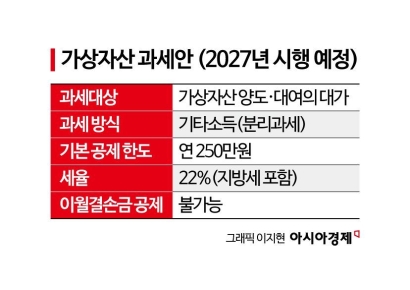 "Stocks Are Not Taxed, but Annual Crypto Gains Over 2.5 Million Won to Be Taxed Next Year... Investors Push Back"
- "Not Jealous of Winning the Lottery"... Entire Village Stunned as 200 Million Won Jackpot of Wild Ginseng Cluster Discovered at Jirisan
- "Even With a 90 Million Won Salary and Bonuses, It Doesn’t Feel Like Much"... A Latecomer Rookie Who Beat 70 to 1 Odds [Scientists Are Disappearing] ③
- "Jeong Yu-kyung Is a Neighbor"...Itaewon Standalone House with Record 23.2 Billion Won Appraisal Up for Auction [Real Estate AtoZ]
- "How Did an Employee Who Loved Samsung End Up Like This?"... Past Video of Samsung Electronics Union Chairman Resurfaces
Opposition to the government bill is also considerable. Economic organizations have already expressed detailed opposition to the government's Fair Economy 3 Acts amendment bill. On the 17th of last month, six economic organizations?the Korea Employers Federation, the Federation of Korean Industries, the Korea Federation of SMEs, the Korea Association of Mid-sized Companies, the Korea Listed Companies Association, and the KOSDAQ Association?submitted a letter to the Ministry of Justice and the Fair Trade Commission requesting careful review of the Commercial Act amendment and the Fair Trade Act draft. Subsequently, the Korea Chamber of Commerce and Industry also requested the government to reconsider on the 21st of the same month, emphasizing respect for the basic rules of the market. First, the six economic organizations clearly opposed the separate election of audit committee members and the revision of the 3% voting rights restriction, the introduction of the multiple derivative lawsuit system, and the selective operation of minority shareholder rights exercise requirements. They argued that requiring at least one audit committee member to be separately elected apart from major shareholders' voting restrictions (3% rule) could infringe on shareholders' property rights and could be exploited or abused by speculative capital, represented by foreign hedge funds, to dominate the board and interfere with corporate management. They pointed out that if the strengthened shareholding regulations for holding companies in the Fair Trade Act amendment are implemented, the increased costs of transitioning to a holding company system will hinder job creation and conflict with government policies encouraging holding company transitions. They also expressed concerns that excessive restrictions on voting rights of public interest corporations could hinder their social contribution activities. Regarding the expanded scope of unfair profit-seeking regulations, they warned that if controlling shareholders sell shares, it could cause stock price declines harming minority shareholders and raise issues of breach of fiduciary duty, and that efficiency losses due to spin-offs would be inevitable.
© The Asia Business Daily(www.asiae.co.kr). All rights reserved.