"Series of Private Equity Fund Scandals Due to Excessive Deregulation... Financial Services Commission Must Be Dissolved" (Comprehensive)

[Asia Economy Reporter Ji-hwan Park] From last year's Lime Asset Management to the recent Optimus Fund redemption suspension incident, concerns have been raised that the primary responsibility for the series of private equity fund redemption suspension incidents lies with the financial authorities who hastily proceeded with deregulation.
On the morning of the 21st, Jeon Seong-in, a professor in the Department of Economics at Hongik University, pointed out at the "Discussion on the Direction of Financial Supervisory System Reform Seen from the Private Equity Fund Redemption Suspension Incident," hosted by Justice Party lawmaker Bae Jin-gyo and Democratic Party lawmaker Min Byung-duk, that "the recent private equity fund crisis originated from excessive deregulation by the financial authorities," adding, "The financial authorities bear significant responsibility for focusing solely on market activation without proper preparation for regulatory blind spots."
He noted that from the 2003 credit card crisis, the 2011 savings bank crisis, the 2018 internet-only bank crisis, to the recent private equity fund crisis, there is a high likelihood of financial accidents linked to deregulation by the financial authorities.
According to Professor Jeon, the fundamental cause of the private equity fund incident began with deregulation of the private equity fund market initiated during the Park Geun-hye administration. The most decisive turning point was the revision of the Capital Markets Act, proposed by the Financial Services Commission as government legislation in 2014 and passed the following year. At that time, the minimum investment amount for individual investors was lowered from 500 million KRW to 100 million KRW. This effectively opened the door wide for individuals to invest in private equity funds.
The minimum capital requirement for asset management companies was also reduced from 6 billion KRW to 2 billion KRW, and further drastically cut to 1 billion KRW last year. With such a significant lowering of entry barriers, the private equity fund market rapidly expanded from around 170 trillion KRW to 400 trillion KRW after the entry barrier was lowered in 2015.
Professor Jeon pointed out as an urgent task the need to legally clarify the conditions for invoking the emergency measures under the Financial Investment Services and Capital Markets Act. He explained, "This private equity fund incident could have been resolved by the Financial Services Commission through the emergency measures under Article 3-35 of the Financial Investment Services and Capital Markets Act, but it was not done," adding, "Under the current regulations, only sanctions against management companies are possible, and there is weak legal basis for the financial authorities to take action when fund insolvency occurs." He also suggested that since investors act as monitors in the private equity fund market, general investors who find it difficult to perform monitoring roles should be completely restricted from accessing these funds.
Professor Jeon also emphasized that using finance as a policy tool for activating venture industries or curbing real estate speculation should be prohibited. Above all, he stated that a major revision of the financial supervisory system is necessary to prevent recurrence of private equity fund incidents. He stressed, "The key is to dissolve the Financial Services Commission and establish a financial supervisory organization that has autonomy and independence from political circles," adding, "At minimum, a civil servant organization should not be responsible for supervisory functions."
Another presenter, Professor Ko Dong-won of Sungkyunkwan University Law School, said, "the recent series of private equity fund redemption suspension incidents are cases of supervisory failure arising from problems in the financial supervisory system," and criticized, "although preemptive regulations were relaxed, post-regulations should have been strengthened, but this was not done, leading to these incidents."
He particularly suggested the need to separate the financial policy function and the financial supervisory function of the Financial Services Commission. He explained that during the Financial Services Commission-led deregulation policy for private equity funds, there was no check-and-balance mechanism, which increased the damage. Professor Ko emphasized, "Separation of financial policy and supervisory functions is an international trend," and "the policy function of the Financial Services Commission should be transferred to the Ministry of Economy and Finance, and the supervisory function should be transferred to an independent financial supervisory organization."
Hot Picks Today
 "Stocks Are Not Taxed, but Annual Crypto Gains Over 2.5 Million Won to Be Taxed Next Year... Investors Push Back"
- "Don't Throw Away Coffee Grounds" Transformed into 'High-Grade Fuel' in Just 90 Seconds [Reading Science]
- Signed Without Viewing for 1.6 Billion Won... Jamsil and Seongbuk Jeonse Prices Jump 200 Million Won in a Month [Real Estate AtoZ]
- "Groups of 5 or More Now Restricted"... Unrelenting Running Craze Leaves Citizens and Police Exhausted
- "Even With a 90 Million Won Salary and Bonuses, It Doesn’t Feel Like Much"... A Latecomer Rookie Who Beat 70 to 1 Odds [Scientists Are Disappearing] ③
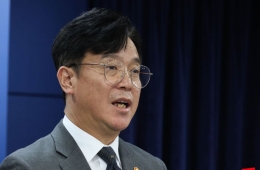
At the discussion, Lee Dong-hoon, head of the Financial Policy Division at the Financial Services Commission, said, "Regarding the private equity fund issue, it is necessary to discuss ways to preserve the positive aspects of deregulation while cutting off the negative ones," adding, "It also seems necessary to consider reflecting early warning signs in the supervisory system before financial accidents occur."
© The Asia Business Daily(www.asiae.co.kr). All rights reserved.