Gwangju Mayor Lee Yong-seop, 2nd Anniversary of Inauguration: "Will Establish the Formula 'Justice Creates Prosperity'"

On the morning of the 29th, Lee Yong-seop, Mayor of Gwangju Metropolitan City, held a press conference in the city hall briefing room to mark the 2nd anniversary of his inauguration during the 7th local government term, announcing major achievements and future plans. Photo by Gwangju Metropolitan City
View original image[Asia Economy Honam Reporting Headquarters Reporter Park Seon-gang] “Although it was a short period, citizens trusted and supported the mayor, enabling many achievements, and it has been a proud two years to be the Mayor of Gwangju Metropolitan City.”
On the 29th, Lee Yong-seop, Mayor of Gwangju Metropolitan City, who will reach the halfway point of his term on the 1st of next month, stated this at a press conference marking his 2nd anniversary in office.
The core values that have run through the two years of the 7th local government administration in Gwangju were innovation and communication.
Gwangju succeeded in the unprecedented Gwangju-type job project, a labor-management win-win model unique in the world, through innovative administration, and opened the path to the era of artificial intelligence in Gwangju, which no one had ventured before.
The issue of Urban Railway Line 2, which had caused conflict and division in the local community for 16 years, was resolved through public discussion, and despite severely insufficient budget, the Gwangju World Swimming Championships were successfully held as a “low-cost, high-efficiency” profitable event. This was possible because innovation and communication supported these efforts.
During the unprecedented crisis of COVID-19, the core driving force that safely protected the Gwangju community was innovation and communication, which led to proactive responses, hospital bed solidarity with Daegu, and active cooperation from citizens.
In particular, Mayor Lee Yong-seop avoided desk-bound administration and strengthened field administration.
Under the motto “The answer is on site (百聞不如一見),” he focused on communication with citizens and sought changes and innovation in city administration. The “Field Listening Day” event, started to resolve long-standing issues in citizens’ daily lives, has been held 16 times so far, and the “Field Policy Tour for Livelihood Economy,” which visits local companies to solve problems, has been conducted 21 times.
Also, the Gwangju Innovation Promotion Committee (Chairman Joo Jeong-min), launched in November 2018, recommended a total of 19 administrative innovations over 12 sessions in two years, including integrated recruitment for public institutions, introduction of a hopeful personnel system, introduction of an interview panel manpower pool system, and implementation of a public contest system for cultural and artistic private operating subsidies, most of which have been reflected in city administration.
Gwangju has produced many achievements with titles such as “world’s first” for the local government-led labor-management win-win Gwangju-type jobs, “nation’s first,” “nation’s only,” and “nation’s largest.”
It attracted the nation’s only eco-friendly automobile parts certification center, completed the country’s first hydrogen convergence energy demonstration center, and opened the nation’s first healthcare robot demonstration center.
Also, the nation’s first declaration of a labor-management win-win city and the selection as the nation’s first win-win regional job project have become driving forces for Gwangju’s leap from the political number one district to the economic number one district.
Gwangju’s finances have also greatly improved. The 2018 budget was 4.5 trillion won, but it increased to 5.2 trillion won this year, just two years later.
This year, for the first time in Gwangju’s history, the era of 2.5 trillion won in national subsidies was opened, and the debt ratio was reduced while increasing financial independence, enhancing fiscal soundness.
◇Gwangju’s leap with the “two wings” of Gwangju-type jobs and artificial intelligence projects
▲Construction of Gwangju-type job automobile factory
With the unprecedented local government-led social integration labor-management win-win Gwangju-type job project in full swing, a domestic automobile factory is being built in Gwangju for the first time in 23 years.
The construction progress of Gwangju Global Motors Co., Ltd.’s automobile factory, which began in December last year, is 30% (as of June 29), and construction for mass production of 100,000 cars by September next year is proceeding smoothly.
Once completed, this factory is expected to create 10,000 direct and indirect jobs, and it is anticipated to have a reshoring effect, attracting companies that had avoided domestic investment due to high wages and labor conflicts back to Korea, and bringing back manufacturing industries that had moved overseas.
In particular, on the 15th, the government selected the automobile factory project as the “No. 1 win-win regional job project” based on the National Balanced Development Act, and with Bitgreen Industrial Complex designated as an economic free zone and a government industrial complex renovation project target, the Gwangju-type job project has gained further momentum.
Also, on January 14 last year, Gwangju declared itself a labor-management win-win city where labor is respected and business is good, and is promoting the establishment of the Gwangju Win-Win Job Foundation to secure the effectiveness of labor policies overall and to perform the function of a labor service platform.
▲Leap to an artificial intelligence-centered city
It is no exaggeration to say that Gwangju’s top choice is “Artificial Intelligence (AI),” as Gwangju is rapidly emerging as an “AI-centered city.”
Last January, the AI-centered industrial convergence complex project was exempted from preliminary feasibility study and confirmed as a national project, drawing attention to Gwangju as an “AI” city. The advanced 3 district, where the complex will be located, was released from the greenbelt in December last year, and the project has been accelerated.
In January, Gwangju held a vision declaration ceremony for the AI-centered city with Choi Ki-young, Minister of Science and ICT, secured a budget of 411.6 billion won over five years, and will begin construction of a world-class big data center in November.
Additionally, a supercomputing system with performance and capacity ranked within the world’s top 10 to process these data will be established.
AI companies and AI talents are also flocking to Gwangju.
Despite the COVID-19 crisis, 16 competitive AI companies have signed business agreements with Gwangju, and among them, 8 companies have opened corporations or research institutes in Gwangju.
Also, the AI Academy, opening on the 2nd of next month, attracted 1,045 applicants nationwide for 180 trainees, showing great interest. Gwangju Institute of Science and Technology (GIST) opened a graduate school of AI to nurture master’s and doctoral talents, and regional universities such as Chonnam National University, Chosun University, and Honam University are also actively fostering AI talents.
▲Designation as an economic free zone
The designation of an economic free zone, Mayor Lee Yong-seop’s first pledge, has created another groundbreaking development opportunity for Gwangju.
The economic free zone includes four core industrial complexes (4,371㎢, 1.32 million pyeong) that guarantee Gwangju’s future: future cars (Bitgreen Industrial Complex), artificial intelligence (Advanced 3 District), and energy (Energy Valley General Industrial Complex, Urban Advanced National Industrial Complex).
In particular, these complexes are already undergoing infrastructure development and corporate investment, so visible results are expected in a short period. The economic ripple effects are expected to be 10.3641 trillion won in production inducement, 3.244 trillion won in added value inducement, 1.6 trillion won in investment attraction, and creation of about 57,000 local jobs.
◇Resolving long-standing issues and the largest-ever international event also powered by citizens...
▲Construction of Urban Railway Line 2, solving a 16-year-old problem
Two years ago, the Urban Railway Line 2 project was Gwangju’s biggest challenge.
However, since the launch of the 7th local government, Gwangju has resolved the 16-year-long pro and con debate through the fairest, most transparent, and fastest public discussion, creating a successful model of cooperative administration.
Urban Railway Line 2, which began construction in September last year, is a circular line that, when completed in stages from 2023, will open an era of public transportation where any place in Gwangju can be reached within 30 minutes.
Also, by employing local residents in construction, expanding subcontracting participation of local specialized construction companies, and using locally produced construction materials and equipment, it contributes to revitalizing the local economy.
▲Gwangju World Swimming Championships rated “best ever”
Despite three major adverse conditions?severely insufficient budget, North Korea’s absence, and lack of domestic star athletes?the 2019 Gwangju World Swimming Championships was evaluated by the International Swimming Federation (FINA) as the most successful event ever.
The Gwangju World Swimming Championships had the most countries (191) participating, the most athletes and officials (12,800) ever, and produced many new records with top-level venues, athlete villages, and event management.
Above all, the active participation and mature civic consciousness of Gwangju citizens, especially the dedicated service of about 3,000 volunteers and 12,000 supporters, were major driving forces behind the event’s success.
With a small budget, it generated a surplus of 15.9 billion won and is benchmarked worldwide as the most successful “low-cost, high-efficiency international event.”
Gwangju is establishing the Korea Swimming Promotion Center as a legacy project and has also launched the Gwangju Swimming Championships and Masters competitions, solidifying its position as a swimming city.

◇Proactive administration shone even more in COVID-19 crisis response
▲Building a watertight quarantine network
In Gwangju, there have been no deaths from COVID-19, and the number of confirmed cases is the lowest among metropolitan cities.
Since the first confirmed case in Gwangju on February 3, proactive administration was carried out, including cohort isolation at 21st Century Hospital, involving the Shincheonji representative in the task force to secure golden time, strengthening conditions for release from isolation for confirmed and contact cases, issuing two administrative orders to strengthen management of overseas entrants, and forming the nation’s only joint public-private countermeasure committee.
With the spirit of sharing and solidarity, Gwangju proposed hospital bed solidarity to treat Daegu’s confirmed patients in Gwangju, which spread to other local governments, uniting national capabilities and establishing South Korea as a global model in quarantine.
Recently, two middle and high school students were almost mistakenly classified as confirmed cases, but after four retests, the testing agency’s error was found, and they were finally confirmed negative.
▲7th livelihood stabilization measures
To revive the local economy suffering from COVID-19, Gwangju announced livelihood stabilization measures seven times since March 5.
Measures include zero-interest loans for small business owners and self-employed, freezing public utility fees and rent reductions, livelihood support for households below 100% median income, livelihood support for low-income special employment workers, unemployed, and furloughed workers with sharply reduced income, the nation’s first employment retention subsidy, creation of 12,000 public jobs, 50% wage support for small business owners, and livelihood support for taxi drivers, revitalizing livelihoods.
In particular, emergency livelihood funds and disaster relief funds are paid through the Gwangju Win-Win Card, contributing to small business sales and local economic revitalization. The scale of Gwangju Win-Win Card circulation in the first half of this year exceeded 450 billion won.
◇Branding the “Gwangju-ness” of Samhyang (Three Villages)
▲Product, brand, and industrialization of Gwangju-ness
Gwangju focuses on job creation and economic revitalization through product, brand, and business development of Gwangju’s unique and distinctive features that can only be seen, enjoyed, and tasted in Gwangju: the righteousness of Uihyang Gwangju, the traditional culture and arts of Yehyang Gwangju, and the flavorful food of Mihyang Gwangju.
Judging that culture is economy and jobs, Gwangju introduced the first-ever cultural economy vice mayor system nationwide.
Gwangju’s representative food, Gwangju Jumeokbap (rice balls), has developed a recipe suited to modern tastes and is becoming a local delicacy, and the representative performance, the Gugak regular performance, has been held 180 times since March last year, attracting 18,367 viewers.
Dongmyeong-dong is being developed as a representative cultural village, and Chunghyo-dong as an ecological cultural village. At Gwangju Tollgate, the gateway to Gwangju, the world’s first media art sculpture “Light of Gwangju,” symbolizing Mudeungsan Mountain, was installed, and the Gwangju History and Folklore Museum was newly opened.
Plans are underway to create the “Asia Art Garden” in Jungoe Park, adjacent to Gwangju Biennale Exhibition Hall, Gwangju Museum of Art, and Gwangju Culture and Arts Center, representative cultural infrastructures of Gwangju, with a budget of 19 billion won by 2023.
▲Inheritance and development of the righteous history of Uihyang Gwangju
On the 40th anniversary of the May 18 Democratic Movement, efforts have been continuously promoted to elevate Gwangju’s May 18 to the world’s May 18, from the past May 18 to the future May 18, and from the May 18 of resentment and anger to the May 18 of integration and harmony.
May 18 was designated as a local holiday, the national flag was flown at half-mast during the May 18 memorial period to honor the spirits of the May 18 martyrs, and the ordinance was revised to provide democratic honor allowances to democratic merit recipients who were in blind spots of support.
The Jeonil Building 245 was remodeled and reopened, becoming a landmark representing Gwangju, and the Democratic Human Rights Memorial Park project was confirmed as a national project after 10 years and is being promoted.
To set the May history straight, the activities of the May 18 Truth Investigation Committee and the enactment of the May 18 History Distortion Punishment Special Act are actively supported.
▲Protected 24 urban parks ahead of the “sunset system”
Ahead of the urban park sunset system on July 1, Gwangju completed the official approval notice for implementation plans for 24 long-unexecuted urban parks by the 18th.
The project targets include 9 private park special projects and 15 fiscal parks, accounting for 55% of all urban parks in Gwangju, about three times the size of Yeouido.
In particular, Gwangju lowered the ratio of non-park facilities to 9.7% (national average 21%) and strengthened public nature by reinvesting excess profits of project operators into park projects, earning recognition as a national model case.
▲Started making Gwangju a good place to give birth and raise children
Gwangju has begun addressing population issues through innovative childcare policies.
From January next year, Gwangju will provide a total birth and childcare allowance of 5.8 to 6.8 million won per newborn in the city.
First child receives 1 million won, second child 1.5 million won, and third or more children 2 million won as birth congratulatory money, and a childcare allowance of 200,000 won per month for two years after birth, totaling 4.8 million won, will be supported.
Gwangju has already implemented the first 24-hour emergency childcare service and inpatient child care service among metropolitan cities, supports infertility treatment costs, and continues to expand public daycare centers.
◇Gwangju-type 3 major New Deals rise in the post-COVID era
▲Digital New Deal based on artificial intelligence
Gwangju is promoting a digital New Deal policy based on artificial intelligence to create local jobs, lead the 4th industrial revolution, and enhance urban competitiveness.
By 2024, an AI-centered industrial convergence complex will be established in Advanced 3 District, and the nation’s first AI pilot (demonstration) city will also be promoted.
An AI comprehensive support center will be installed, and an AI mentor group and dedicated fund will be formed to nurture professional talents and support startups. Gwangju will complete an AI business model featuring core talent production and new jobs in non-face-to-face and telecommuting formats.
▲Green New Deal centered on Energy Valley
Gwangju aims to create an energy self-sufficient city to open the decarbonization era by fostering new energy industries and energy transition, and is accelerating the construction of Energy Valley.
It plans to establish a 700 billion won air industry cluster in Pyeongdong 3rd Industrial Complex in cooperation with the Ministry of Trade, Industry and Energy and LG, and by 2024, a clean air industry cluster will be built in Bitgreen Industrial Complex with full national funding.
The city arboretum, designated as a national wetland protection area for Hwangryonggang Jangnok Wetland, the Gwangjucheon Arirang cultural waterway project, and the construction of Urban Railway Line 2 are also being promoted as part of the Green New Deal policy.
▲Job New Deal centered on win-win Gwangju-type jobs
Gwangju Global Motors Co., Ltd. automobile factory is the nation’s first win-win job project and the first model for realizing industrial peace through labor-management win-win.
Also, a 760 billion won industrial complex renovation project linking Bitgreen Industrial Complex, Advanced Industrial Complex, and Hanam Industrial Complex is underway to create a Gwangju-type automobile industry cooperation belt. The eco-friendly automobile parts cluster, with an investment of 303 billion won, and the eco-friendly automobile parts certification center, with an investment of 36 billion won, are scheduled to be completed next year.
◇Establishing new control towers for culture, tourism, and welfare
▲Strengthening the role of Gwangju Tourism Foundation
The Gwangju Tourism Foundation, launching next month, will serve as the control tower for tourism administration, building a non-face-to-face tourism information system in the city center and playing a pivotal role in making Gwangju a stay-type tourist city.
Also, continuing the reputation of “Yehyang Gwangju,” the integration of culture and tourism will begin in earnest to make Gwangju the Asian cultural hub city that everyone wants to visit.
The area around the Asia Culture Center will be developed as a cultural attraction linked with the Dongmyeong-dong cultural village project, and the execution power of the Asian cultural hub city project will be secured through special law amendments.
Also, centered on the CGI zone where the Gwangju Realistic Content Cube will be located, the cultural content industry responding to non-face-to-face culture in the post-COVID era will be developed, and the construction of the second exhibition hall of the Kim Dae-jung Convention Center will further strengthen the competitiveness of the local MICE (Meetings, Incentives, Conferences, and Exhibitions) industry.
▲Launch of Gwangju Social Service Agency
The Gwangju Social Service Agency, starting pilot operation next month, is expected to play a central role in directly providing long-term care, childcare, and care services, improving the quality of social welfare services through support for private welfare services, and improving the treatment of welfare workers.
Along with this, Gwangju will accelerate the realization of a warm city where no one is left out by completing the Senior Citizens’ Hall (2020), building a dementia prevention and anti-aging specialized senior complex facility in the western area, constructing a facility for the disabled, and establishing a comprehensive support plan for people with developmental disabilities.
▲Finding solutions through win-win for Eodeungsan Tourism Complex project and military airport relocation
The Eodeungsan Tourism Complex project has been stalled for 15 years.
Gwangju plans to complete the selection of a project operator within this year by preparing a win-win alternative that balances public interest and profitability through opinion gathering from civil society and surrounding self-employed businesses.
Regarding the military airport relocation issue, solutions are being sought in two directions (two tracks) from the perspective of win-win and co-growth between Gwangju and Jeonnam.
While promoting legal amendments to enable the Ministry of National Defense to take more active responsibility and obligation in the national military airport relocation project, additional incentive support measures for the areas where the military airport is relocated are expected to be prepared.
Mayor Lee Yong-seop said, “Gwangju must live well simply because it is righteous. Only then can history give lessons,” and expressed his determination to “open wide the righteous and prosperous ‘Artificial Intelligence Gwangju Era’ and create a formula where righteousness generates prosperity.”
He added, “Now, Gwangju is undergoing great changes that were unimaginable in the past, enough to be proud of. It is changing from the political number one district to the economic number one district, and the Gwangju where people, money, and companies come instead of leaving is being realized,” and said, “Together with about 4,000 public officials, we will continuously innovate and communicate with citizens with the determination of ‘Opening roads when meeting mountains, building bridges when meeting water (봉산개도 우수가교, 逢山開道 遇水架橋)’ so that Gwangju can stand tall as the future of Korea.”
Hot Picks Today
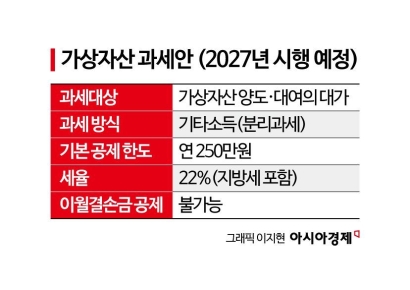 "Stocks Are Not Taxed, but Annual Crypto Gains Over 2.5 Million Won to Be Taxed Next Year... Investors Push Back"
- "Not Jealous of Winning the Lottery"... Entire Village Stunned as 200 Million Won Jackpot of Wild Ginseng Cluster Discovered at Jirisan
- "Rather Than Endure a 1.5 Million KRW Stipend, I'd Rather Earn 500 Million in the U.S." Top Talent from SNU and KAIST Are Leaving [Scientists Are Disappearing] ①
- "How Did an Employee Who Loved Samsung End Up Like This?"... Past Video of Samsung Electronics Union Chairman Resurfaces
- "Even With a 90 Million Won Salary and Bonuses, It Doesn’t Feel Like Much"... A Latecomer Rookie Who Beat 70 to 1 Odds [Scientists Are Disappearing] ③
He also urged, “Even though the second wave of COVID-19 is approaching and the virus is rapidly spreading nationwide, the war against COVID-19 is not over yet. The greatest enemy of COVID-19 is ‘complacency.’ I ask citizens to strictly follow quarantine rules such as wearing masks, washing hands frequently, and maintaining social distance to protect themselves and the Gwangju community, even if it is inconvenient.”
© The Asia Business Daily(www.asiae.co.kr). All rights reserved.