Will the Securities Tax Reform Proposal Be a Remedy or a Poison?
Negative Concerns Remain High, but Transaction Tax Decreases and Profit-Loss Offset Effects Also Occur
![[Image source=Yonhap News]](http://www.asiae.co.kr/news/img_view.htm?img=2020062611130428073_1593137584.jpg)
[Asia Economy Reporter Eunmo Koo] Opinions are divided on how the government's securities tax reform plan, centered on the expansion of capital gains tax imposition, will affect the stock market. While many analyses suggest negative impacts such as double taxation controversies, there are also forecasts that tax burdens could decrease for investors due to reductions in securities transaction tax and the offsetting of gains and losses.
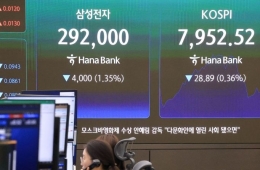
According to the Korea Exchange on the 26th, most securities stocks failed to avoid declines the previous day. Kiwoom Securities (-6.02%) plummeted more than 5%, while Mirae Asset Daewoo (-4.73%), Meritz Securities (-4.63%), NH Investment & Securities (-4.31%), Korea Financial Group (-3.83%), Samsung Securities (-3.76%), and Hanwha Investment & Securities (-3.61%) also fell.
This is interpreted as a reflection of the market's negative stance on the government's announced "Financial Tax System Advancement Direction." The tax reform plan mainly introduces financial investment income tax, imposing comprehensive taxation on all income generated from financial investment products, and levies capital gains tax on all stock investors. It also includes provisions for offsetting income and losses within financial investment assets and a phased reduction of securities transaction tax.
In the securities industry, the prevailing view is that the tax reform plan will negatively impact securities firms' performance. Since the capital gains tax is introduced fully but the securities transaction tax is not completely abolished, double taxation controversies may arise, potentially leading to a decline in investment incentives for domestic stocks. Hyejin Park, a researcher at Daishin Securities, stated, "It is impossible to have an equivalent exchange between the reduction of securities transaction tax and the imposition of capital gains tax. While capital gains tax imposition will not lead to a decrease in stock trading, the increase in alternative investment options could be a cause of weakened competitiveness."
Jiyoung Han, a researcher at Cape Investment & Securities, also commented, "From the government's perspective, supplementing the revenue loss from the phased abolition of securities transaction tax with capital gains tax is a natural step." However, she added, "Choosing to maintain rather than phase out the transaction tax, combined with the earlier-than-expected timing of full capital gains tax imposition, means that the double taxation issue arising from 2023 could reduce investors' incentives to invest in domestic stocks."
However, some opinions suggest it is premature to conclude that this policy will negatively affect securities stocks. Although capital gains tax will be imposed, the reduction in transaction tax and the allowance of offsetting gains and losses and carryforward deductions could reduce tax burdens for investors who trade frequently and have incurred losses.
Hot Picks Today
 If They Fail Next Year, Bonus Drops to 97 Million Won... A Closer Look at Samsung Electronics DS Division’s 600M vs 460M vs 160M Performance Bonuses
- Opening a Bank Account in Korea Is Too Difficult..."Over 150,000 Won in Notarization Fees Just for a Child's Account and Debit Card" [Foreigner K-Finance Status]②
- President Lee Orders Thorough Investigation and Safety Inspection of Rebar Omission in GTX-A Samsung Station Section
- Room Prices Soar from 60,000 to 760,000 Won and Sudden Cancellations: "We Won't Even Buy Water in Busan" — BTS Fans Outraged
- "Who Is Visiting Japan These Days?" The Once-Crowded Tourist Spots Empty Out... What's Happening?
Daejun Kim, a researcher at Korea Investment & Securities, analyzed, "If, through future consultations, the capital gains tax rate applied to financial investment income becomes lower than major countries' rates, or if unlimited carryforward deductions are extended as in Anglo-American countries, and if the additional tax exemption threshold is set higher than 20 million won, perceptions of capital gains tax are likely to change, making it premature to make judgments now."
© The Asia Business Daily(www.asiae.co.kr). All rights reserved.
!["Please Help Us": How Much Do Those Bowing 90 Degrees These Days Actually Earn? [Data Pick]](https://cwcontent.asiae.co.kr/asiaresize/307/2026052010120870131_1779239528.png)