"'Seoul Station Random Assault' Dismissal, Will the Public Understand?…Legislation Committee Criticizes 'Judicial Reform' (Summary)"
![[Image source=Yonhap News]](http://www.asiae.co.kr/news/img_view.htm?img=2020062311244820774_1592879088.jpg)
[Asia Economy Reporter Lee Ji-eun] At the Legislation and Judiciary Committee meeting held on the 23rd amid the boycott by the United Future Party, ruling coalition lawmakers checked the judiciary's commitment to 'judicial reform.' Following the heightened calls for 'prosecutorial reform' at the committee on the 18th, the next target was judicial reform. Voices criticizing the court's dismissal of the arrest warrant in the recent 'Seoul Station random assault case' also emerged.
Democratic Party lawmaker So Byung-chul criticized at the committee, "When reading the reasons for the dismissal of the Seoul Station random assault case, can the public really understand this?" expressing that the public finds it difficult to sympathize with the court.
The Seoul Station random assault case involved suspect Lee, who assaulted a woman he did not know on the first floor of Seoul Station on the afternoon of the 26th of last month and fled. The victim suffered injuries including a torn eye area and a fractured left cheekbone. The court dismissed the arrest warrant twice and proceeded with a non-custodial indictment.
Regarding this, Rep. So said, "Afterwards, random assaults also occurred in Changwon and Geochang but were ultimately dismissed," adding, "Would the victim understand the 700- and 1100-character dismissal reasons from her perspective? If she suffers retaliatory assault (while not in custody), who will take responsibility?" During this, he also read critical comments from the public posted on portal site articles.
Calls for judicial reform were also strong. Democratic Party lawmaker Kim Nam-guk pointed out, "The voices of the public wanting judicial reform are high, and while not belittling the court's efforts, they were insufficient." This was in reference to the judicial reform plan announced by Chief Justice Kim Myung-soo in March.
He said, "Making the Supreme Court's Ethics Audit position an open appointment is only a minor change and cannot solve the fundamental (judicial scandal) problem," adding, "Calling the Chief Justice the owner or chairman and referring to district court chiefs as subsidiary company presidents or bosses is the root cause of the chronic judicial scandal problem." He also pointed out that there are only four external members in the Judicial Administration Advisory Council as a problem.
Democratic Party lawmaker Kim Yong-min asked Chief Prosecutor Cho, "The major factors of the judicial scandal were interference in trials, trial trading, and a blacklist of judges. What measures are being taken?" He also asked, "In March last year, the prosecution completed its investigation into the judicial scandal and notified the Supreme Court of 66 people involved. What was the outcome?" In response, Chief Prosecutor Cho said, "No special review was conducted for 32 people whose statute of limitations had passed, and disciplinary committees have been held for only 10 out of the remaining 34."
Democratic Party lawmaker Park Beom-gye criticized the court for placing more weight on the prosecution's testimony than that of the key witness Han Man-ho in the case of former Prime Minister Han Myeong-sook, questioning, "Isn't this a regression of the trial-centered principle?" Chief Prosecutor Cho refrained from commenting, saying, "I cannot speak about ongoing cases."
Democratic Party lawmaker Park Joo-min criticized the lenient disciplinary actions against judges, saying, "Has a judge ever resigned after being disciplined? They usually only receive suspension, and from the general public's perspective, if a judge who committed unconstitutional acts returns and presides over trials again, doubts may arise." Chief Prosecutor Cho responded, "If it is said that they should not remain in the judicial office, the National Assembly can discuss impeachment."
In a subsequent question, Open Democratic Party lawmaker Kim Jin-ae said, "When Chief Prosecutor Cho mentions judge impeachment, it feels like saying 'If the National Assembly can do it, then try it,'" criticizing, "Impeachment in the National Assembly is politically problematic and difficult, so passing responsibility to the Assembly while the court ignores responsibility is problematic."
Judiciary Committee Chairman Yoon Ho-jung also emphasized the urgency of judicial reform, saying, "The opinions of lawmakers are the voice of the people, so please reflect them in related policies." The United Future Party judiciary committee members, who did not attend the meeting on the 18th, also did not attend this meeting.
Hot Picks Today
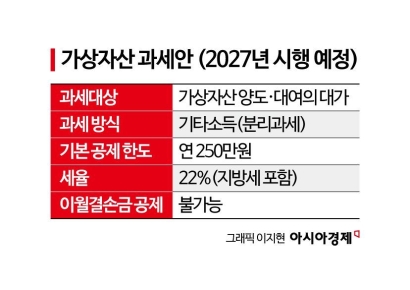 "Stocks Are Not Taxed, but Annual Crypto Gains Over 2.5 Million Won to Be Taxed Next Year... Investors Push Back"
- "Not Jealous of Winning the Lottery"... Entire Village Stunned as 200 Million Won Jackpot of Wild Ginseng Cluster Discovered at Jirisan
- "Rather Than Endure a 1.5 Million KRW Stipend, I'd Rather Earn 500 Million in the U.S." Top Talent from SNU and KAIST Are Leaving [Scientists Are Disappearing] ①
- "How Did an Employee Who Loved Samsung End Up Like This?"... Past Video of Samsung Electronics Union Chairman Resurfaces
- "Even With a 90 Million Won Salary and Bonuses, It Doesn’t Feel Like Much"... A Latecomer Rookie Who Beat 70 to 1 Odds [Scientists Are Disappearing] ③
Meanwhile, at the committee meeting on the 18th, lawmakers criticized Minister of Justice Choo Mi-ae over allegations related to the former Prime Minister Han's political funds law violation case and the suppression of prosecution inspection, demanding corrective action. Minister Choo also said, "Correction is necessary," and instructed Prosecutor General Yoon Seok-youl to have the Supreme Prosecutors' Office's Human Rights Department and Inspection Department jointly investigate the case. Prosecutor General Yoon officially announced on the 21st, three days after the instruction, that he would accept it.
© The Asia Business Daily(www.asiae.co.kr). All rights reserved.







