A 'Support Center' to Nurture Dreams of Students in Gwangju Region Opens
Gwangju Metropolitan Office of Education Promotes Construction of Gwangju Student Culture and Arts Support Center

[Asia Economy Honam Reporting Headquarters, Reporter Yoon Jamin] A dedicated space for creative arts and arts maker experiences, where students in the Gwangju area can nurture their dreams, talents, and artistic sensibilities, will be established.
The Gwangju Metropolitan Office of Education announced on the 21st that it plans to establish the Gwangju Student Culture and Arts Support Center (tentative name) on the site of Gwangju Jungang Elementary School, a two-story building with a total floor area of 2,790㎡.
With a total project cost of 7.38 billion KRW, the center is scheduled to open in September next year and is currently in the architectural design phase.
The establishment of the Gwangju Student Culture and Arts Support Center is an educational superintendent’s pledge project aimed at fostering students' creative convergence arts capabilities to lead the 4th Industrial Revolution era, based on the "Gwangju Metropolitan Office of Education School Culture and Arts Education Promotion Ordinance" enacted by the city council in March last year.
The center plans to operate art creation experience programs, arts maker programs, and vacation art camps for elementary and middle school students in collaboration with the National Asia Culture Center’s Children’s Culture Center and the Gwangju Youth Life Design Center.
Additionally, in connection with the Dong-gu Miro Center, specialized programs for youth and local residents will be conducted to establish a regional culture and arts education platform centered on the Art Street.
The Office of Education decided to build 12 experience spaces tailored to the characteristics of programs such as practical music, Korean traditional music (gugak), Nanta (Korean percussion performance), composition, Korean painting, lifestyle design, crafts, architecture, classical dance, practical dance, theater, and video production, so that students can experience music, fine arts, performing arts, and video arts comprehensively at the Gwangju Student Culture and Arts Support Center (tentative name).
Hot Picks Today
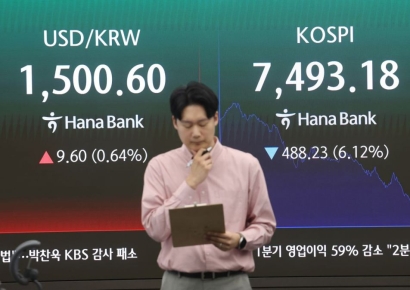 After Topping 8,000 Instead of Hitting 10,000... KOSPI Plunges—When Will It Rebound?
- "Samsung and Hynix Were Once for the Underachievers"... Hyundai Motor Employee's Lament
- [Breaking] Court Rules Against Samsung Electronics Union...1 Billion Won per Day Penalty for Exceeding Strike Scope
- Six Economic Organizations Urge Withdrawal of Samsung Electronics Strike Plan...Warn of National Loss of Opportunity
- "That? It's Already Stashed" Nightlife Scene Crosses the Line [ChwiYak Nation] ③
Superintendent Jang Huiguk said, “Art education suitable for the 4th Industrial Revolution era should not be limited to traditional production and appreciation but should advance toward creation and communication. The center should exist not only for students’ art education but also as a space where youth, artists, and local residents can enjoy culture and arts together, centered on Art Street. I hope it will establish itself as a cultural and artistic hub through collaboration and communication with related local institutions.”
© The Asia Business Daily(www.asiae.co.kr). All rights reserved.







