"Hotter Every Year and Stronger Typhoons"... Establishment of Highest Typhoon Category and Inclusion of Humidity in 'Heatwave Warnings'
Heatwave Advisory Issued with Highest Daily Feels-Like Temperature
Seoul Area Divided into 4 Advisory Zones

[Asia Economy Reporter Hyunju Lee] A new heatwave warning standard reflecting temperature and humidity will be established. The highest typhoon category, 'Super Strong,' will be newly introduced, and the Seoul area will be subdivided into four warning zones.
On the 8th, the Korea Meteorological Administration announced changes to the heatwave warning criteria and improvements to typhoon forecast information. These improvements were made due to the increasing number of heatwave days and the tendency for typhoons to become stronger.
To supplement the current heatwave warning standard, which only considers the daily maximum temperature, a new standard based on the apparent temperature reflecting both temperature and humidity will be introduced. Since the perceived temperature rises with increasing humidity at the same temperature, within the temperature range of 30 to 40 degrees Celsius, using 50% humidity as a baseline, an increase or decrease of 10% in humidity will correspond to an approximate 1-degree increase or decrease in perceived temperature. Accordingly, the heatwave warning criteria will change from daily maximum temperature to daily maximum apparent temperature, with threshold values set at 33 degrees for heatwave advisories and 35 degrees for heatwave warnings. Heatwave impact forecasts and the heat sensation index service will also provide information based on apparent temperature.
The forecast period for tropical depressions before typhoon development will be extended, and the highest typhoon intensity category, 'Super Strong,' will be introduced. Tropical depressions and typhoons are types of tropical cyclones; in Korea, wind speeds near the center of 17 m/s or less are classified as tropical depressions, and those above as typhoons. To support pre-typhoon disaster prevention, the forecast period for tropical depression information will be extended from the current 1 day to 5 days. Typhoon intensity will be classified as 'Super Strong' when maximum wind speeds reach or exceed 54 m/s. Among typhoons occurring in the past 10 years, the frequency of 'Very Strong' typhoons accounted for half. The previous classification of typhoon size into small, medium, and large will be discontinued, and instead, the areas affected by strong winds (15 m/s or more) and storms (25 m/s or more) blowing from the typhoon center will be provided.
Hot Picks Today
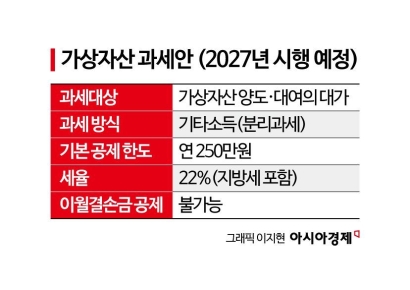 "Stocks Are Not Taxed, but Annual Crypto Gains Over 2.5 Million Won to Be Taxed Next Year... Investors Push Back"
- "Not Jealous of Winning the Lottery"... Entire Village Stunned as 200 Million Won Jackpot of Wild Ginseng Cluster Discovered at Jirisan
- "Even With a 90 Million Won Salary and Bonuses, It Doesn’t Feel Like Much"... A Latecomer Rookie Who Beat 70 to 1 Odds [Scientists Are Disappearing] ③
- "Rather Than Endure a 1.5 Million KRW Stipend, I'd Rather Earn 500 Million in the U.S." Top Talent from SNU and KAIST Are Leaving [Scientists Are Disappearing] ①
- "How Did an Employee Who Loved Samsung End Up Like This?"... Past Video of Samsung Electronics Union Chairman Resurfaces
Meanwhile, to prepare for localized heavy rain and heatwaves in the Seoul area due to climate change, Seoul's warning zones will be divided from the entire city into four detailed zones: Northwest, Northeast, Southwest, and Southeast. Over the past five years, the number of times heatwave advisories reached the criteria varied by zone, with a maximum of 134 times in the Southeast zone and a minimum of 105 times in the Northwest zone, showing a difference of 29 occurrences.
© The Asia Business Daily(www.asiae.co.kr). All rights reserved.







