Five Areas Including Gyeongbuk Selected as 'Industrial Complex Revitalization Zones'... "60,000 Jobs to Be Created Over 3 Years"
Daegu, Yeosu, Gwangju Newly Selected for Smart Industrial Complexes
Linking Industrial Complex Regeneration, Urban Regeneration New Deal, and Smart City Initiatives

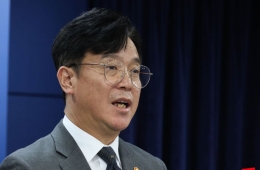
Jeong Seung-il, Vice Minister of the Ministry of Trade, Industry and Energy (Co-Chairman of the Committee for Strengthening the Competitiveness of Aging Industrial Complexes), presided over the "Committee for Strengthening the Competitiveness of Aging Industrial Complexes" on the 7th at the Job Committee's main conference room in Gwanghwamun, Seoul. The meeting was attended by about 20 members, including ex officio members (director-level) from eight ministries such as the Ministry of Land, Infrastructure and Transport and the Job Committee, as well as appointed members. On this day, Vice Minister Jeong discussed the selection of five regions, including Gyeongbuk, as "Industrial Complex Renovation" areas, the draft plan for the selection of industrial complex renovation and smart industrial complexes, and the revision of the committee's operating rules.
(Photo by Ministry of Trade, Industry and Energy)
[Asia Economy Reporter Moon Chaeseok] The government has selected five locations, including Gumi in Gyeongbuk, Gwangju, and Daegu, as industrial complex renovation areas. This is to revitalize the regional economy, which has been depressed due to the novel coronavirus disease (COVID-19). The government expects to create 60,000 jobs and generate 48 trillion won in production over the next three years.
On the 7th, the Ministry of Trade, Industry and Energy and the Ministry of Land, Infrastructure and Transport jointly held the Committee for Strengthening the Competitiveness of Aging Core Industrial Complexes and announced the selection of five renovation areas. The industrial complex renovation is a job creation project that focuses support on industrial complexes as innovation hubs for regional industries.
When a metropolitan local government establishes an industrial complex innovation plan by linking core industrial complexes with connected complexes or urban areas within the region, the government provides consulting and evaluation, then supports the plan by investing ministry budgets over three years. The government plans to increase the number of renovation areas to about five this year, 10 next year, and 15 in 2022.
Among the five renovation areas, the core industrial complexes of Seongseo, Yeosu, and Gwangju Advanced were selected as new smart industrial complexes. The government plans to expand smart industrial complexes to 4 this year, 7 next year, 10 in 2022, and 20 by 2030.

Gyeongbuk Province is designing a cooperation model between core and connected industrial complexes focusing on next-generation mobile displays and others. Through urban regeneration and shared transportation systems, they aim to improve job conditions centered on industrial complexes. The goals include creating 21,000 jobs over three years, increasing the number of global leading companies by 20, and increasing technology innovation-type companies by 12%.

Gwangju City plans to integrate the existing light and home appliances industry with the automotive electronic parts industry. They will link the advanced industrial complex (electronic parts and module supply) with Bitgreen Industrial Complex (eco-friendly finished cars) and Hanam Industrial Complex (mold and processed parts supply). The goals include creating 10,000 jobs, increasing the concentration of automotive industry workers from 18.5% (next year) to 20% (2023), and raising the youth employment rate from 37.5% (next year) to 48.4% (2023).

Daegu City will advance its existing main industries of machinery metal, transportation equipment, and textiles into robotics and functional materials. They will establish a regulatory-free zone for collaborative robots, an innovative startup ecosystem, manufacturing robot demonstration support, industrial complex-type smart city (Challenge), and an industrial complex imagination hub. They aim to create 5,000 jobs and increase production by 1.7 trillion won.

Incheon City will transform its existing root industries into high value-added bio (diagnostic kits, reagent manufacturing) and materials, parts, and equipment industries (future car parts, rare earths, etc.). They will implement industrial complex-type smart city (Challenge), aging industrial complex regeneration, bio raw material development support, and improvement of root company process environments to create 7,000 jobs by 2023, increase production by 4.5 trillion won, and raise worker satisfaction from 75 points to 85 points.

Jeonnam Province will create an ecosystem for next-generation materials and parts industries such as secondary batteries linked to its main industries of chemicals and steel. They also propose a strategy to utilize large-scale information and communication technology (ICT) infrastructure for integrated management of environment, safety, transportation, and logistics between adjacent core and connected industrial complexes. Alongside aging industrial complex regeneration, construction of happy housing, and maintenance of aging infrastructure, they aim to create 15,000 jobs over three years, increase production by 35 trillion won, reduce industrial accidents by 10%, decrease air pollution emissions by 15%, and save 15 billion won in logistics costs.
The Ministry of Trade, Industry and Energy, the Ministry of Land, Infrastructure and Transport, and 11 other ministries along with the Job Committee plan to support the five renovation areas by promoting industrial complex smartization, environmental improvement, and enhancement of startup, employment, and cultural conditions. They will finalize the innovation plans for the five renovation areas by December.
The Ministry of Trade, Industry and Energy will support manufacturing-service convergence, joint innovation R&D among multiple companies, and manufacturing innovation infrastructure projects in newly selected smart industrial complexes and connected complexes along with existing smart industrial complexes. The Ministry of Land, Infrastructure and Transport will actively support infrastructure expansion and residential environment improvement in Gyeongbuk, Incheon, and Jeonnam, where new industrial complex regeneration projects are planned, as well as in existing regeneration areas such as Gyeongbuk, Gwangju, Daegu, and Incheon. The Job Committee will lead inter-ministerial cooperation to shift from existing ministry- and project-based support methods to comprehensive package support and performance management focused on outcome goals, in line with the industrial complex renovation plan announced last November.
Jung Seung-il, Vice Minister of the Ministry of Trade, Industry and Energy, said, "Despite difficulties due to COVID-19, cities and provinces have created future target industry selections, investment activation, and regional job creation plans considering the growth potential of regional industries, their importance to the regional economy, and the possibility of industry convergence. Now it is the government's turn to support the innovation plans established by the regions to strengthen the competitiveness of the industrial complex-centered industrial ecosystem."
Park Sun-ho, First Vice Minister of the Ministry of Land, Infrastructure and Transport, said, "In the post-COVID era, with declining regional vitality and low growth, no single ministry can solve complex problems alone. If related ministries unite their efforts through this industrial complex renovation project, the competitiveness of industrial complexes and regions will improve." He emphasized, "We will link industrial complexes and surrounding urban areas into a single economic and living zone and transform them into preferred workplaces and living spaces for workers and their families by integrating various support policies such as smart cities, urban regeneration New Deal, and happy housing."
Hot Picks Today
 "Stocks Are Not Taxed, but Annual Crypto Gains Over 2.5 Million Won to Be Taxed Next Year... Investors Push Back"
- "Don't Throw Away Coffee Grounds" Transformed into 'High-Grade Fuel' in Just 90 Seconds [Reading Science]
- [Lee Jaemyung Administration One Year] "A Breakwater in Crisis, a Blade Against Waste"... Planning Ministry's Fiscal Tightening Earns High Marks
- "Groups of 5 or More Now Restricted"... Unrelenting Running Craze Leaves Citizens and Police Exhausted
- "Even With a 90 Million Won Salary and Bonuses, It Doesn’t Feel Like Much"... A Latecomer Rookie Who Beat 70 to 1 Odds [Scientists Are Disappearing] ③
Kim Yong-gi, Vice Chairman of the Job Committee, said, "The first step of industrial complex innovation centered on job creation has been taken. We will strengthen field-centered communication and city/province-centered performance management, add measures such as financial support and deregulation, and cooperate with related ministries to ensure quality job creation and industrial innovation."
© The Asia Business Daily(www.asiae.co.kr). All rights reserved.