[Weekly Market Review] KOSPI's Strong V-Shaped Rebound... The Power of the 'Donghak Ant Movement'
Foreigners Net Sell 7,657 Billion KRW but KOSPI Rises 7.8%
"Domestic Market Shows Strongest Rebound Among Global Markets"
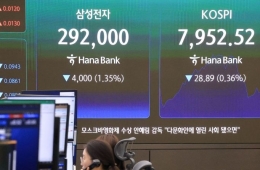
[Asia Economy Reporter Minji Lee] In the second week of April, the domestic stock market has continued a strong V-shaped rebound after hitting a low due to the spread of the novel coronavirus infection (COVID-19). The rebound strength compared to the low point has intensified as individual investors have poured in new funds at an unimaginable scale.
![[Image source=Yonhap News]](http://www.asiae.co.kr/news/img_view.htm?img=2020041015560770873_1586501767.jpg)
According to the Korea Exchange on the 11th, the KOSPI closed this week at 1,860.70, up 135.26 points (7.8%) from the previous week. Except for one day, the KOSPI ended higher every day this week. On the 6th, it rose 3.85% in a single day, marking the highest increase this month.
During this period, Samsung Electronics rose about 4.8%, from 47,000 KRW to 49,250 KRW based on the closing price on the 3rd. SK Hynix also increased about 5.6%, from 79,600 KRW to 84,100 KRW during the same period.
Individual investors bought stocks worth 304.2 billion KRW this week. Foreigners and institutions net sold 765.7 billion KRW each, while institutional investors net bought 451.5 billion KRW. Kim Hak-gyun, head of Shin Young Securities Center, said, “Due to individual investors’ buying momentum, the domestic stock market showed the strongest rebound among major global markets,” adding, “Since stock prices fell at an unprecedented speed in February and March, the subsequent rebound is highly likely to take a V-shaped form.”
According to Shin Young Securities Research Center, looking at the fluctuation rates from the year’s lowest points of major global stock markets until the 9th, the KOSDAQ index showed the highest increase at 44%. It was followed by Russia (38%), Argentina (27%), KOSPI (26%), Germany (25%), U.S. S&P (25%), and Brazil (22%). Shanghai (6%), Hong Kong (12%), and Hong Kong H-Index (15%) showed lower fluctuation rates compared to major markets.
The KOSDAQ index rose about 6%, from a closing price of 573.01 on the 3rd to 611.26. Celltrion Healthcare, a large-cap stock, fell about 2.6%, from 81,900 KRW to 79,700 KRW. It is believed that the block deal news involving Singapore’s sovereign wealth fund Temasek followed by private equity fund One Equity Partners (OEP) affected the stock price.
In the domestic stock market, stocks related to telemedicine, protective clothing, and vaccines showed strength due to the impact of COVID-19. Although diagnostic kit stocks had been strong, profit-taking sales emerged, and investor sentiment appears to have shifted to vaccine and therapeutic-related stocks.
For example, Shinpoong Pharmaceutical, which is reportedly considering developing the malaria treatment drug 'Piramex' as a COVID-19 treatment, surged about 54%, from 15,400 KRW to 23,750 KRW this week. Green Cross, developing COVID-19 plasma therapy and vaccines, rose 12%, from 140,500 KRW to 158,000 KRW. On the other hand, Seegene, a leading company in COVID-19 diagnostic kits, fell 0.8%, and LabGenomics plunged 21.6%.
Additionally, 5G-related stocks in the KOSDAQ market recorded gains. The telecommunications service sector rose 16.7% over the week. KB Securities’ Small Cap Team explained, “Telecom stocks stood out as expectations for global network investments increased due to a rebound in net 5G subscriber additions and a surge in traffic.”
Oil prices showed high volatility this week as OPEC+ (the Organization of the Petroleum Exporting Countries and a coalition of 10 oil-producing countries including Russia) prepared for an extraordinary meeting, reflecting expectations for a production cut agreement. On the 9th, OPEC+ successfully agreed to cut production by 10 million barrels per day during May and June.
Hot Picks Today
 If They Fail Next Year, Bonus Drops to 97 Million Won... A Closer Look at Samsung Electronics DS Division’s 600M vs 460M vs 160M Performance Bonuses
- Opening a Bank Account in Korea Is Too Difficult..."Over 150,000 Won in Notarization Fees Just for a Child's Account and Debit Card" [Foreigner K-Finance Status]②
- Seongdong Police Station Chief Placed on Standby for Misuse of Official Vehicle... National Police Agency Launches Audit
- Room Prices Soar from 60,000 to 760,000 Won and Sudden Cancellations: "We Won't Even Buy Water in Busan" — BTS Fans Outraged
- "Who Is Visiting Japan These Days?" The Once-Crowded Tourist Spots Empty Out... What's Happening?
Kim Byung-yeon, a researcher at NH Investment & Securities, diagnosed, “Investment sentiment turned favorable as the U.S. hinted at a fourth economic stimulus package worth at least 1 trillion dollars,” adding, “With policy coordination among countries and a rebound in China’s real economy indicators, the domestic stock market maintained its upward trend.”
© The Asia Business Daily(www.asiae.co.kr). All rights reserved.
!["Please Help Us": How Much Do Those Bowing 90 Degrees These Days Actually Earn? [Data Pick]](https://cwcontent.asiae.co.kr/asiaresize/307/2026052010120870131_1779239528.png)