Moody's Downgrades G20 GDP Growth Rate to Negative
Due to the Impact of COVID-19, Lowered Again After 3 Weeks... G20 -0.5%
South Korea's Growth This Year 0.1%...Significantly Downgraded from 1.4% Earlier This Month
Recovery Expected to Begin from Q2 Next Year
![[Source=Moody's/https://www.moodys.com/]](http://www.asiae.co.kr/news/img_view.htm?img=2020032609402742623_1585183227.jpg)
[Asia Economy Reporter Hyunwoo Lee] Moody's, an international credit rating agency, has revised downward its forecast, stating that the economies of the world's 20 major countries (G20) will contract by 0.5% this year due to the recession caused by the novel coronavirus disease (COVID-19). It is expected that corporate activities and consumption will continuously shrink throughout the first half of this year, followed by a gradual recovery in the second half of this year and next year.
On the 25th (local time), Moody's announced in a report on the international economic outlook that the G20's gross domestic product (GDP) growth rate will record minus 0.5% amid the recession caused by COVID-19. Moody's stated, "In November last year, the G20 economy was expected to grow by 2.6%, but due to the contraction of household and corporate activities caused by the COVID-19 outbreak and the increasing fiscal burden on governments, we have revised downward the economic growth forecast."
Most advanced countries, including the United States (-2.0%), Eurozone (-2.2%), Japan (-2.4%), United Kingdom (-3.0%), France (-1.4%), and Italy (-2.7%), are expected to experience negative growth, while South Korea (0.1%) is expected to show slight growth. Emerging countries such as China (3.3%) and India (2.5%) are also expected to see their economic growth rates significantly weaken compared to last year. Corporate activities and demand are expected to contract sharply through the first and second quarters of this year, hindering growth, with recovery expected to begin from the second quarter of next year.
Moody's analyzed, "Advanced countries will see GDP growth rates return to a recovery trend after the second quarter of 2021 through income support and policy measures to reduce corporate default risks, but emerging economies, which relatively lack social safety nets and resources for income support for corporations and households, are expected to slow down relatively more."
Hot Picks Today
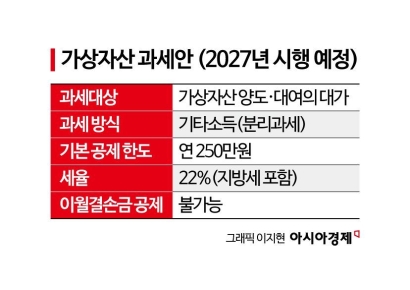 "Stocks Are Not Taxed, but Annual Crypto Gains Over 2.5 Million Won to Be Taxed Next Year... Investors Push Back"
- "Not Jealous of Winning the Lottery"... Entire Village Stunned as 200 Million Won Jackpot of Wild Ginseng Cluster Discovered at Jirisan
- "Even With a 90 Million Won Salary and Bonuses, It Doesn’t Feel Like Much"... A Latecomer Rookie Who Beat 70 to 1 Odds [Scientists Are Disappearing] ③
- "Rather Than Endure a 1.5 Million KRW Stipend, I'd Rather Earn 500 Million in the U.S." Top Talent from SNU and KAIST Are Leaving [Scientists Are Disappearing] ①
- "How Did an Employee Who Loved Samsung End Up Like This?"... Past Video of Samsung Electronics Union Chairman Resurfaces
© The Asia Business Daily(www.asiae.co.kr). All rights reserved.







