Nationwide 'Shincheonji War'... Accelerating COVID-19 Mass Testing
![On the afternoon of the 27th, at the Shincheonji Bedro Jiseongjeon in Buk-gu, Gwangju (an administrative disposition notice indicating facility closure is attached to the entrance door of Gwangju Church). [Image source=Yonhap News]](http://www.asiae.co.kr/news/img_view.htm?img=2020022809041784288_1582848257.jpg)
On the afternoon of the 27th, at the Shincheonji Bedro Jiseongjeon in Buk-gu, Gwangju (an administrative disposition notice indicating facility closure is attached to the entrance door of Gwangju Church). [Image source=Yonhap News]
View original image[Asia Economy Reporters Jeong Il-woong, Lee Hyun-joo, Lee Kwan-joo] The government has secured the list of Shincheonji Church of Jesus (Shincheonji) members, the starting point of the COVID-19 outbreak, accelerating the nationwide full-scale investigation of these members for COVID-19.
According to local governments and police nationwide on the 28th, Seoul City conducted a telephone survey targeting 28,317 Shincheonji members whose list was received from the government the previous day, and about 1,500 were found to be unreachable. The police are visiting each household to locate those who did not answer the phone.
Gyeonggi Province, which is the most proactive in securing the Shincheonji list, began a full investigation of 33,582 Shincheonji members in the province from the 26th. Gyeonggi Province first conducted COVID-19 tests on 4,890 residents of Gyeonggi who attended the Shincheonji General Assembly headquarters worship held in Gwacheon on the 16th of this month, among 9,930 attendees, confirming 215 symptomatic individuals. The province is working with the police to locate 195 people who could not be reached by phone and 28 people without contact information.
Daejeon City conducted a full investigation of 12,335 Shincheonji members and identified 167 people with suspected COVID-19 symptoms. These symptomatic individuals were instructed to self-quarantine and visit screening clinics for testing, while the remaining asymptomatic members will have their health status checked twice daily by phone for two weeks by the local autonomous district. For the 807 who did not respond, additional investigations will be conducted with Shincheonji, and if contact is still not possible, the police will be requested to locate them.
In Chungcheongnam-do, health status was surveyed for 4,736 out of 5,225 members who were contacted, with 87 classified as symptomatic. Among them, 6 live in other regions, and specimens were collected from 81 symptomatic individuals for testing. For the 519 unreachable members, each city and county will re-verify and then request the police to locate them. Chungnam Province also plans to conduct a full investigation of 1,305 Shincheonji trainees in the province, whose list was additionally received from the Central Disaster and Safety Countermeasures Headquarters the previous day.
In Ulsan, telephone surveys were conducted on 3,802 out of 4,013 Shincheonji members in the region, with 154 classified as symptomatic. There were 181 unreachable members and 23 who refused to answer calls. Ulsan City explained that those who refused calls hung up during the phone conversation.
Jeju Province started telephone interviews from this day after receiving information on 102 Shincheonji trainees in the province. The previous day, health status was checked for 646 Shincheonji members in Jeju, with 36 residents showing symptoms. However, all symptomatic individuals tested negative. Jeju Province is working with the police to locate 12 unreachable Shincheonji members (9 unreachable, 3 residing outside the province including overseas). Gangwon Province also secured a list of 10,331 Shincheonji members in the region and began confirming their whereabouts on the same day.
Hot Picks Today
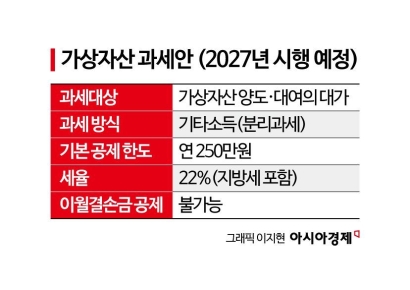 "Stocks Are Not Taxed, but Annual Crypto Gains Over 2.5 Million Won to Be Taxed Next Year... Investors Push Back"
- "Not Jealous of Winning the Lottery"... Entire Village Stunned as 200 Million Won Jackpot of Wild Ginseng Cluster Discovered at Jirisan
- "Rather Than Endure a 1.5 Million KRW Stipend, I'd Rather Earn 500 Million in the U.S." Top Talent from SNU and KAIST Are Leaving [Scientists Are Disappearing] ①
- "How Did an Employee Who Loved Samsung End Up Like This?"... Past Video of Samsung Electronics Union Chairman Resurfaces
- "Even With a 90 Million Won Salary and Bonuses, It Doesn’t Feel Like Much"... A Latecomer Rookie Who Beat 70 to 1 Odds [Scientists Are Disappearing] ③
Earlier, the Central Disaster and Safety Countermeasures Headquarters received a list of 212,324 domestic Shincheonji members and 33,281 overseas members from the Shincheonji headquarters, and additionally obtained a list of 65,127 Shincheonji trainees the previous day. The police formed a 'COVID-19 Rapid Response Team' with 5,753 officers deployed across 18 provincial police agencies and 255 police stations nationwide to locate suspected COVID-19 patients and support epidemiological investigations by health authorities.
© The Asia Business Daily(www.asiae.co.kr). All rights reserved.







