Hong Nam-ki: "Rapid Execution of 20.8 Billion KRW for Quarantine Response Budget... Contingency Fund Support if Insufficient" (Update)
Charter Flight Dispatch Budget 1 Billion KRW... Immediate Execution Upon Dispatch Decision
Government "Fully Committed to Ensuring Public Safety and Minimizing Economic Impact"
![[Image source=Yonhap News]](http://www.asiae.co.kr/news/img_view.htm?img=2020012808351825372_1580168118.jpg)
[Asia Economy Reporter Jang Sehee] Hong Nam-ki, Deputy Prime Minister and Minister of Economy and Finance, said on the 28th, "We will swiftly execute a total of 20.8 billion KRW in quarantine response budgets to actively support proactive quarantine measures."
On the same day, Deputy Prime Minister Hong held an emergency meeting with related ministers at the Government Seoul Office to review quarantine budget support related to the novel coronavirus and minimize economic impact, announcing this plan.
Deputy Prime Minister Hong explained, "We will promptly execute the quarantine response budget totaling 20.8 billion KRW, which includes 6.7 billion KRW for establishing and operating the quarantine response system, 5.2 billion KRW for quarantine and diagnostic expenses, and 2.9 billion KRW for isolation treatment costs, all of which are already reflected in this year's budget. In particular, the 1 billion KRW budget for dispatching charter flights to protect overseas nationals is also included in the budget, so we are preparing to execute it immediately upon decision to dispatch the charter flights."
He added, "If the already secured budget is insufficient or additional expenses arise in the future, we will support the 2 trillion KRW contingency fund allocated in this year's budget."
The meeting discussed ▲ budget support status ▲ ripple effects on the real economy ▲ ripple effects on domestic and international financial markets and future response measures.
It was also emphasized that careful inspection of potential impacts on the real economy will be conducted, focusing on minimizing negative effects.
Deputy Prime Minister Hong stated, "For domestic economic activities such as domestic demand, the impact is still limited, and it is necessary to observe the future developments more closely. Referring to past cases such as SARS in 2003 and MERS in 2015, we will thoroughly analyze the impact on domestic demand sectors like tourism and services by scenario and implement necessary measures."
Regarding domestic and international financial markets, he said, "Risk-off sentiment has increased, causing volatility to expand. Since the 21st, preference for safe assets has continued, leading to declines in global stock prices and major government bond yields in China, the U.S., and Europe, while safe-haven currencies such as the dollar and yen have strengthened, and emerging market currencies like the yuan have weakened." He added, "It is necessary to be cautious about excessive concerns regarding the impact on financial markets."
He also emphasized, "The government will mobilize all policy capabilities and make every effort to ensure public safety and minimize economic impact."
Hot Picks Today
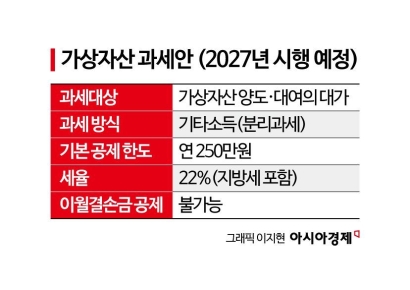 "Stocks Are Not Taxed, but Annual Crypto Gains Over 2.5 Million Won to Be Taxed Next Year... Investors Push Back"
- "Not Jealous of Winning the Lottery"... Entire Village Stunned as 200 Million Won Jackpot of Wild Ginseng Cluster Discovered at Jirisan
- "Even With a 90 Million Won Salary and Bonuses, It Doesn’t Feel Like Much"... A Latecomer Rookie Who Beat 70 to 1 Odds [Scientists Are Disappearing] ③
- "Rather Than Endure a 1.5 Million KRW Stipend, I'd Rather Earn 500 Million in the U.S." Top Talent from SNU and KAIST Are Leaving [Scientists Are Disappearing] ①
- "How Did an Employee Who Loved Samsung End Up Like This?"... Past Video of Samsung Electronics Union Chairman Resurfaces
Meanwhile, attendees at the meeting included Jin Young, Minister of the Ministry of the Interior and Safety; Sung Yun-mo, Minister of Trade, Industry and Energy; Park Young-sun, Minister of SMEs and Startups; Park Neung-hoo, Minister of Health and Welfare; Kim Hyun-mi, Minister of Land, Infrastructure and Transport; Park Yang-woo, Minister of Culture, Sports and Tourism; Moon Sung-hyuk, Minister of Oceans and Fisheries; Noh Hyung-wook, Director of the Office for Government Policy Coordination; Eun Sung-soo, Chairman of the Financial Services Commission; and Choi Yoon-hee, Second Vice Minister of Foreign Affairs.
© The Asia Business Daily(www.asiae.co.kr). All rights reserved.







