Northern Front Breakthrough and Southern 'Solo Breakthrough'... Focus on Independent North-South Relations Approach
President Moon Initiates Decoupling of North America-South Korea Relations
Matching North Korea-US Pace Leads to Worst South-North Situation
Strong Measures to Prevent Permanent Derailment of North Korea Dialogue
"Concerns Over Fragmentation of ROK-US North Korea Policies Worsening Situation"

President Moon Jae-in and North Korean State Affairs Commission Chairman Kim Jong-un are holding hands and talking at Panmunjom on the afternoon of June 30 last year. In the center is U.S. President Donald Trump.
View original imageNorth Korean State Affairs Commission Chairman Kim Jong-un declared a 'frontal breakthrough' policy this year, signaling a prolonged deadlock in North Korea-US talks, while President Moon Jae-in has effectively formalized a 'solo breakthrough' approach to overcome this impasse. This is the government's drastic remedy to drive North Korea-US dialogue through independent progress in inter-Korean relations, stepping outside the ironclad framework of South Korea-US cooperation. However, there are concerns that independent inter-Korean relations may be difficult to realize within the framework of the international community's coordinated sanctions regime against North Korea.
The government has been accelerating its independent inter-Korean relations policy since President Moon Jae-in expressed his intention to pursue inter-Korean cooperative projects beyond the scope of sanctions in his New Year's address on the 7th and his New Year's press conference on the 14th.
Lee Do-hoon, Director-General for Korean Peninsula Peace and Security Affairs at the Ministry of Foreign Affairs, who visited the United States to hold consultations with Stephen Biegun, US Special Representative for North Korea and Deputy Secretary of State, arrived at Dulles International Airport near Washington DC on the 15th (local time) and clearly stated to correspondents that he intends to "persuade the US side" regarding the government's push for inter-Korean cooperative projects.
Regarding the issue of pursuing individual tourism related to inter-Korean cooperative projects, Lee said, "I plan to have a discussion (with the US side)" and added, "I think it is most necessary now to frankly discuss each other's positions and seek mutual understanding." He explained, "The UN Security Council sanctions themselves do not prohibit this."
Earlier, on the 14th (local time), Foreign Minister Kang Kyung-wha, after a series of meetings with US and Japanese foreign ministers in Palo Alto near San Francisco, told reporters, "Depending on the timing, either North Korea and the US may take the lead first, or inter-Korean relations may advance first." This is interpreted as a refusal to synchronize the progress of North Korea-US talks with inter-Korean relations.
The Ministry of Unification, the main government agency in charge of North Korea policy, is specifying keywords such as 'separated families' and 'individual tourism' as cooperation measures. On the 14th (Korean time), Minister of Unification Kim Yeon-chul said at a meeting with religious and social organization leaders, "With the new year, the government plans to take measures to improve inter-Korean relations rather than waiting for North Korea-US relations to be resolved."
The Ministry of Unification is reportedly prioritizing 'individual tourism for separated families' as its top project. Ministry of Unification Deputy Spokesperson Kim Eun-han emphasized at a regular briefing on the 15th, "The issue of separated families is a humanitarian and very urgent matter, and all possible alternatives must be explored for effective resolution," adding, "Creating opportunities for families to meet each other is the most urgent task."
However, it remains uncertain whether these government efforts can lead to substantive progress in North Korea-US talks. Concerns continue to arise as South Korea embarks on a solo breakthrough policy. Joshua Stanton, a sanctions expert, described the push for individual tourism for separated families as "a disregard for the South Korea-US alliance, UN Security Council sanctions resolutions, and the safety of South Koreans" in an interview with Radio Free Asia (RFA).
Hot Picks Today
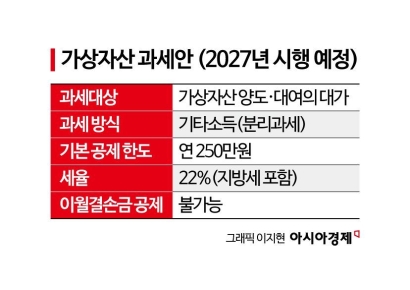 "Stocks Are Not Taxed, but Annual Crypto Gains Over 2.5 Million Won to Be Taxed Next Year... Investors Push Back"
- "Not Jealous of Winning the Lottery"... Entire Village Stunned as 200 Million Won Jackpot of Wild Ginseng Cluster Discovered at Jirisan
- "Even With a 90 Million Won Salary and Bonuses, It Doesn’t Feel Like Much"... A Latecomer Rookie Who Beat 70 to 1 Odds [Scientists Are Disappearing] ③
- [Click e-Stock] "Conquering China with Snacks"... A Stock with Strong Performance and High Dividends
- "How Did an Employee Who Loved Samsung End Up Like This?"... Past Video of Samsung Electronics Union Chairman Resurfaces
Evans Revere, Senior Fellow at the Brookings Institution in the US, who visited South Korea on the 15th, said, "President Moon stated (in his New Year's address) that he would pursue inter-Korean relations regardless of the state of North Korea-US talks," adding, "This ultimately creates a decoupling between South Korea's North Korea policy and the US North Korea policy, and this phenomenon will continue." He pointed out that the fragmentation of North Korea policy could cause both South Korea and the US to lose influence over North Korea, thereby expanding North Korea's room for maneuver.
© The Asia Business Daily(www.asiae.co.kr). All rights reserved.







