'DLF Scandal' FSC Disciplinary Hearing Begins... Will Woori and Hana Bank Executives Face Severe Sanctions?
Son Tae-seung, Chairman of Woori Financial Group, and Ham Young-joo, Vice Chairman of Hana Financial Group, Provide Direct Explanation... Focus on 'Unclear Grounds for Sanctions'

On the 16th, when the Financial Supervisory Service's disciplinary review committee regarding the overseas interest rate-linked derivative-linked fund (DLF) incident, which caused massive principal losses, was held, members of the DLF Victims Countermeasure Committee and the Financial Justice Solidarity held a press conference in front of the Financial Supervisory Service in Yeouido, Seoul, demanding severe disciplinary actions against Woori Bank and Hana Bank. Photo by Kang Jin-hyung aymsdream@
View original image[Asia Economy Reporter Kangwook Cho] The Financial Supervisory Service’s (FSS) Disciplinary Committee held a meeting on the 16th to determine the level of sanctions against banks and their executives in connection with the overseas interest rate-linked derivative-linked fund (DLF) scandal, which caused massive principal losses. Attention is particularly focused on whether severe disciplinary actions will be taken against executives such as Sohn Tae-seung, Chairman and CEO of Woori Financial Group and Woori Bank, and Ham Young-joo, Vice Chairman of Hana Financial Group.
The disciplinary committee began at 10 a.m. at the FSS headquarters on the 11th floor in Yeouido, Seoul. Typically, the FSS disciplinary committee is held twice a month on a biweekly basis and usually starts at 2 p.m., but this time it was unusually moved up to 10 a.m. This is interpreted as a sign that a fierce battle will unfold, given that severe disciplinary actions against the CEOs were pre-notified.
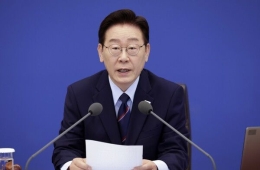
Chairman Sohn and Vice Chairman Ham attended in person with their legal teams to present their defense. Since the disciplinary results could inevitably impact Sohn’s reappointment as chairman of Woori Financial Group and Ham’s bid for the next chairman of Hana Financial Group, it appears they decided to make a clear statement.
The main issue at the disciplinary hearing is the level of sanctions against the CEOs. Sanctions against financial company employees range across five levels: light disciplinary actions such as caution and warning, and severe disciplinary actions including reprimand, suspension (leave of absence), and dismissal recommendation. Executives who receive severe disciplinary actions can complete their remaining term but cannot serve as executives of financial companies for three years thereafter. Because of this, although Chairman Sohn succeeded in his reappointment last year, if severe disciplinary action is confirmed before the March shareholders’ meeting, reappointment may become impossible. Ham, who was considered the top successor to Kim Jung-tae, Chairman of Hana Financial Group, would be unable to challenge for the next chairman position if he receives severe disciplinary action. They may file objections and seek injunctions from the court to suspend the enforcement of the sanctions, but this could be burdensome as it might be seen as confronting the FSS.
The FSS has already pre-notified Chairman Sohn and Vice Chairman Ham of the severe disciplinary action of a “reprimand.” The core grounds for the sanctions are “lack of internal control” and “excessive management pressure.” However, the problem lies in the possible insufficiency of legal grounds for the sanctions. The Financial Services Commission announced last year that it would establish grounds to hold top executives responsible to prevent recurrence of consumer damage like the DLF incident, but the related amendment to the “Financial Company Governance Act” that would serve as the legal basis is currently pending in the Political Affairs Committee.
The banks are expected to mount an all-out effort to reduce the level of sanctions against their executives by arguing that the grounds for sanctions are unclear. They claim that while the “Financial Company Governance Act” states that financial companies must establish internal control standards and the enforcement decree specifies that “effective internal control standards must be established,” there is no clause that punishes executives if these are not met. On the other hand, the FSS considers the effectiveness of internal control standards to be crucial. For this reason, the DLF dispute mediation reflected “the bank’s internal control negligence” in the compensation ratio for the first time. As the two sides present sharply opposing arguments, if no disciplinary decision is made on this day, another disciplinary committee will be held on the 30th.
Hot Picks Today
 "Stocks Are Not Taxed, but Annual Crypto Gains Over 2.5 Million Won to Be Taxed Next Year... Investors Push Back"
- "Don't Throw Away Coffee Grounds" Transformed into 'High-Grade Fuel' in Just 90 Seconds [Reading Science]
- Signed Without Viewing for 1.6 Billion Won... Jamsil and Seongbuk Jeonse Prices Jump 200 Million Won in a Month [Real Estate AtoZ]
- [Breaking] Bloomberg: "Korean HMM Oil Tanker Attempts Escape from Strait of Hormuz"
- "Even With a 90 Million Won Salary and Bonuses, It Doesn’t Feel Like Much"... A Latecomer Rookie Who Beat 70 to 1 Odds [Scientists Are Disappearing] ③
An anonymous official from the financial authorities said, “We do not expect the disciplinary process to end after one or two hearings,” adding, “Also, since this case involves sanctions against financial institutions, the final resolution by the Financial Services Commission is required, so even if the level of sanctions is decided, it may take considerable time before they actually take effect.”
© The Asia Business Daily(www.asiae.co.kr). All rights reserved.