Chinese Vice Premier Liu He Arrives in Washington... Preparing to Sign Trade Agreement (Comprehensive)
[Asia Economy Beijing=Special Correspondent Park Sun-mi] Liu He, Vice Premier of China, arrived in Washington on the 14th at the invitation of the United States.
On the 14th, China's state-run Global Times reported Liu's arrival in Washington, stating that he would stay in Washington until the 15th to proceed with the signing of the first phase of the US-China trade agreement. The details of the trade agreement are expected to be disclosed immediately after the signing ceremony.
It also recalled that on the 13th of last month, both the US and China announced through a Chinese statement that they had agreed on the contents of the first phase trade agreement based on the principles of equality and mutual respect.
According to Xinhua News Agency, the agreement consists of a total of nine sections: preamble, intellectual property rights, technology transfer, food and agricultural products, financial services, exchange rates and transparency, trade expansion, mutual evaluation and dispute resolution, and final provisions.
The agreement reportedly includes not only the gradual removal of additional tariffs imposed by the US on China and the shift from tariff increases to reductions but also China's large-scale purchase of US products.
The total scale of US goods that China plans to purchase over the next two years amounts to $200 billion across four sectors. Purchase targets have been set at $75 billion for manufactured goods, $50 billion for energy, $40 billion for agricultural products, and $35 to $40 billion for services.
Hot Picks Today
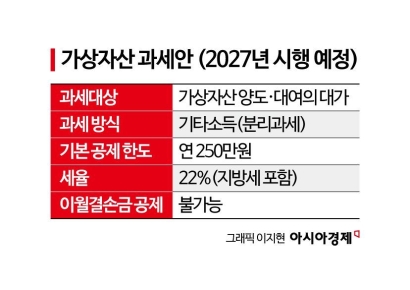 "Stocks Are Not Taxed, but Annual Crypto Gains Over 2.5 Million Won to Be Taxed Next Year... Investors Push Back"
- "Not Jealous of Winning the Lottery"... Entire Village Stunned as 200 Million Won Jackpot of Wild Ginseng Cluster Discovered at Jirisan
- "Even With a 90 Million Won Salary and Bonuses, It Doesn’t Feel Like Much"... A Latecomer Rookie Who Beat 70 to 1 Odds [Scientists Are Disappearing] ③
- General Strike D-1: Final Negotiations Between Samsung Electronics Labor and Management Over One Key Issue
- "How Did an Employee Who Loved Samsung End Up Like This?"... Past Video of Samsung Electronics Union Chairman Resurfaces
Meanwhile, on the 13th (local time), the US Treasury Department announced that China promised to refrain from competitive currency devaluation and to disclose related information under the first phase trade agreement, and removed China from the currency manipulator designation. The US Treasury had designated China as a currency manipulator for the first time in 25 years in August last year. The US emphasized that the first phase trade agreement also includes an 'enforcement mechanism' that allows unilateral reimposition of tariffs if China fails to properly implement these agreed terms.
© The Asia Business Daily(www.asiae.co.kr). All rights reserved.