Pompeo: "Dialogue with North Korea Still Hopeful"...Harsh Criticism of Iran
![[Image source=Yonhap News]](http://www.asiae.co.kr/news/img_view.htm?img=2020010811255985717_1578450358.jpg)
[Asia Economy Reporter Hyunwoo Lee] U.S. Secretary of State Mike Pompeo indicated that the negotiation stance with North Korea will continue, unlike Iran, which mentioned the possibility of additional military options while remaining hopeful for dialogue.
According to foreign media including the Associated Press on the 7th (local time), Secretary Pompeo said at a press briefing held at the State Department building in Washington DC, "There have been many stories about what (North Korea) might do by the end of the year, but we have not seen anything yet," adding, "We still hope to have talks about the denuclearization method promised by Chairman Kim to President Trump in 2018." This statement is analyzed as indicating that the possibility of negotiations with North Korea remains open, as provocations such as nuclear tests or intercontinental ballistic missile (ICBM) launches expected around Christmas last year did not occur.
In contrast, he continued to make tough remarks about Iran. Secretary Pompeo criticized the U.S. visa denial to Iranian Foreign Minister Javad Zarif, who was attempting to attend the United Nations Security Council, calling him "a propagandist spreading Iran's propaganda." He further emphasized, "No one can believe Javad's claim that Qasem Soleimani came to Baghdad as a diplomat on a peace mission."
This phenomenon is analyzed as emerging after Pompeo, a hardliner on Iran, rose as the top figure in diplomatic and security policy within the Trump administration following the departure of John Bolton, a hardliner on North Korea and former White House National Security Advisor. The Washington Post (WP) reported that Pompeo has maintained a hardline stance on Iran, establishing an Iran-focused intelligence bureau shortly after being appointed CIA Director in 2017. He has also maintained close ties with Mossad, Israel's intelligence agency. Mark Esper, U.S. Secretary of Defense and a West Point classmate of Pompeo, is also known to have proposed the Soleimani elimination strategy to President Trump.
Hot Picks Today
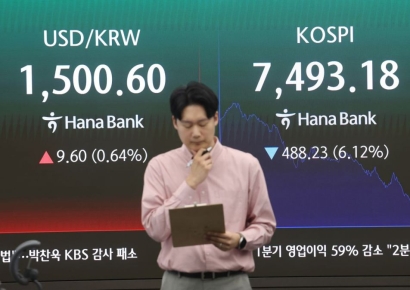 After Topping 8,000 Instead of Hitting 10,000... KOSPI Plunges—When Will It Rebound?
- "Samsung and Hynix Were Once for the Underachievers"... Hyundai Motor Employee's Lament
- [Breaking] Court Rules Against Samsung Electronics Union...1 Billion Won per Day Penalty for Exceeding Strike Scope
- 'Real Strike' Looms as Samsung Union Grows More Hardline... How the 2024 Strike Process Compares
- "That? It's Already Stashed" Nightlife Scene Crosses the Line [ChwiYak Nation] ③
However, U.S. media express concerns that the Trump administration's contrasting strategies toward Iran and North Korea may backfire. They suggest that North Korea, witnessing the elimination of Soleimani and the hardline policy against Iran, may become more obsessed with nuclear weapons to stabilize its regime and avoid denuclearization talks. WP reported that the Trump administration's decision to kill Soleimani gave North Korea the conviction that it must accelerate nuclear weapons development, while also proving that when the U.S. president talks about "fire and fury," it is not just an empty threat. CNN also analyzed that the North Korean regime, having witnessed the fates of Saddam Hussein in Iraq and Muammar Gaddafi in Libya, will further strengthen its belief that nuclear weapons are the only factor that can make their fate different from Iraq and Libya.
© The Asia Business Daily(www.asiae.co.kr). All rights reserved.







