Rising US-Iran Tensions... Government Launches 24-Hour Monitoring and Maritime Response Team (Comprehensive)
Job Budget 37% Executed Within Q1; 60 Trillion Invested in Major Public Institutions
![[Image source=Yonhap News]](http://www.asiae.co.kr/news/img_view.htm?img=2020010809302185136_1578443421.jpg)
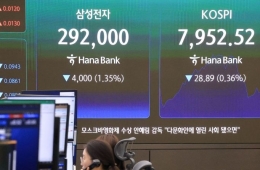
[Asia Economy Reporter Jang Sehee] The government is activating a task force that includes not only the financial and foreign exchange markets but also sectors such as exports, oil prices, overseas construction, and maritime logistics in response to escalating tensions between the United States and Iran.
On the 8th, Hong Nam-ki, Deputy Prime Minister and Minister of Economy and Finance, held an 'Economic Vitality Measures Meeting' at the Government Seoul Office and stated, "We will form and operate joint or respective ministry task forces covering not only the financial and foreign exchange markets but also exports, oil prices, overseas construction, and overseas logistics sectors." He also emphasized, "We will comprehensively monitor areas closely related to our economy, such as stock prices, exchange rates, and oil prices, 24 hours a day."
The government plans to make every effort to expedite the execution of this year's budget. Deputy Prime Minister Hong said, "We have set the goal for early budget execution in the first half of the year at a record high of 62%, and for job projects that have a significant impact on the public, we will execute 37% within the first quarter."
Deputy Prime Minister Hong expressed, "We will execute the budget supporting the economy as early as possible and manage the inclusive welfare budget to be executed timely." He added, "To ensure timely execution of the inclusive welfare budget, we will check the execution status through the monthly fiscal management inspection meetings to ensure that major welfare benefits such as livelihood benefits, medical benefits, and child allowances are paid without disruption."
The government will also invest 60 trillion won in major public institutions to create jobs and boost economic vitality. He said, "We will focus investment particularly on social overhead capital (SOC) sectors such as new town construction and energy sectors like power plant construction," and mentioned, "To ensure timely investment by public institutions, we will shorten the preliminary feasibility study period, which currently takes more than 10 months, to a maximum of 7 months."
Furthermore, in response to the failure of major economic bills to pass the National Assembly, the government has begun work on the enactment and revision of subordinate statutes. This is a measure following the automatic expiration of major bills with the end of the 20th National Assembly on May 20.
To encourage foreign investment support, the cash support limit for foreign-invested companies will be increased to 55 billion won. Additionally, as a response to the Service Industry Development Act, a Service Industry Innovation Task Force (TF) will be formed. Regarding the hydrogen industry, public institutions such as Korea Gas Corporation and Korea Gas Safety Corporation will take on the role of dedicated agencies.
The major bills currently pending in the National Assembly include the Hydrogen Economy Promotion and Hydrogen Safety Management Act, Renewable Energy Act, Foreign Investment Promotion Act, Basic Act on Service Industry Development, and Minimum Wage Act.
Attending the meeting were Deputy Prime Minister Hong Nam-ki, Yoo Eun-hye, Deputy Prime Minister for Social Affairs and Minister of Education, Jin Young, Minister of the Ministry of the Interior and Safety, Kim Hyun-mi, Minister of Land, Infrastructure and Transport, Eun Sung-soo, Chairman of the Financial Services Commission, Park Neung-hoo, Minister of Health and Welfare, and Park Young-sun, Minister of SMEs and Startups.
Hot Picks Today
 If They Fail Next Year, Bonus Drops to 97 Million Won... A Closer Look at Samsung Electronics DS Division’s 600M vs 460M vs 160M Performance Bonuses
- Opening a Bank Account in Korea Is Too Difficult..."Over 150,000 Won in Notarization Fees Just for a Child's Account and Debit Card" [Foreigner K-Finance Status]②
- "While Others Rest"...3 Million May Have to Work on the Alternative Public Holiday
- Room Prices Soar from 60,000 to 760,000 Won and Sudden Cancellations: "We Won't Even Buy Water in Busan" — BTS Fans Outraged
- "Who Is Visiting Japan These Days?" The Once-Crowded Tourist Spots Empty Out... What's Happening?
© The Asia Business Daily(www.asiae.co.kr). All rights reserved.
!["Please Help Us": How Much Do Those Bowing 90 Degrees These Days Actually Earn? [Data Pick]](https://cwcontent.asiae.co.kr/asiaresize/307/2026052010120870131_1779239528.png)