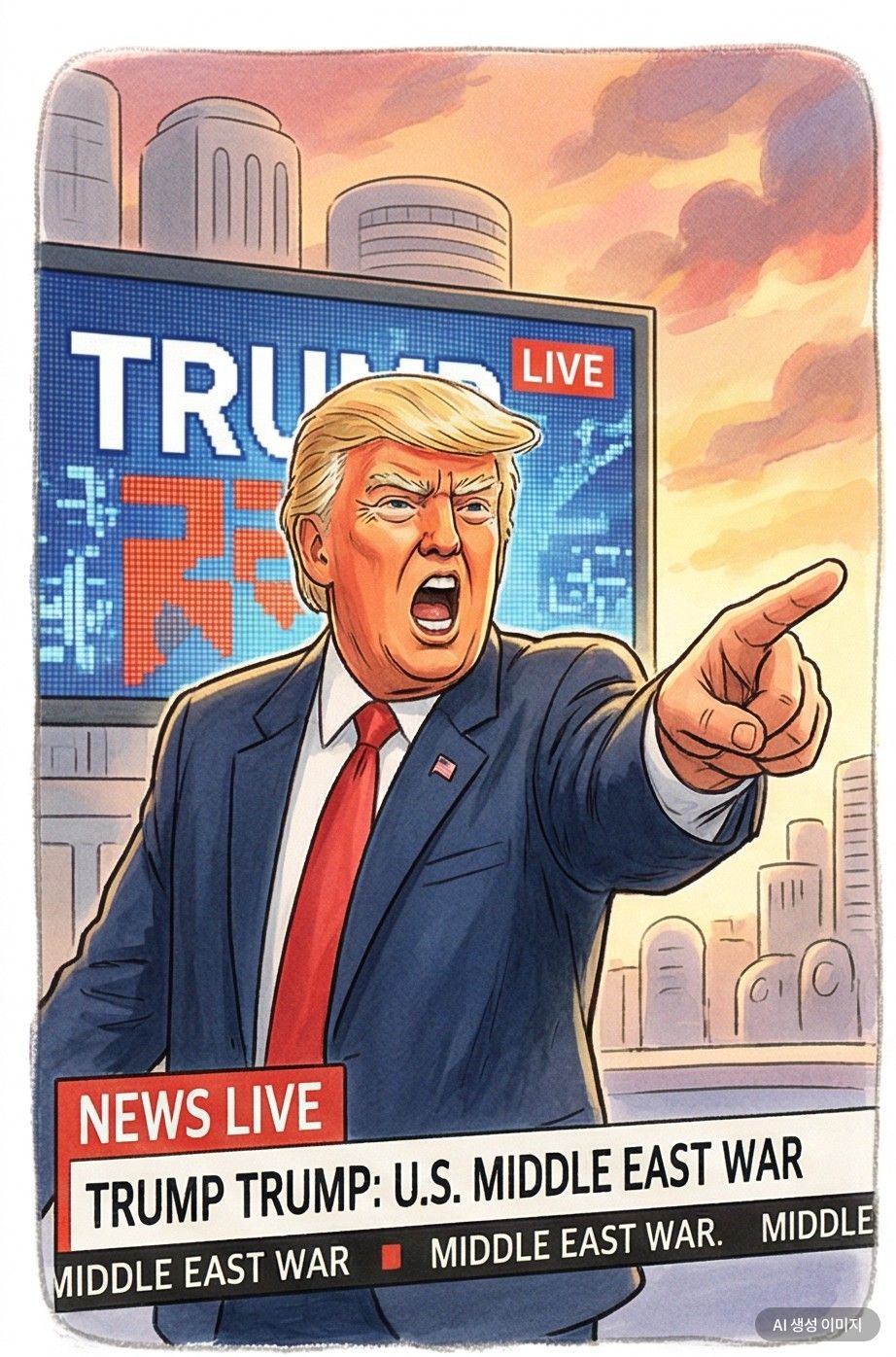

Trump Says 'Strong Blow Within 2 to 3 Weeks'
Trump's Remarks Send Stock Market on a 'Roller Coaster Ride'
With expectations that the war between the United States and Iran will soon come to an end coexisting with concerns that the conflict may continue for the time being and the Strait of Hormuz will remain blocked, the Korean stock market is experiencing extreme volatility. There are warnings that investors should be cautious, as the market is showing highly unstable swings in response to every word from U.S. President Donald Trump.
Market Reverses to Decline After Trump Says "Strong Blow to Iran Within 2 to 3 Weeks"
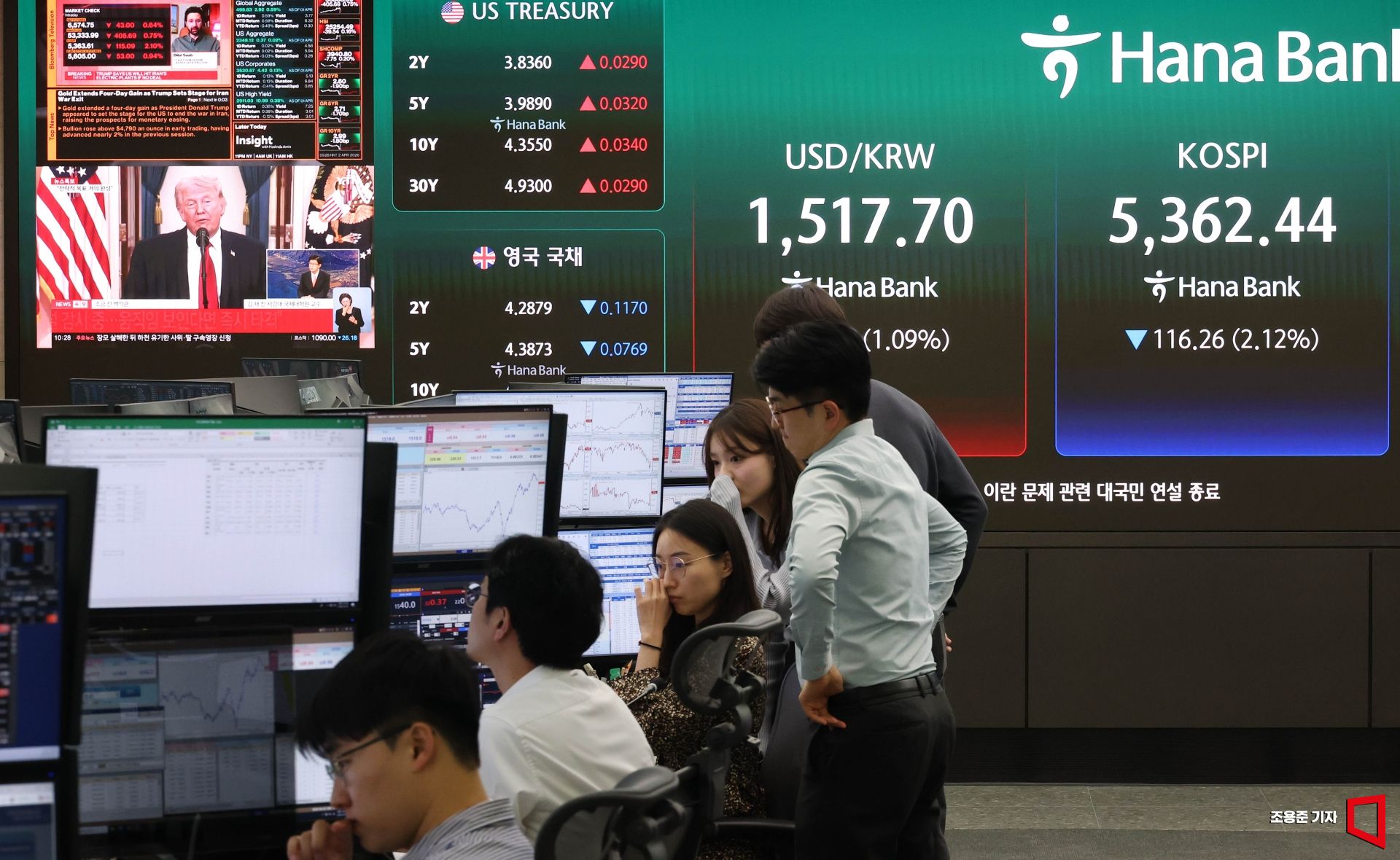
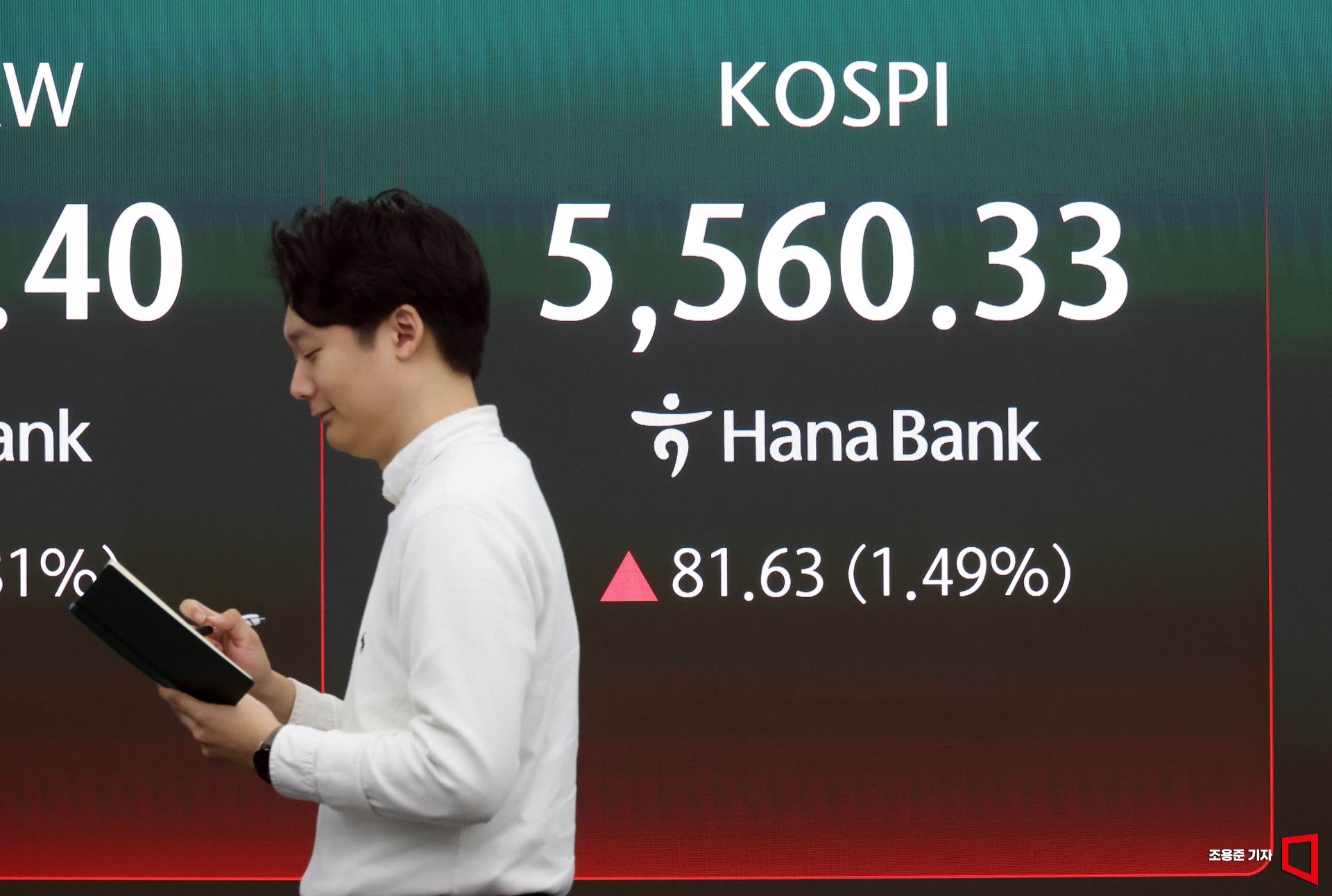
On April 2, the KOSPI opened at 5,551.69, up 1.33% from the previous trading day, but reversed to a decline, trading at 5,413.20 as of 10:22 a.m. KST, down 1.20%. At the same time, the KOSDAQ was trading at 1,100.75, down 1.38% from the previous session.
President Trump, during a public address at 10 a.m. KST, stated, "While we are at the stage of ending the current war, we will deliver an extremely strong blow to Iran over the next two to three weeks," which sent the Korean stock market into a sharp decline. As news of Trump's remarks spread, the won-dollar exchange rate also rose to the 1,517 won range.
Rapid Decline in Hopes for Armistice
KOSPI Starts Up Then Reverses to Decline
Intraday Drop of Over 1% Recorded
Up until the previous day, optimism about an armistice had been reflected in gains in the New York stock market, but the Korean market is now declining due to Trump's speech. Overnight, the Dow Jones Industrial Average rose 0.48% from the previous session, and the Nasdaq Composite Index gained 1.16%. Semiconductor stocks saw a significant rebound. The share prices of memory chip manufacturers such as Micron (8.9%), SanDisk (9.0%), and Western Digital (10.1%) surged sharply.
Suh Sangyoung, a researcher at Mirae Asset Securities, analyzed, "The New York stock market rose on hopes that the war might end as channels for dialogue between the U.S. and Iran opened. Additionally, employment, manufacturing, and consumer indicators all exceeded market expectations, further fueling hopes for a soft landing in the economy."
KOSPI Soared Over 8% the Previous Day on Trump's "War Will End Soon" Remarks ... Second Highest Daily Gain Ever

The Korean stock market continues to experience extreme volatility, repeatedly surging and plunging in response to President Trump's statements on the war. According to the Korea Exchange, since the outbreak of the Middle East war at the end of February, sidecar mechanisms have been triggered a total of eight times on the KOSPI. Half of these were buy-side sidecars, while the rest were sell-side. When a sidecar is triggered, program trading orders are temporarily suspended to cool down an overheated market.
KOSDAQ also turns to a weak trend
Won-Dollar exchange rate rises to 1,510 won range
Contrasting movement with previous day's New York stock market rise
Domestic stock market volatility increases due to war remarks
The magnitude of both gains and losses has been very large. The previous day, the KOSPI soared by 426.24 points from the previous session—a single-day gain that ranks as the second largest in the history of the Korean stock market. The largest gain on record was 490.36 points, achieved on March 5. At that time, after a steep drop in the KOSPI following U.S. and Israeli airstrikes on Iran, bargain-hunting the next day fueled a dramatic rebound. Both the largest and second-largest single-day gains in the Korean market have stemmed from the U.S.-Iran conflict involving Trump and the United States.

In terms of percentage gains, this was the fifth largest ever. The top record was set on October 30, 2008, during the global financial crisis, at 11.95%. The second-highest was on March 5, and the third was March 24, 2020, with an 8.6% gain. At that time, the market soared after the U.S. announced unlimited quantitative easing in response to the COVID-19 crisis.

Han Jiyeong, a researcher at Kiwoom Securities, commented, "Two days ago, the KOSPI dropped by more than 4%, then yesterday surged by over 8%, and since March, the sidecar mechanism has been triggered eight times. The domestic stock market is now like a giant leveraged battlefield. Given Trump's remarks, volatility is likely to continue in our market."
-

Reporter Lee Changhwan goldfish@asiae.co.kr
-

Reporter Lim Chunhan choon@asiae.co.kr
-
Edit Kang Dongwon kangdw76@asiae.co.kr
© The Asia Business Daily(www.asiae.co.kr). All rights reserved.
!["Please Help Us": How Much Do Those Bowing 90 Degrees These Days Actually Earn? [Data Pick]](https://cwcontent.asiae.co.kr/asiaresize/323/2026052010120870131_1779239528.png)