Gathering at a tuna restaurant in Bangbae-dong... First price-fixing among the three major milling companies
Editor's NoteThe "white powder," which is classified as a premium product the lighter its color, was referred to as "jingaru" during the Joseon Dynasty and was considered a luxury item. After the Korean War, flour entered the country in large quantities as aid, helping to fill the stomachs of people on the devastated Korean Peninsula. Flour, now a staple ingredient in noodles, ramen, bread, and snacks, has become an essential raw material in the food industry. When flour prices rise, not only do the prices of foods made with flour increase, but so do costs for meals at home and dining out, leading to greater living expenses for ordinary people. The Asia Business Daily has reconstructed the "flour price-fixing" scheme, amounting to 6 trillion won, based on the indictment from prosecutors, and examined how this collusion over the past six years has strained the lives of everyday citizens.
How Collusion Destroyed the Lives of Ordinary People
In November 2019, at "Sajo Tuna" in Bangbae-dong, Seoul, Song, Head of Sales at Daehan Flour Mills, Nam, Head of the Milling BU at Sajo DongA One, and Kim, Manager of the Actual Demand SU at CJ CheilJedang, gathered over tuna dishes. These three companies, which together hold a 75% share of the domestic milling market, are known as the "major players." The three executives agreed to jointly respond in a way favorable to milling companies when negotiating flour prices with their clients. At the time, the international price of wheat flour had peaked at 276 dollars per ton (annual average) in 2012, then declined for five consecutive years, before jumping over 10% in 2018 to surpass 180 dollars per ton, and then remained steady.
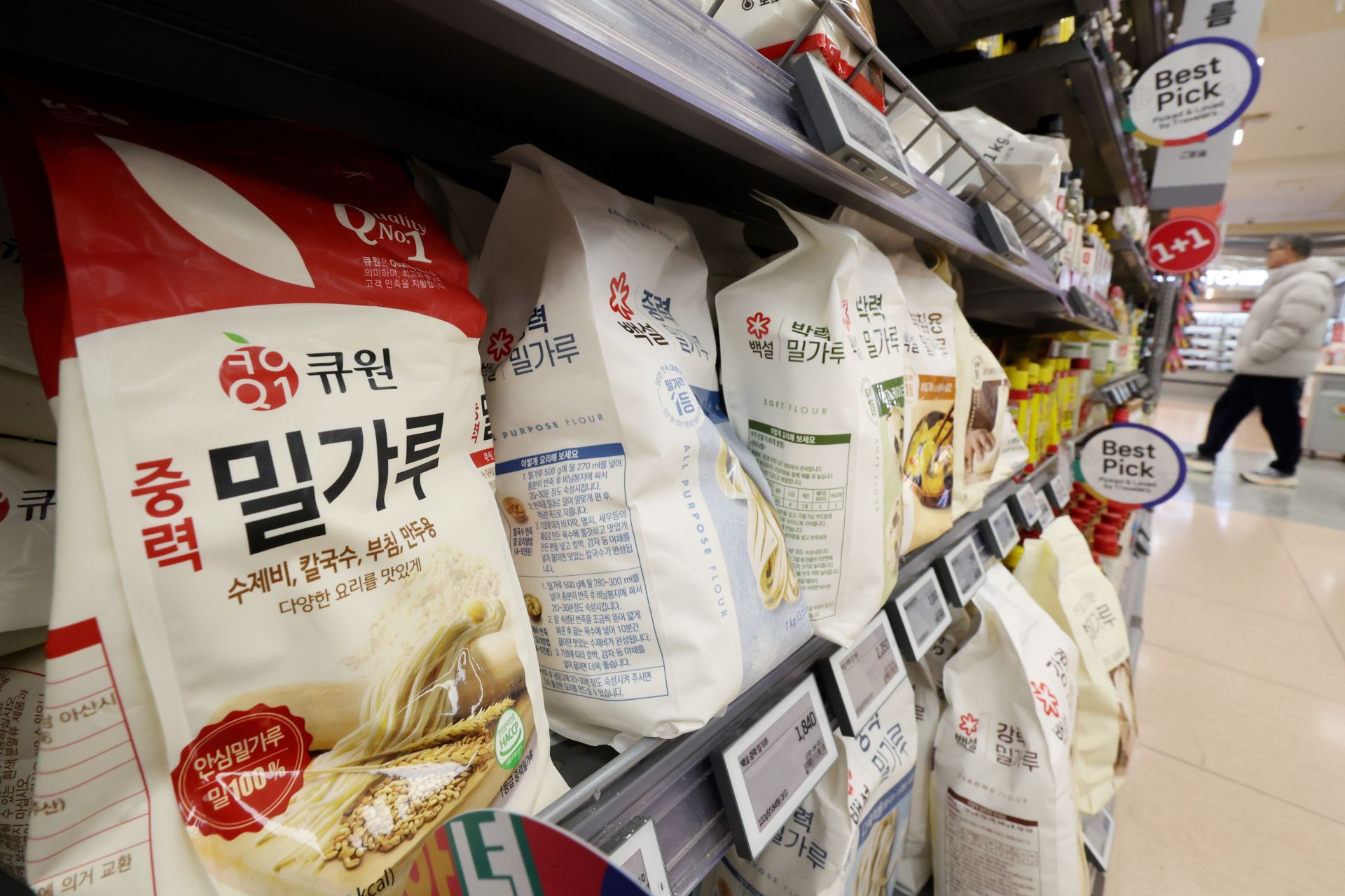
Decision to jointly respond to flour prices amid international wheat price fluctuations
January 2020 restaurant meeting... Agreement to increase the price of 20kg flour bags
Mobilizing all sales executives... Joint push to raise the minimum flour selling price
Seven major and minor companies sharing information, effectively forming a cartel in the milling industry
This price-fixing among the major milling companies began in earnest two months later, in January 2020. On January 14, 2020, the three executives met again at a restaurant in Seodaemun-gu, Seoul, and agreed to raise the price of grade 1.5 flour (medium flour) by at least 10,000 won per 20kg bag.
Two days later, the sales executives from these three companies sprung into action. Kim, Head of Sales at Daehan Flour Mills, Yang, Head of the Milling Sales Division 1 at Sajo DongA One, and Lee, Sales Manager at CJ CheilJedang, took charge. They agreed to increase the minimum selling price of grade 1.5 flour (medium flour) by at least 10,000 won per 20kg, and to raise the price of grade 2 flour (all-purpose flour) to at least 7,500 to 8,000 won per 20kg.
They reported these agreements to their respective superiors and also shared the details with "minor players" in the industry, such as Samyang Corporation, Daesun Flour Mills, Samhwa Flour Mills, and Hantop. All seven companies are members of the Korea Flour Mills Industry Association. These companies leveraged the high barriers to entry in the flour market, which requires large-scale facility investments, and took advantage of the raw material supply chain crisis caused by the COVID-19 pandemic to effectively operate as a cartel and control flour prices. According to the prosecutors' indictment, these seven milling companies attempted price-fixing 32 times over the past six years.
Notably, the milling companies specifically targeted food manufacturers that use large amounts of flour but do not own or hold stakes in milling subsidiaries. They exploited the critical weakness that these manufacturers could not produce their products without a steady supply of flour. The rewards for collusion were significant. Most of the executives who initially led the price-fixing were promoted to top positions and continued their secret dealings, and Song Inseok, CEO of Daehan Flour Mills, led the Korea Flour Mills Industry Association from 2024 up until recently.

Major Milling Companies Targeted Nongshim... Ignored Price Reduction Demands
The largest target was Nongshim, South Korea's biggest ramen company. Daehan Flour Mills, Sajo DongA One, and CJ CheilJedang-collectively known as the "major players"-colluded against Nongshim, which is the largest consumer of flour. Nongshim conducts business with all three of the major milling companies and is recognized as the "benchmark" in the flour market, exerting direct and indirect influence over price negotiations with other large end-users.
In the summer of 2021, the major milling companies met at a restaurant in Mapo-gu, Seoul, and agreed that "since wheat prices have risen, the supply price of flour to Nongshim should also be increased." They set a common goal to raise the 2021 supply price by at least 35 won per kilogram compared to the previous rate. In 2022, they also submitted quotes to Nongshim with "negative incentives (discounts)" but agreed to increase prices by at least 100 won per kilogram compared to the previous year, ultimately raising the price by 90 won per kilogram.
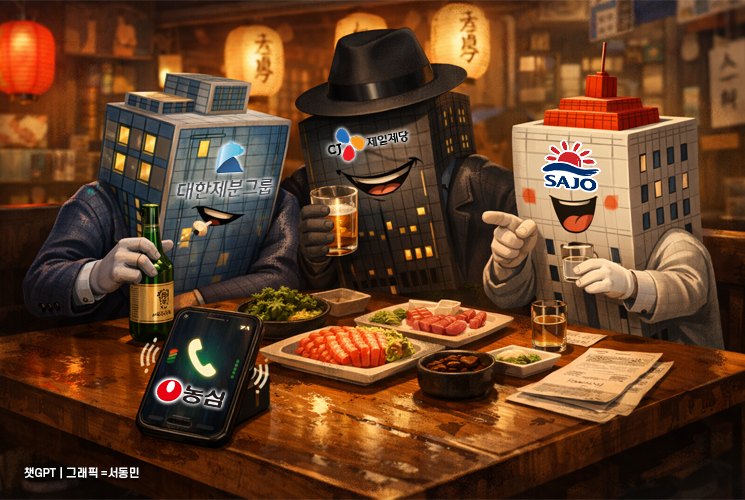
Seven Milling Companies Attempted Price Fixing of Flour 32 Times Over Six Years
Targeting Food Companies Without Milling Partners... Strategy Exploiting Weaknesses
Executives Leading the Collusion Promoted… Dominated the Milling Association
Targeting Largest Client Nongshim… Utilizing Influence on Benchmark Prices
Agreement on Consecutive Supply Price Increases to Nongshim from 2021 to 2022
Following these consecutive price hikes, Nongshim pushed back. After Russia invaded Ukraine, one of the world's major breadbaskets, in 2022, the price of wheat soared but then plummeted the following year. Nongshim took this opportunity to demand a flour price adjustment. However, the major milling companies responded, "Is it really necessary to go that far?" and initially agreed to reduce the price by only 20 won per kilogram, but eventually settled on a modest reduction of 30 to 50 won per kilogram.
Dissatisfied with this minimal price cut, Nongshim again demanded a price adjustment in 2024. In response, the major milling companies met at a tuna restaurant in Seodaemun-gu, Seoul, and decided to ignore Nongshim's demands until March of that year, maintaining the existing supply price. They also agreed that if they did eventually lower the price, it would not be applied retroactively and would only be reduced by 55 to 75 won per kilogram.
This so-called "deceiving Nongshim" by the major milling companies continued into last year. Around December 2024, the CEOs of the major players gathered at a hotel coffee shop in Jung-gu, Seoul, and agreed that "although wheat prices have stabilized, the exchange rate has risen, so the supply price of flour to Nongshim should be increased or at least maintained."
A new variable emerged around that time. Samyang Corporation, a minor player that supplied small quantities of flour to Nongshim, broke the secret agreement and offered to lower prices for Nongshim. But the major players quickly intervened. They contacted a Samyang Corporation executive saying, "We need to raise or at least maintain prices, so how can you reduce them by 20 won? Nongshim's price must be kept in line with ours, so make sure this doesn't happen again," warning that cooperation among milling companies needed to be solidified. As a result, Samyang Corporation's defection was blocked.
Ultimately, when Nongshim requested a price cut in February last year, the major players secretly agreed to a reduction of only 3 to 10 won per kilogram.
Daehan Flour Mills Took Money from Young Consumers... Minor Players Targeted Paldo
As the market leader, Daehan Flour Mills effectively orchestrated the organized price-fixing among milling companies for several years. It also controlled the flour prices supplied to Bimbo QSR Korea, which produces all the hamburger buns for McDonald's-whose main customer base consists of people in their teens and twenties with limited budgets-and to Dongdaemun Yeopgi Tteokbokki. In this process, Samyang Corporation collaborated closely with Daehan Flour Mills.
Daehan Flour Mills and Samyang Corporation synchronized their supply prices, deceiving Bimbo QSR Korea by submitting quotes that were 5 to 10 won per kilogram higher or lower than each other, thereby securing the first and second supplier spots. This secret arrangement, which began in 2023, continued through last year, during which McDonald's raised hamburger prices annually. Furthermore, Daehan Flour Mills and Samyang Corporation reportedly increased the price of flour supplied to the tteokbokki franchise operator Hot Seasoner by 1,000 won per 20kg bag in March last year.
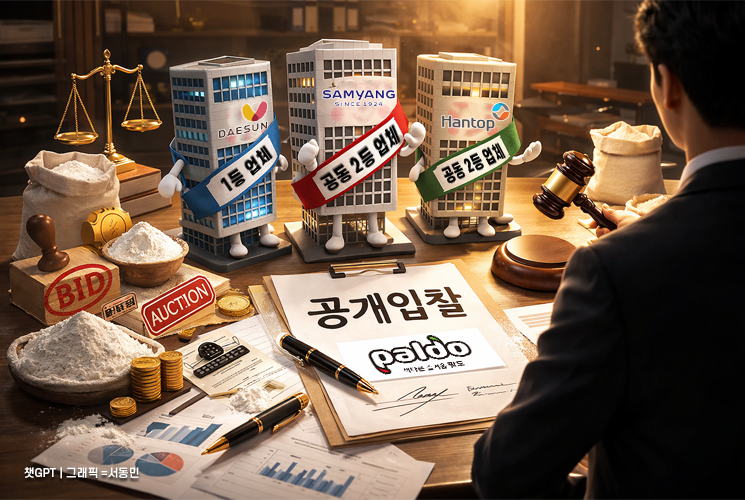
Minimizing Price Reduction Despite the Drop in Raw Wheat Prices 'Defense'
Suppressing Attempts to Leave Samyang Corporation... Strengthening Cooperation Among Major Companies
Controlling Flour Prices Including Bimbo QSR and Yeopgi Tteokbokki
Intervening in Paldo Bids... Six Companies Prosecuted Except CJ
Minor players Samyang Corporation, Daesun Flour Mills, and Hantop targeted Paldo, the fourth-largest ramen company by market share. From 2023 through last year, they divided up flour supply to Paldo and systematically responded to Paldo's demands for price cuts. Unlike the major players, who typically met in person, the minor players discussed and coordinated discounts for Paldo over the phone.
They even interfered with Paldo's public bidding process. Last year, Paldo notified them that it would reduce its number of flour suppliers from three to two. Facing urgent circumstances, Chairman Ryu of Hantop personally reached out to executives at Samyang Corporation and Daesun Flour Mills, asking them to "give up some of their supply volume." The three companies then devised a plan to become "joint second suppliers" so that all could continue their business relationship with Paldo. Daesun Flour Mills and Hantop agreed to list an additional discount of 15 won per kilogram on their bids, while Samyang Corporation wrote 17 won per kilogram, thereby forcing Paldo to select all three companies.
Prosecutors have indicted six companies belonging to the Korea Flour Mills Industry Association-excluding CJ CheilJedang, which received leniency for self-reporting-and seven current and former CEOs, as well as seven sales executives, on charges of violating the Monopoly Regulation and Fair Trade Act.
-
Reporter Heo Kyungjun kjune@asiae.co.kr
-
Edit Kang Dongwon kangdw76@asiae.co.kr
© The Asia Business Daily(www.asiae.co.kr). All rights reserved.

![[Exclusive] "Looking Beyond Financial Statements for Future Value"... IBK Injects 170 Billion Won into 72 Innovative Companies](https://cwcontent.asiae.co.kr/asiaresize/304/2026011314545989464_1768283699.jpg)