"A Free Concert Ticket for 200,000 Won?"Ticket Scalpers Mock Government Crackdown

Choe Hee-young, Minister of Culture, Sports and Tourism, has declared the BTS comeback concert a testing ground for anti-scalping efforts, expressing strong determination for a crackdown. However, the situation on the ground tells a different story. Even as the government tightens its surveillance network by launching public-private consultative bodies, illegal sales and circumvention methods at several times the official price remain rampant online.
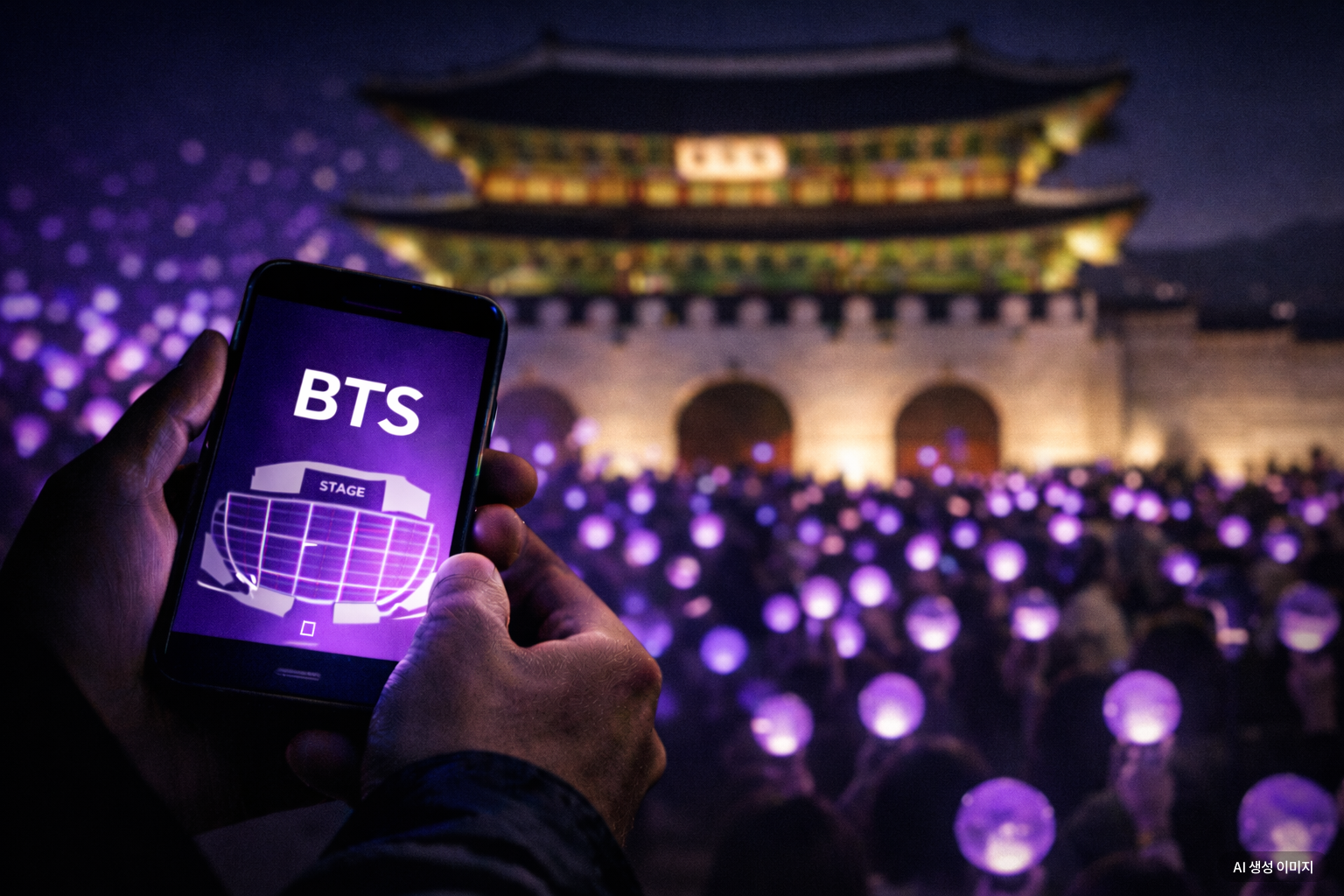
On March 10, a review of online secondhand marketplaces and social networking services (SNS) revealed a surge in ticket transfer posts ahead of the "BTS Comeback Live: Arirang" concert, set for March 21 at Gwanghwamun Square in Seoul. Although the event is free for fans, scalpers are luring buyers by offering tickets at 120,000 to 150,000 won each.
It is also common for sellers to list a low price and then raise the actual amount during the transaction. When inquiring with a seller who listed a free concert ticket at 100,000 won, the response was, "There are no 100,000 won tickets. The minimum is 200,000 won." In some cases, posts claim "face value" or "seats together available," yet actually demand a premium.
'Id Move' and 'Bracelet Transfer'Even Worse for Paid ConcertsTicket Prices Soar Up to Four Times the Official Rate

The situation is even more severe for paid concerts. Tickets for performances at Goyang Sports Complex from April 9 to 12 are officially priced at 198,000 to 264,000 won, but online they are trading for 800,000 to 900,000 won-up to four times the official price. During the concert dates, nearby accommodation prices have also surged to more than 2.4 times the usual rate, increasing the burden on attendees.
Transaction methods are becoming increasingly sophisticated. To evade on-site identity verification, tactics such as "ID transfer" (A-olm), where buyers immediately repurchase tickets after a cancellation, and "bracelet transfer" (Pal-olm), where entry wristbands are handed over, are openly shared. Some posts even suggest using professional agencies, indicating an organized trade structure.
Government: "This Concert Is a Litmus Test"But Tougher Penalties Start in August

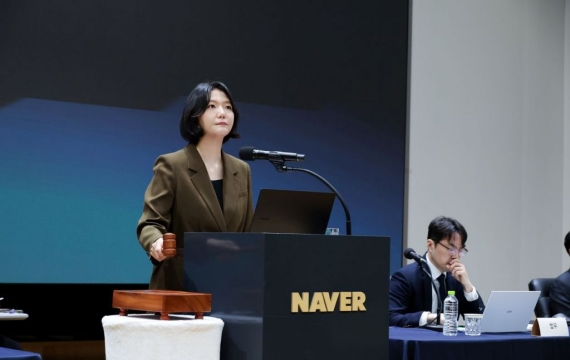
Choi Hwiyeong, Minister of Culture, Sports and Tourism (second from left), is speaking at the 'Performance and Sports Ticket Scalping Prevention Public-Private Joint Task Force Launch Ceremony' held on the 5th at the National Museum of Modern and Contemporary Art Seoul in Jongno-gu, Seoul. Photo by Yonhap News Agency
원본보기 아이콘The government is also ramping up its response. At the "Performance and Sports Ticket Scalping Prevention Public-Private Joint Task Force Launch Ceremony" held on March 5 at the National Museum of Modern and Contemporary Art Seoul in Jongno-gu, Seoul, Minister Choe stated, "This BTS concert will be an important test case for anti-scalping measures," and announced a strong crackdown policy. She also called for responsible action from platform operators, noting that numerous suspected scalping transactions had been detected on certain platforms.
However, institutional limitations remain clear. Amendments to the Performing Arts Promotion Act and the National Sports Promotion Act, which impose fines of up to 50 times the transaction amount for illegal sales, will not come into effect until August 28. Until then, authorities must rely on administrative monitoring and voluntary self-regulation by platforms.
The Ministry of Culture, Sports and Tourism plans to cooperate with 18 agencies, including the Fair Trade Commission and the National Police Agency, to block irregularities at the reservation stage and strengthen real-time monitoring.
Minister Choe said, "Scalping issues are intertwined with technology, distribution, and consumer awareness, and cannot be resolved by legal revisions alone." She added, "It is important to actively inform the public that buying tickets from scalpers carries a high risk of reservation cancellations or fraud."
From Fines Up to 50 Times the Sale Price to Jail TimeMajor Countries Have Already Introduced Tough Regulations


Major countries overseas have already implemented strict regulatory frameworks. In Taiwan, after BLACKPINK concert scalping prices soared to 45 times the official price last year, the Culture and Creative Industries Development Act was amended to significantly increase penalties. Japan and China also block scalped tickets by verifying the identity of buyers and attendees at the venue.
Popular culture critic Kim Heonsik commented, "Raising fines is mostly a symbolic move," adding, "It is realistically difficult to crack down on all peer-to-peer transactions that exploit anonymity." He emphasized, "It is necessary to reinforce regulations that hold platform operators jointly responsible for allowing illegal transactions, among other more effective institutional improvements."
-

Reporter Lee Yiseul ssmoly6@asiae.co.kr
-
Edit Lee Seonju sjlee109@asiae.co.kr
© The Asia Business Daily(www.asiae.co.kr). All rights reserved.

![[Exclusive] "Looking Beyond Financial Statements for Future Value"... IBK Injects 170 Billion Won into 72 Innovative Companies](https://cwcontent.asiae.co.kr/asiaresize/304/2026011314545989464_1768283699.jpg)