President Lee Jae-myung Convenes Emergency Economic Inspection Meeting on Middle East Situation
Preparing for the worst-case scenario... Swift implementation of maximum price system for petroleum products Strict punishment for those attempting to gain unfair profits An opportunity to restore market order
President Lee Jae-myung has ordered the prompt introduction of a maximum pricing system for petroleum products and an active review of expanding the 100 trillion won market stabilization program in response to the escalating crisis in the Middle East. He also called for simultaneously managing volatility in the financial and foreign exchange markets and instability in energy supply, emphasizing the need to use this as an opportunity to accelerate reforms to improve the structure of the capital market.
At the start of the emergency economic inspection meeting on the Middle East situation, held at the Blue House main building on the morning of March 9, President Lee stated, "As the crisis in the Middle East intensifies, the uncertainty in the domestic and global economic environment is increasing significantly. Since it is difficult to predict how the situation will unfold, the government must prepare preemptive countermeasures with a sense of urgency, keeping even the worst-case scenario in mind."
President Lee added, "Crises always impose even greater difficulties on ordinary people who are already struggling. Please do your utmost to minimize the temporary pain experienced by the public. A crisis is also an opportunity. How we prepare for and respond to the situation determines our future, even if we face the same circumstances."
"Improving the Structure of Our Capital Markets Through This Situation"
President Lee first underscored the need to respond to volatility in the financial and foreign exchange markets. "The lifeblood of our economy is finance," he said. "We must actively respond to the increased volatility in the foreign exchange market and move beyond past approaches to thoroughly inspect hidden risks and meticulously prepare countermeasures." He continued, "If necessary, we should actively expand the market stabilization program, which is prepared at a scale of 100 trillion won, and preemptively prepare measures at both the government and central bank levels."
He also reiterated the need for capital market reform. President Lee stated, "We must strictly punish those seeking to gain unfair profits by exploiting tough market conditions," and added, "I hope we can use this situation to swiftly push forward reform tasks to improve the structure of our capital markets." This reflects his intention to use the crisis not just for defensive measures but as an opportunity to restore market order.
Regarding energy supply, he called for diversifying supply sources to reduce dependence on the Middle East. President Lee said, "The current energy supply and price instability is severe, so extraordinary measures are needed. It would be desirable to quickly identify alternative supply routes that do not pass through the Strait of Hormuz, in cooperation with strategic partner countries."
He also announced a strict crackdown on the domestic petroleum distribution market. President Lee ordered a thorough crackdown on illegal acts such as collusion and hoarding by refiners and gas stations, stating, "If violations occur, it is necessary to impose strict sanctions amounting to several times the profits generated by such acts." He further mentioned the need for direct price controls in response to soaring oil prices. "For petroleum products that have recently seen excessive price hikes, we should swiftly introduce and boldly implement a maximum pricing system," he said. As the Middle East crisis increases the possibility of domestic fuel prices and living costs rising, this suggests that the government is considering not only market crackdowns but also institutional price stabilization measures.
President Lee repeatedly emphasized the need for comprehensive measures to mitigate the impact of rising energy prices on low-income households. "The burden of higher prices due to energy price increases falls first and hardest on ordinary citizens," he said. "We must devise careful and effective measures." He continued, "If the current Middle East crisis becomes prolonged, it could have a major impact on the real economy, so please prepare thoroughly and meticulously using all possible means."
Preparing for Compound Shocks... All Ministries Gathered in One Place
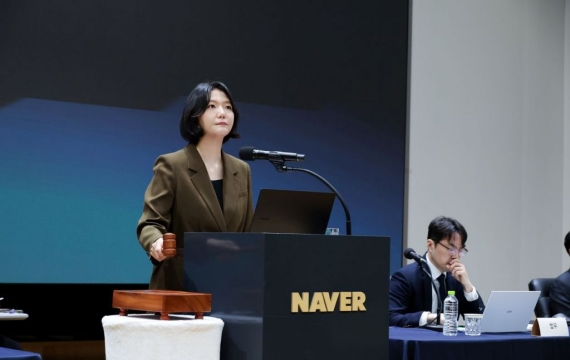
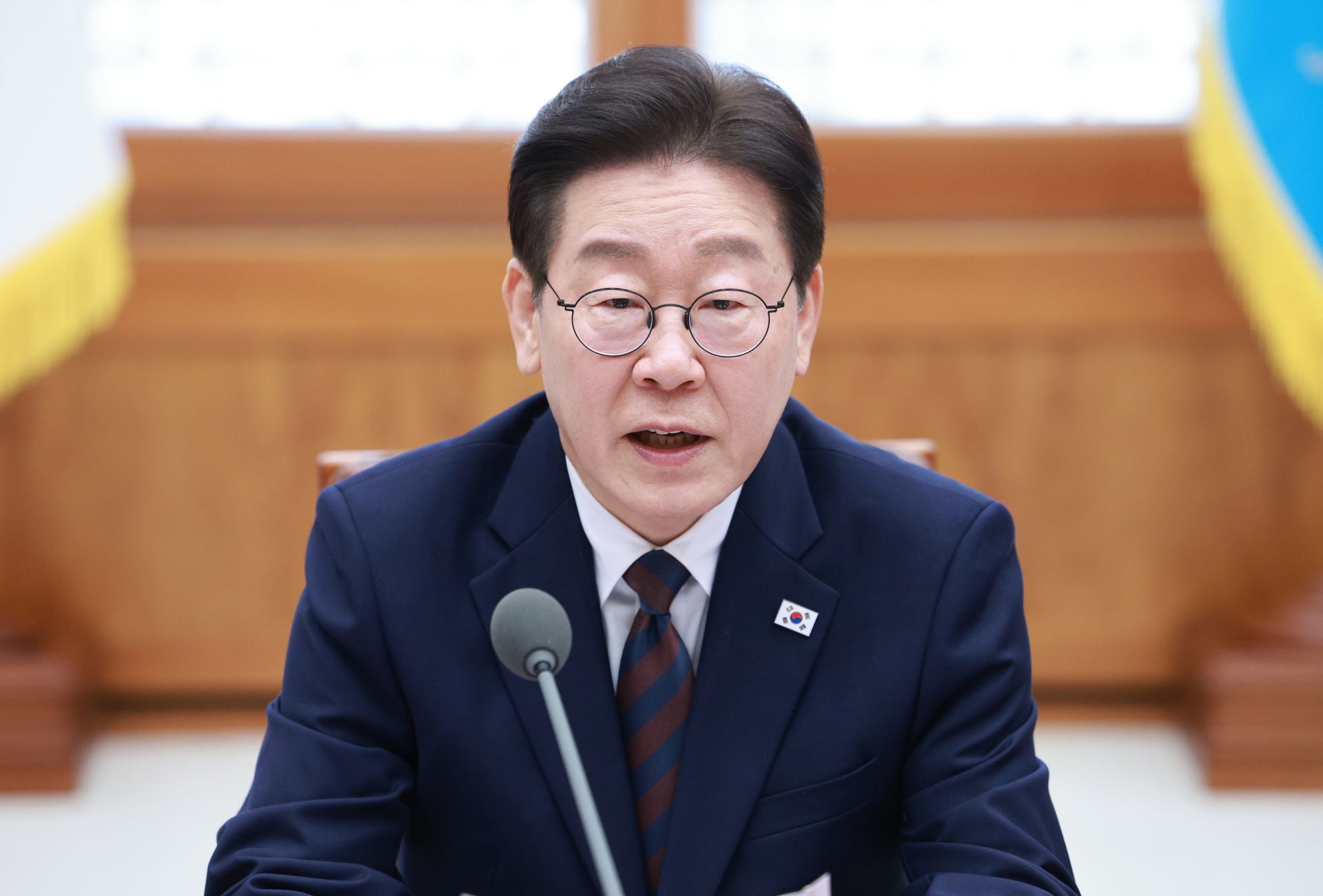
President Lee Jae-myung is speaking at the Emergency Economic Inspection Meeting on the Middle East situation held at the Blue House on the 9th. Photo by Yonhap News Agency
The background behind President Lee's decision to convene this meeting is the prolonged disruption of passage through the Strait of Hormuz. The Strait of Hormuz, which handles about 20% of the world's crude oil and liquefied natural gas (LNG) supply, is effectively closed. As a result, on March 7 (local time), the Kuwait Petroleum Corporation (KPC), faced with shipment blockages due to the Middle East war, declared force majeure and decided to reduce oil production. This means the shock from the Middle East is now spreading beyond a simple geopolitical risk to a global real-economy supply chain variable.
The fact that the Ministry of Economy and Finance, the Ministry of Trade, Industry and Energy, the Ministry of Climate, Energy and Environment, the Ministry of Planning and Budget, the Ministry of Agriculture, Food and Rural Affairs, the Fair Trade Commission, and the National Tax Service all attended the meeting presided over by President Lee is seen as a move to prepare for complex shocks. It is likely that topics such as securing energy supply and import routes, the speed at which refiners and gas stations pass on price increases, the possibility of collusion and hoarding, the impact on agricultural and processed food prices, and tax support will all be discussed at one table.
At the meeting, Deputy Prime Minister for Economic Affairs and Minister of Economy and Finance Koo Yooncheol reported on "Assessment of Real Economy Impact and Whole-of-Government Response Direction." Minister of Trade, Industry and Energy Kim Junggwan reported on "Oil and Gas Supply and Price Stabilization Measures." Financial Services Commission Chairman Lee Eogwon shared "Financial Market Situation Assessment and Response Measures." According to a Blue House official, "By bringing all ministries together, we are assessing the current response and setting priorities to enable swift decision-making with relevant ministries."
Soaring Fuel Prices Shake Living Costs
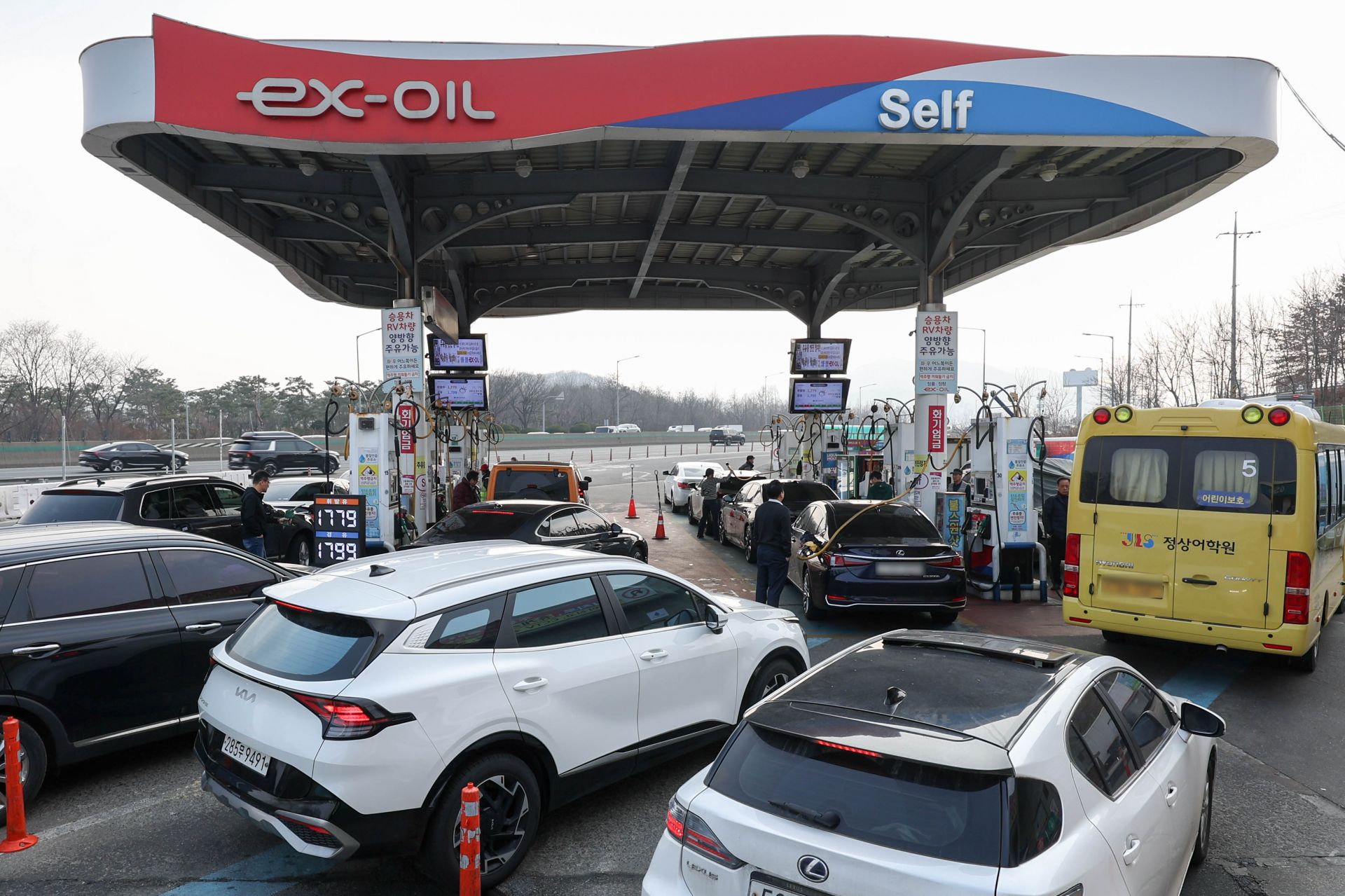
On the 9th, as international oil prices surpassed $100, fuel prices at gas stations nationwide have been rising, and cars lined up at the Mannam Plaza gas station in Seocho-gu, Seoul, trying to refuel before prices go up further. Photo by Kang Jin-hyung
International oil prices are already fully reflecting the shock of the Middle East crisis. On the morning of March 9, international crude oil prices soared to over 100 dollars per barrel. On the New York Mercantile Exchange, West Texas Intermediate (WTI) crude futures rose to 107.54 dollars per barrel. This is the first time since July 2022 that WTI prices have exceeded 100 dollars per barrel. Brent crude prices also surpassed 100 dollars per barrel. This indicates that international oil prices have begun to reflect the possibility of a prolonged Middle East crisis.
The government has activated a 24-hour response system to minimize the economic impact of the Middle East crisis. Blue House Chief of Staff Kang Hoonshik held an unscheduled briefing on March 6 and announced that, in consultation with the United Arab Emirates (UAE), Korea would urgently import 6 million barrels of crude oil. Two Korean-flagged oil tankers will dock at alternative UAE ports that do not require passage through the Strait of Hormuz, and 4 million barrels of crude oil stored at these ports will be transported to Korea. The government has also reached an agreement to use an additional 2 million barrels from the UAE joint stockpile if necessary.
However, the immediate issue is not depletion of reserves, but the gasoline and diesel prices felt by consumers. As of the morning of March 9, Opinet data showed the national average gasoline price at gas stations had risen to 1,896.24 won per liter, and diesel to 1,918.60 won. In Seoul, gasoline was 1,947.32 won and diesel 1,968.09 won. While the rapid daily increases of several dozen won have eased somewhat, since changes in international oil prices typically take two to three weeks to be reflected at domestic gas stations, further increases cannot be ruled out. This is also why the government, at President Lee's instruction, brought out the maximum pricing card.
The impact of rising oil prices on the cost of living must also be closely monitored. In February, consumer prices rose 2.0% year-on-year, with core inflation (excluding food and energy) rising 2.3%, and living costs up 1.8%. While February's figures do not indicate prices are far outside the management range, the recent oil price surge is not yet fully reflected, so caution is warranted. From March onward, higher fuel costs could spread to logistics, processed foods, dining out, and livestock prices.
KOSPI Sees Largest Drop Ever... Lowest Level in 17 Years
On the 9th, as the KOSPI fell more than 6% intraday triggering a sell-side circuit breaker, employees at the Seoul Hana Bank headquarters dealing room were monitoring the stock market and exchange rates. On the day, the KOSPI opened at 5265.37, down 319.50 points (5.72%) from the previous trading day on the 9th, and the KOSDAQ started at 1096.48, down 58.19 points (5.04%). Photo by Jo Yongjun
Concerns about financial market volatility are also mounting. On March 4, due to the shock of the Middle East war, the KOSPI plunged 12.06% to close at 5,093.54, marking the largest drop ever. The won-dollar exchange rate soared to 1,505.8 won during trading, falling to its lowest level in 17 years. On March 9, as international oil prices surged again and the war situation worsened, the won-dollar rate opened up 16.6 won at 1,493.0 won and continued to fluctuate in the 1,490 won range. The KOSPI also dropped more than 8% during the morning session, falling to the 5,096 level. Around 9:06 a.m. after the market opened, the sidecar (temporary halt of program sell orders) was triggered due to volatility in the KOSPI 200 futures index.
Going forward, the government's top priority is expected to be preemptively mitigating the escalating fallout from the Middle East war. The government is likely to step up efforts to address short-term supply anxiety through reserves and emergency imports from the UAE, while also working to slow the pace at which rising oil prices are passed on to consumer prices and managing volatility in exchange rates and the stock market.




![[Exclusive] "Looking Beyond Financial Statements for Future Value"... IBK Injects 170 Billion Won into 72 Innovative Companies](https://cwcontent.asiae.co.kr/asiaresize/304/2026011314545989464_1768283699.jpg)