Average monthly income of full-time domestic riders is 3.7 million won... Top earners make 7 million won
Number of Foreigners Illegally Employed in Delivery and Courier Sectors Quadruples in Three Years
Foreigners Circumvent Platforms by Renting Korean Accounts for a Fee
Foreigners with Student and Non-professional Work Visas Working Illegally as Riders
Obligation to Purchase Insurance Ignored... Growing 'Safety Blind Spots'
Due to This... For Korean Riders, 'Getting a Delivery Call Is Like Picking Stars from the Sky'
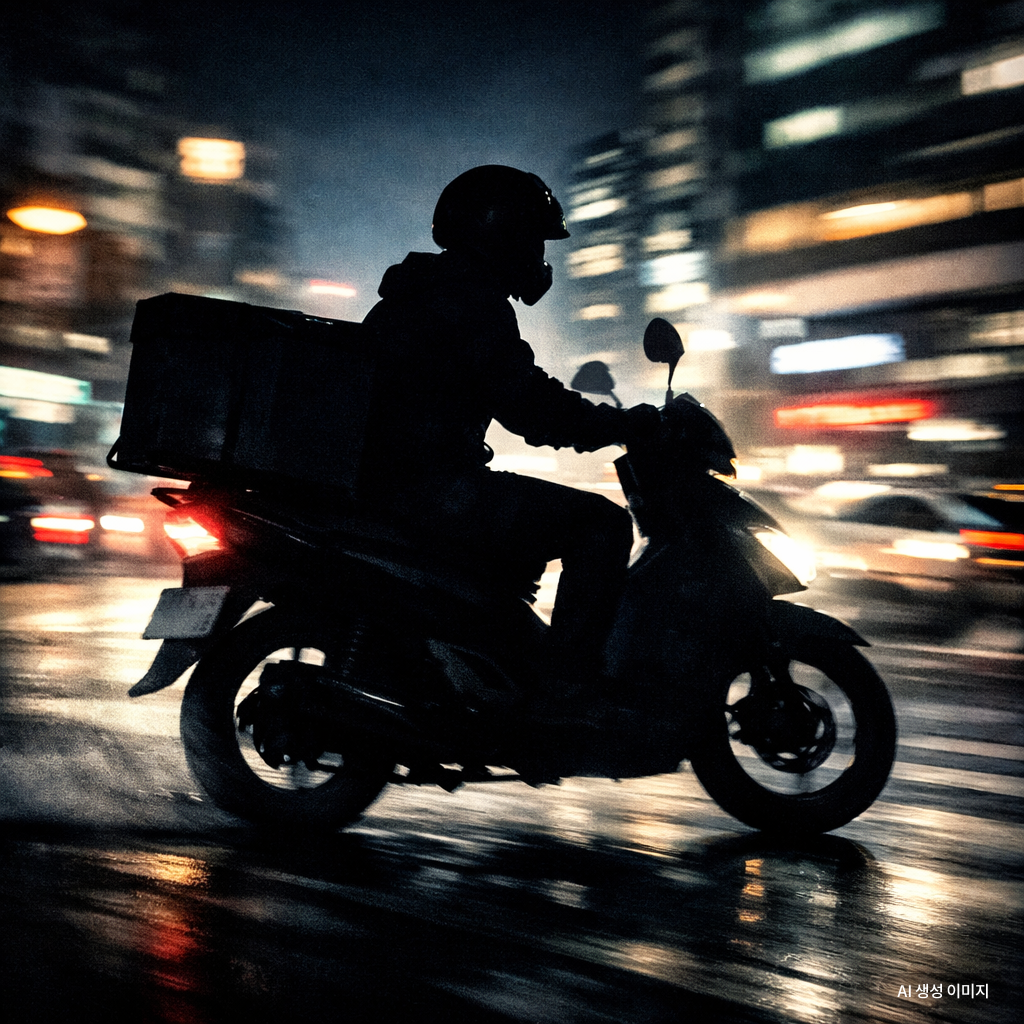
Shin Dahyun (48), a sixth-year delivery worker living in Gwangjin-gu, Seoul, confessed, "These days, getting a delivery call is like picking stars from the sky." While delivery demand remains steady, the number of "competitors on the road" has soared. He added, "Three or four out of ten are illegal foreign riders," and said, "Koreans who pay for insurance and work honestly are being pushed out."
The rapidly growing domestic delivery market has emerged as a new illegal employment route for foreign workers seeking high earnings. With the number of foreigners entering the delivery sector through identity theft and without proper visas surging, there are growing concerns not only about safety issues but also about the livelihoods of domestic delivery workers.

Average income of Chinese delivery workers is 1.3 million won... Koreans flock due to income gap
Promotion spreads on SNS: "40,000 won per day with just a translator"
According to the Ministry of Justice on March 5, the number of foreigners caught illegally working in delivery and courier jobs jumped from 117 in 2023 to 486 in 2025-an increase of more than fourfold in just three years. Under current law, only those with a Residence (F-2), Permanent Residency (F-5), or Marriage Migration (F-6) visa are permitted to work in the delivery industry. However, cases of foreigners with Non-professional Employment (E-9) or Student (D-2) visas working as illegal riders continue to occur.
Posts Seeking Korean Accounts and Bank Accounts Shared in Southeast Asian Communities
Platform's “Foreign User Registration Block” Still Has Verification Loopholes
Authorities Point Out the Need to Strengthen Identity Verification Such as Facial Recognition
In the delivery industry, it is widely noted that these individuals mostly use "identity theft" methods. Delivery agencies secure multiple accounts under Korean names and then rent them to foreigners for a fixed monthly fee of about 200,000 to 300,000 won. Major platforms like Coupang Eats have implemented measures to block foreign workers from registering as riders, but loopholes remain. Even with a foreign-registered mobile phone, the system can be bypassed simply by logging in with a Korean account and sharing the authentication code, effectively neutralizing the platform's policy.
Foreign workers are willing to risk illegality and danger to enter the delivery industry because of the overwhelming profitability. According to Chinese business media outlet Yicai, the average monthly income of a Chinese delivery worker was about 6,803 yuan (1.3 million won) in 2023, while the average full-time rider on the domestic platform Barogo earned 3.738 million won. The top 20% of riders make between 5 million and 7 million won. This means earnings in Korea can be three to five times higher than in China. The obligation to subscribe to "delivery driver commercial transport insurance," which costs about 2 million won per year, is also being ignored.

As a result, videos describing the Korean delivery market as a "land of opportunity" are being posted one after another on Chinese social media platforms such as Xiaohongshu. Promotional videos claiming "You can earn 40,000 won a day with just a translator, even if you don't speak Korean" are fueling illegal employment. On Facebook and in communities of Southeast Asian university students, multiple posts have been found sharing methods to obtain Korean accounts and bank accounts.
Although strengthening identity verification-such as through facial recognition-has been suggested as a solution, the delivery platform industry is hesitant due to concerns about increased costs and rider attrition. An official at the Immigration and Foreigners Policy Headquarters emphasized, "With limited enforcement personnel, there are clear limits to catching all illegal foreign riders in urban areas," adding, "Strengthening identity verification at the platform level to prevent identity theft and imposing penalties on illegal employers must go hand in hand."
-

Reporter Park Hosu lake@asiae.co.kr
-
Edit Kang Dongwon kangdw76@asiae.co.kr
© The Asia Business Daily(www.asiae.co.kr). All rights reserved.

![[Exclusive] "Looking Beyond Financial Statements for Future Value"... IBK Injects 170 Billion Won into 72 Innovative Companies](https://cwcontent.asiae.co.kr/asiaresize/304/2026011314545989464_1768283699.jpg)