
![4,000 Won Twisted Doughnut and Double-Priced 'Limousine Cart'... "This Is Too Much" [Korean Golf Courses Cross the Line]](http://www.asiae.co.kr/news/img_view.htm?img=2025062010330115723_1750383181.jpg)
Domestic golfers are also expressing dissatisfaction with the cart usage fees. Although electric carts typically recover their purchase cost within six months, there are still criticisms that the usage fees are excessively high.
Mr. A, who works in Seoul, was left speechless after seeing the price of a twisted doughnut at B Golf Course in Yongin, Gyeonggi Province. After finishing the first half of his round, he stopped by the halfway house for a snack and was shocked to see a price tag of 4,000 won for a single twisted doughnut, letting out a sigh. Mr. A expressed his dissatisfaction, saying, "I knew food and beverages at golf courses were expensive, but this is too much," and added, "I don't think I'll ever come to this golf course again."
Domestic golf courses have enjoyed a boom since 2020 due to the COVID-19 pandemic. As golf was recognized as a relatively safe outdoor sport, a large number of beginners, including "gollini" (a portmanteau of golf and children, referring to novice golfers), flocked to the courses. With overseas travel becoming difficult, even the younger generation with a keen sense of fashion turned to golf courses. Seizing this opportunity, golf courses significantly raised their usage fees. In the Seoul metropolitan area, demand was so high that even booking a tee time became difficult.
The gap in green fees between membership and public golf courses, which once narrowed, is widening again. As of May 2020, the difference was 47,600 won on weekdays and 44,000 won on weekends. By May 2022, these differences had decreased to 35,800 won and 31,700 won, respectively, due to a higher rate of increase at public golf courses. However, as of May 2025, the gap has widened again to 48,300 won on weekdays and 43,200 won on weekends. Frequent price hikes at public golf courses have made the non-member green fees at membership courses appear relatively cheaper, prompting membership courses to raise their prices as well.
Green fee increases are directly linked to golf course supply and business performance. Before COVID-19, membership courses would raise prices first, followed by public courses. After the pandemic, however, public courses began raising prices preemptively, with membership courses following suit.
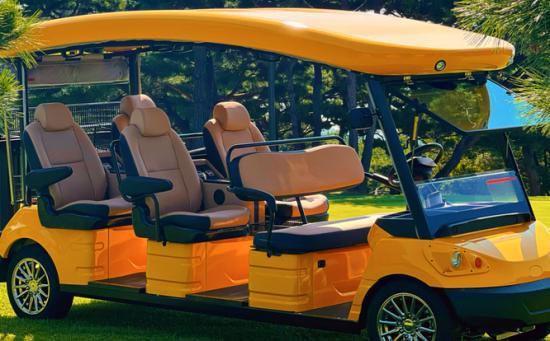
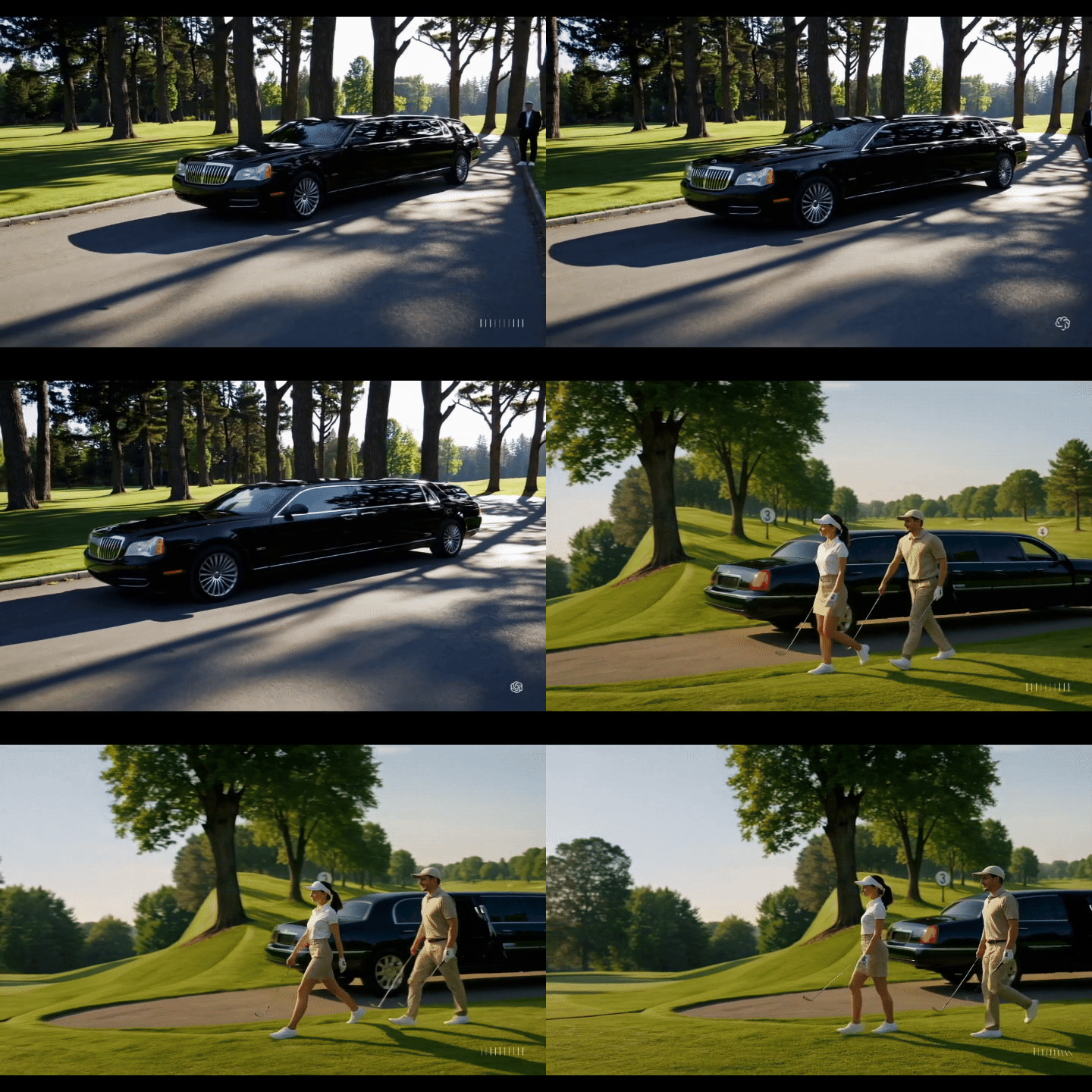
In particular, since 2023, 'Limousine Carts' that cost about twice as much as existing electric carts have been introduced to maximize profits through them.
Seocheon Beom, director of the Korea Leisure Industry Research Institute, stated, "Considering that the purchase price of a 5-seater electric cart is around 13 million won, the current cart usage fees are excessive."
He pointed out, "Electric carts are a means to increase the turnover rate of golf courses, so the cart fees should be reduced to about half."
![4,000 Won Twisted Doughnut and Double-Priced 'Limousine Cart'... "This Is Too Much" [Korean Golf Courses Cross the Line]](http://www.asiae.co.kr/news/img_view.htm?img=2025062011375315914_1750387073.jpg)
Complaints are also being raised about food and beverage prices and caddie fees. Park Junghoon, a lawmaker from the People Power Party, criticized excessive pricing at a forum in March 2025 aimed at eradicating unfair practices at golf courses, stating, "In 2023, there were many golf courses with operating profit margins exceeding 60%, and some charged 140,000 won for a single dish of sweet and sour pork. This is more expensive than the 90,000 won charged at the Shilla Hotel." Caddie fees, which used to be between 80,000 and 100,000 won, have recently risen to between 120,000 and 170,000 won, increasing the burden on weekend golfers.
There is a growing call for an overall reduction in usage fees for domestic golf courses to return to normalcy. According to the Korea Leisure Industry Research Institute, the net increase in golf course sales from 2020 to 2023 reached approximately 2.4863 trillion won. About 5.78 million golfers spent an additional 430,000 won per person. If usage fees are lowered to reasonable levels, it is expected that demand for overseas golf will shift back to the domestic market, revitalizing the Korean golf industry.

![[Exclusive] "Looking Beyond Financial Statements for Future Value"... IBK Injects 170 Billion Won into 72 Innovative Companies](https://cwcontent.asiae.co.kr/asiaresize/304/2026011314545989464_1768283699.jpg)