Changes are being detected in the portfolios of foreign investors.
Foreign investors net-buy 3 trillion won in KOSPI this month
Reducing holdings in defense and nuclear power stocks
Buying Samsung Electronics and SK Hynix
"Current stock prices are excessively undervalued"
Signaling a shift in rally leaders
Reducing holdings in defense and nuclear power stocks
Buying Samsung Electronics and SK Hynix
"Current stock prices are excessively undervalued"
Signaling a shift in rally leaders
Changes are being detected in the portfolios of foreign investors who had led the rally in defense industry stocks since the beginning of the year. Since the presidential election, these investors have poured about 3 trillion won into the KOSPI, betting over 1 trillion won on leading semiconductor stocks Samsung Electronics and SK Hynix, signaling a shift in the leading stocks of the rally.
According to the Korea Exchange on June 10, Samsung Electronics and SK Hynix closed the previous day at 59,800 won (up 1.18%) and 229,000 won (up 2%), respectively. Both stocks briefly surpassed 60,000 won and 230,000 won during intraday trading. It has been about a year since SK Hynix reclaimed the "230,000-nix" title, last achieved in July of the previous year.
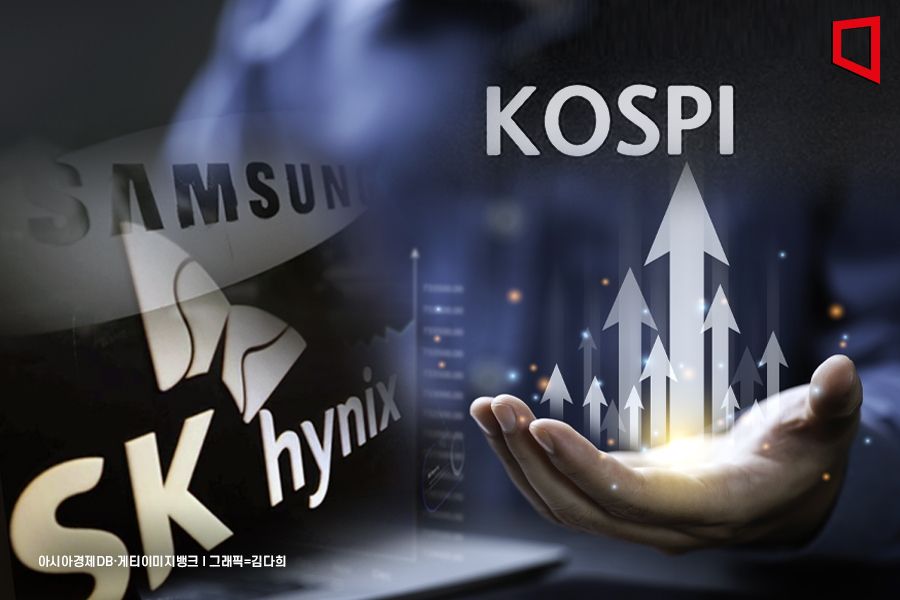
Since the presidential election, those who have poured about 3 trillion won into the KOSPI are betting over 1 trillion won on semiconductor leaders Samsung Electronics and SK Hynix, signaling a shift in the leading stocks of the rally.
"Samsung Electronics currently has a low price-to-book ratio (PBR) and relatively low downside risk."
"Although SK Hynix's earnings volatility in the second half may be greater than expected, even considering this risk, the current stock price level is excessively low."
The strong performance of the KOSPI's "two engines" is being driven by the return of foreign investors. From the beginning of the year until last month, foreign investors had sold 14.5 trillion won in KOSPI stocks, but immediately after the presidential election, they net-bought 2.1 trillion won over two days and purchased an additional 980 billion won on this day, supporting the index. From January to May, the top net-buy stocks among foreign investors were defense and nuclear power stocks such as Hanwha Aerospace, Korea Electric Power Corporation, Doosan Enerbility, NAVER, and LIG Nex1. However, this month, SK Hynix and Samsung Electronics together accounted for a net purchase of 1.145 trillion won, taking the first and second places, respectively.
Lee Seungwoo, a researcher at Eugene Investment & Securities, stated, "Samsung Electronics currently has a low price-to-book ratio (PBR) and relatively low downside risk," and added, "Although SK Hynix's earnings volatility in the second half may be greater than expected, even considering this risk, the current stock price level is excessively low." The increase in DRAM prices due to preemptive memory purchases by clients amid tariff uncertainty and the trend of reduced DDR4 production are also considered positive factors for both companies.

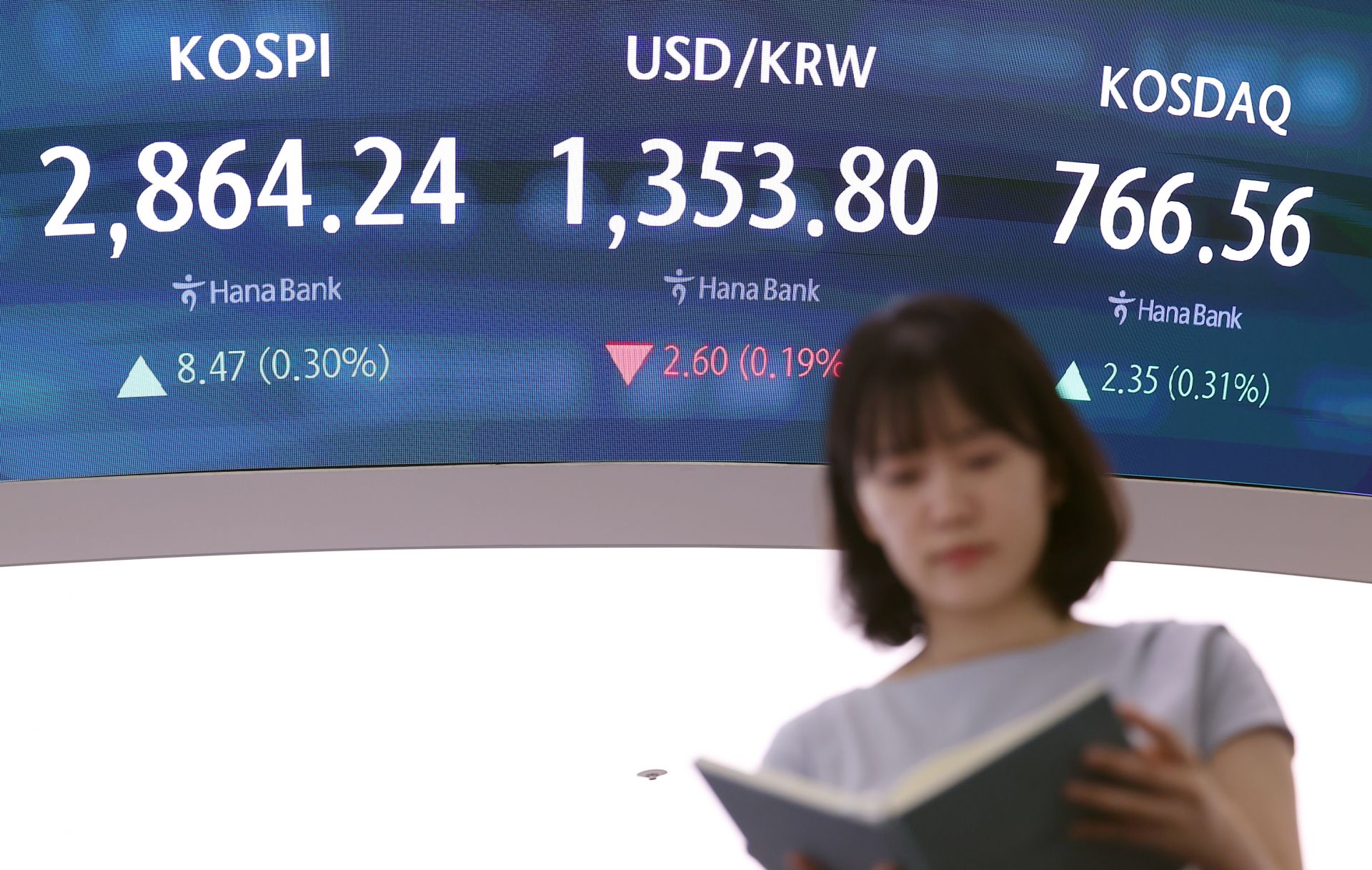
There is continued optimism regarding the sustainability of foreign investor buying. This is attributed to the recent stabilization and downward trend of the won-dollar exchange rate. Jung Dawoon, a researcher at LS Securities, explained, "If we simplify the relationship between the won-dollar exchange rate and foreign investors' KOSPI shareholding ratio as linear, a 1-won decrease in the exchange rate leads to a 0.0079% increase in the shareholding ratio," and added, "If the current exchange rate drops to 1,330 won per dollar, foreign investors' KOSPI shareholding ratio could expand by an additional 0.565 percentage points to 31.865%."
However, there are also voices cautioning against excessive chasing of the rally, as the stock market may enter a cooling-off period due to short-term overheating. Cho Joonki, a researcher at SK Securities, pointed out, "While there is potential for further gains with the influx of positive news, the current index level represents a short-term shooting range with a low risk-reward ratio," and warned, "If adjustment factors arise, the magnitude of the decline could be larger than expected."
The fact that the KOSPI has entered a technical bull market (up 20% from the bottom) also supports the argument for a short-term correction. Heo Jaehwan, a researcher at Eugene Investment & Securities, noted, "Except for certain periods such as the 2011-2012 European debt crisis and COVID-19, the KOSPI's upward momentum usually halted after rising 20-30% from the bottom," and added, "Recently, the KOSPI has risen 22.6%. The likelihood of further acceleration in the upward trend is gradually decreasing."
-

Reporter Kim Jinyeong camp@asiae.co.kr
-
Edit Choi Yujeong yjchoi@asiae.co.kr
© The Asia Business Daily(www.asiae.co.kr). All rights reserved.

![[Exclusive] "Looking Beyond Financial Statements for Future Value"... IBK Injects 170 Billion Won into 72 Innovative Companies](https://cwcontent.asiae.co.kr/asiaresize/304/2026011314545989464_1768283699.jpg)