Strengthened Content Policy... Image Generation Now Refuses Requests Based on Real Person Representation
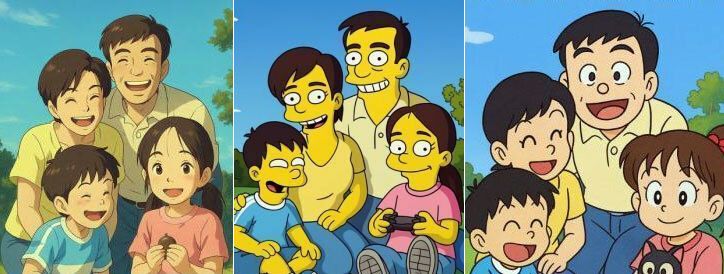
ChatGPT's feature that transforms images into the styles of famous animations such as Studio Ghibli and Disney is gaining popularity. Some users are even making it a trend to convert their profile pictures into Ghibli-style artwork and upload them to social networking services (SNS). Amidst this Ghibli craze, the use of OpenAI's ChatGPT image generation model has become more strictly regulated. Since May 31, OpenAI's GPT-4o-based image generation system has internally implemented a much more sophisticated and stringent content policy, with enhanced restrictions on photo-based image generation.
Within OpenAI, updates to DALL-E's image generation model safety filters now make the system more sensitive in determining whether an uploaded photo is being reinterpreted or altered to represent a real person. As a result, content policies related to photos are enforced more strictly, and ChatGPT now automatically refuses to generate images if it determines a violation.

Sam Altman, CEO of OpenAI, also changed his profile picture to a 'Ghibli-style illustration.' Sam Altman X (X)
원본보기 아이콘In fact, some users requesting to "change it to a Ghibli style" are receiving rejection messages such as "This violates our content policy" or "It is difficult to provide this due to system limitations." To achieve results similar to before, users must now provide detailed written descriptions of the photo or illustration. The same applies to other styles such as Disney, Ghibli, Slam Dunk, or Pixar.
Additionally, many paid ChatGPT users report experiencing a "fast and seamless" service, but free users are often refused or struggle to obtain their desired results. This is because, when image generation requests surge, GPU resources are prioritized for paid users. OpenAI currently offers paid subscription services: 'ChatGPT Plus' at $20 per month (about 27,000 KRW) and 'ChatGPT Pro' at $200 per month (about 270,000 KRW). There are concerns that such significant pricing could widen the gap in accessibility to artificial intelligence (AI).

In fact, several users have received messages stating, "The scene was automatically blocked because it was judged to be composed based on the uploaded photo." Requests like "Change this photo to Ghibli style" are blocked as before, and users must describe the appearance in the photo in detail with text to make a request. The same applies to other art styles such as Disney, Ghibli, Slam Dunk, or Pixar. Asia Economy DB
원본보기 아이콘GPT-4o-Based Image Generation Feature Gains Global Popularity... Copyright Infringement Concerns Arise
Meanwhile, the GPT-4o-based image generation feature has become hugely popular, with the daily average number of generated images reaching between 420 million and 560 million in the week following its launch on May 25. In Korea, there has been a boom with SNS and KakaoTalk profile photos being replaced with ChatGPT-generated images. Many are amazed at how the warm and lyrical style of Studio Ghibli, founded by legendary Japanese animator Hayao Miyazaki, is faithfully recreated.
The system can also replicate styles like The Simpsons or Disney. However, there are growing concerns about potential copyright infringement. OpenAI has not clarified whether it has copyright agreements with animation studios. It is also not officially confirmed whether the original creators' consent was obtained for the images used to train the AI. Legal experts offer various interpretations, ranging from the opinion that training without partnerships could violate copyright law to the view that simply recreating the atmosphere of an artwork may not be problematic.

Among these, recently, AI images have even been used to create 'fake receipt' images using ChatGPT, raising growing concerns that AI images could be exploited for crimes such as false expense claims or refund fraud. Didi Das X
원본보기 아이콘Recently, even "fake receipt" images created using ChatGPT have emerged, raising concerns that AI-generated images could be misused for crimes such as fraudulent expense claims or refund scams. These images have evolved to the point where details like food stains and crumpled paper textures are so realistic that they are difficult to distinguish from real receipts without close inspection. Experts stress the urgent need for institutional measures to prevent the spread of AI-manipulated content that undermines trust.
-
Reporter Bang Jeil zeilism@asiae.co.kr
-
Edit Yang Hyejin adoretj@asiae.co.kr
© The Asia Business Daily(www.asiae.co.kr). All rights reserved.
![[Exclusive] "Looking Beyond Financial Statements for Future Value"... IBK Injects 170 Billion Won into 72 Innovative Companies](https://cwcontent.asiae.co.kr/asiaresize/304/2026011314545989464_1768283699.jpg)