In Depth
Scientists Are Disappearing
-
26.05.21 06:30
- ④A Shaky Regional Research Ecosystem... "Professors Now Take the Initiative"
-
Editor's NoteThe statement that scientists are disappearing may sound exaggerated. After all, statistics show that the number of graduate students in the science and engineering fields and investment in research and development (R&D) are being maintained. However, the reality in the field tells a different story: graduate programs failing to fill seats, prolonged postdoctoral (postdoc) positions, and regional research labs falling silent. Through this special series, The Asia Business Daily examines the question of 'Why are scientists disappearing?' and explores what changes are needed in both policy and practice to ensure that scientists can continue their research in South Korea for the long term. In regional university laboratories, professors now seek out students themselves, instead of waiting for them to apply. In the past, students would knock on lab doors first, and professors would select candidates who matched their research topics. But now, even when admissions briefings are
-
26.05.20 06:30
- "Even With a 90 Million Won Salary and Bonuses, It Doesn’t Feel Like Much"... A Latecomer Rookie Who Beat 70 to 1 Odds ③
-
Editor's NoteThe assertion that “scientists are disappearing” may sound exaggerated. After all, the number of graduate students in science and engineering and investment in research and development (R&D) are statistically being maintained. However, the reality at research sites is quite different, with unfilled graduate programs, prolonged postdoctoral researcher (postdoc) periods, and silent, stagnant laboratories in regional areas. Through this series, The Asia Business Daily explores the question, “Why are scientists disappearing?” and seeks solutions for how policy and field practices need to change to ensure scientists can continue their research careers for the long term in South Korea. "I am actually one of the lucky ones." Park Sung-Hoon (38, alias), who works at K Research Institute, a government-funded institution in Daejeon, spoke calmly. Born in 1988, he completed his master's and doctoral programs and, after two years as a postdoctoral researcher, only managed to secur
-
26.05.19 06:40
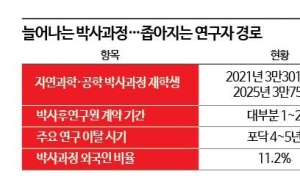
- ②After the PhD, Only One-Year Contracts Remain
-
Editor's NoteThe statement that "scientists are disappearing" may sound exaggerated. After all, the number of graduate students in science and engineering and investment in research and development (R&D) remain steady, at least on paper. However, at research sites, a very different reality is unfolding: unfilled graduate programs, prolonged postdoctoral researcher (postdoc) periods, and regional laboratories that have fallen silent. Through this series, The Asia Business Daily explores the question: "Why are scientists disappearing?" We seek to find solutions to how policies and the field itself must change in order for Korea to become a country where scientists can continue their research careers for the long term. Even after earning a PhD, the path to becoming an independent researcher does not open easily. In reality, young researchers repeatedly take on one- to two-year contract research positions after obtaining their degrees. The pathway to stable research positions is narrowing,
-
26.05.19 06:30
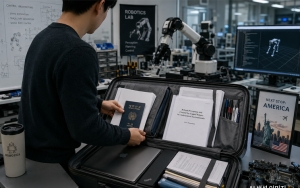
- "Rather Than Endure a 1.5 Million KRW Stipend, I'd Rather Earn 500 Million in the U.S." Top Talent from SNU and KAIST Are Leaving ①
-
Editor's NoteThe statement that "scientists are disappearing" may sound like an exaggeration. After all, the number of graduate students in STEM fields and investment in research and development (R&D) have both been maintained in terms of figures. However, the reality at research sites reveals a very different picture: unfilled graduate programs, prolonged postdoctoral researcher (postdoc) periods, and quiet, stagnant laboratories in regional universities. Through this special series, The Asia Business Daily explored the question, "Why are scientists disappearing?" We sought solutions on how both policy and the research field must change in order to create a South Korea where scientists can continue their research careers for the long term. In February of this year, Junhyeon Kim (28, pseudonym), who received a master's degree in science and engineering from a university in Seoul, is set to leave for the United States in August to pursue a PhD in robotics. He could have chosen to study