In Depth
Shaken K-Automobile
-
26.05.19 10:55
- ④ Lee Jaemyung's Domestic Production Promotion Tax System... Legislative Status
-
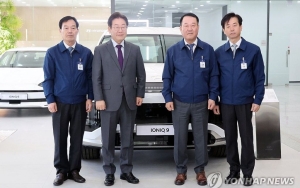
"I understand that Japan and the United States have already introduced similar systems. In order to encourage domestic production and protect domestic industries, it is necessary to introduce new deduction and tax credit systems. Perhaps it would be appropriate to call it a 'domestic production promotion tax system.' President Lee Jae-myung made these remarks during his visit to Hyundai Motor Company's Asan Plant in February last year, when he was serving as the leader of the Democratic Party of Korea. Since then, we have examined the current status of the legislative process for the domestic production promotion tax system. According to the National Assembly's Bill Information System on May 19, a total of 14 partial amendments to the Restriction of Special Taxation Act have been proposed in the 22nd National Assembly to introduce the domestic production promotion tax system. The key content is to promote domestic production and stabilize supply chains by allowing companies to deduct
-
26.05.19 10:55
- ③ Chairman Jung Daejin: "Including Electric Vehicles in Domestic Production Incentive Tax System Will Strengthen the Industry Ecosystem"
-
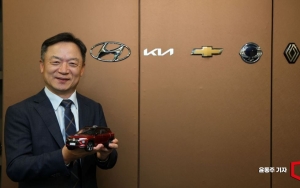
The automobile industry is insisting that environmentally friendly vehicles should be included as eligible items for the domestic production promotion tax system the government is seeking to introduce. This is due to concerns about weakening competitiveness of domestically produced vehicles, amid the influx of cheap Chinese electric cars and the strengthening of global protectionism. On May 6, The Asia Business Daily interviewed Jung Daejin, Chairman of the Korea Automobile Mobility Industry Association (KAMA), at the Automobile Hall in Seocho-gu, Seoul, to hear his thoughts on the importance of introducing the production tax system. In the area in front of his office, several miniature models of vehicles produced by domestic car manufacturers were on display. This highlighted both KAMA and Chairman Jung’s deep affection for the domestic automobile industry. Chairman Jung emphasized, "Through tax incentives, we can stably maintain the entire supply chain—from batteries to parts to fin
-
26.05.19 10:54
- ② US, China, Japan, EU Tighten Protection for Their Industries... Only Korean Cars Left Unprotected
-
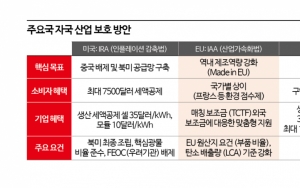
Global protectionism aimed at safeguarding domestic automotive industries is becoming increasingly sophisticated. As China intensifies its aggressive export push, the European Union (EU) has followed the United States and Japan in tightening defensive measures by linking incentives to domestic production. Meanwhile, there is growing concern across the Korean industry that a lack of effective countermeasures could result in Korea falling behind in global competition. According to the China Association of Automobile Manufacturers on May 19, China exported 7.1 million vehicles last year, an increase of 21.1% compared to the previous year. After remaining at around 1 million vehicles annually until 2020, exports nearly doubled in 2021 and have continued their steep growth. The main driver of this increase has been new energy vehicles, including electric vehicles (EVs) and plug-in hybrids (PHEVs). As China targets the global market with new energy vehicles as its core export engine, major
-
26.05.19 10:54
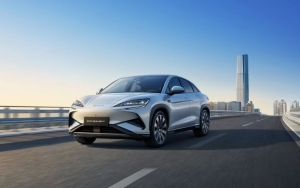
- ① Era of 1 Million EVs: Losing Home Ground
-
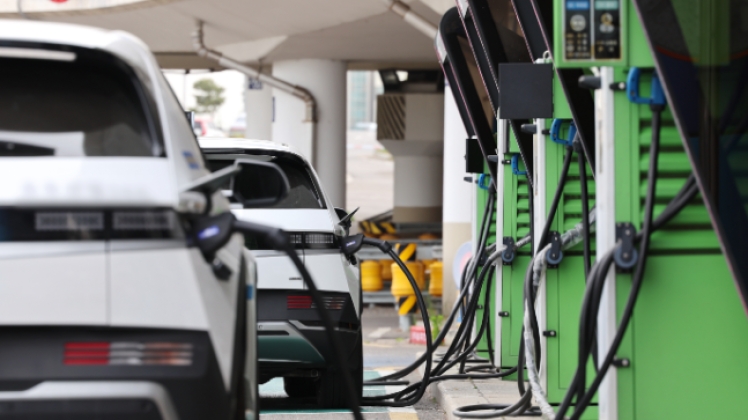
The number of registered electric vehicles (EVs) in Korea has surpassed 1 million, but the dominant players in the market are changing. In the first quarter of this year, the best-selling EV was the Tesla Model Y, and BYD, the global No.1, has quickly established itself by surpassing 10,000 cumulative sales in just one year since its entry. With the influx of American and Chinese brands, Korean automakers are even losing ground in their home market. At the root of this shift is a regulatory gap. The United States is strongly protecting its domestic industry through the Inflation Reduction Act (IRA), while Japan is doing so with its Strategic Fields Promotion Tax System. China, too, is providing comprehensive support to its domestic EV industry through subsidies and tax incentives. In contrast, even companies that manufacture cars domestically in Korea are not receiving adequate support. As a remedy, the introduction of a "domestic production promotion tax system" is being discussed. A