In Depth
Vulnerable Countries
-
26.05.21 07:02
- ⑮Prosecution: "Control Tower Urgently Needed... Delay Could Break the Dam"
-
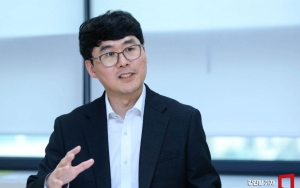
Incheon, known as the "gateway to Korea," is considered the front line in the fight against narcotics. The investigative team defending this region is now facing a dilemma. Starting in October, they will no longer be authorized to investigate narcotics crimes. As a result, there have been calls to establish a control tower that can provide an integrated response to crime and carry forward the investigative capabilities that the prosecution has developed. During an interview conducted on April 29 at the Incheon District Prosecutors' Office in Michuhol-gu, Incheon, Sung Dukyung, Head of the Violent Crimes Division at the Incheon District Prosecutors' Office (38th Judicial Research and Training Institute class), stated, "We must quickly establish a control tower to inherit the narcotics investigation capabilities that the prosecution has accumulated." He added, "If this process is delayed, an investigative vacuum could last for a month or two. If the dam we are barely holding back breaks,
-
26.05.21 07:01
- ⑭Police: "Undercover Investigations Introduced, Supply and Distribution Networks Blocked at Once"
-
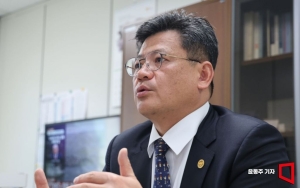
The police are focusing their investigative efforts on dismantling drug cartels, which are structured as decentralized cells, from the ground up. Recently, an amendment to the Narcotics Control Act allowing undercover investigations of narcotics crimes was passed. This has provided a legal foundation to strike at the leaders and the supply and distribution networks that had previously remained hidden. Oh Changhan, Chief Superintendent of the Narcotics and Organized Crime Investigation Division at the National Police Agency, stated in an interview conducted on April 30 at the National Police Agency in Seodaemun-gu, Seoul, "With the path to undercover investigations now open, we are able to block supply and distribution networks in one sweeping action," and added, "We will utilize this strategy under strict conditions to effectively counter criminal organizations." The Narcotics and Organized Crime Investigation Division, led by Oh, extradited Park Wangyeol (47), known as ‘Telegram World
-
26.05.21 07:00
- ⑬Released for 'Treatment'... Half of Hospitals Show No Results
-
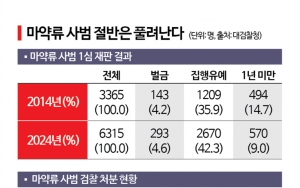
Nearly half of those convicted of drug-related offenses were released either because they were first-time offenders or had a treating physician. However, it was found that half of the treatment and protective institutions where these addicts should have received care had no record of providing any treatment. Due to this lax leniency—rather than strong punishment or effective treatment and rehabilitation—one in three ends up relapsing into drug use. Half Receive Suspended Sentences: Courts and Prosecutors Release Offenders for "Treatment" According to the Drug Crime White Paper published by the Supreme Prosecutors’ Office on May 21, the number of individuals convicted of drug-related offenses remained above 20,000 annually after peaking at 27,611 in 2023. However, many offenders received relatively light punishments such as fines or suspended sentences. Looking at the outcomes of first-instance trials for drug offenders, in 2024, fines and suspended sentences accounted for 2,963 out of
-
26.05.20 08:02
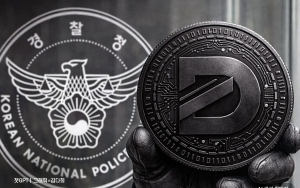
- ⑫Half of Drug Money Laundered...16 Trillion Won in Korea
-
It is estimated that 'half' of the criminal proceeds generated by global cross-border drug organizations are laundered. This is the result of using virtual assets designed to bypass the central control of governments and financial institutions. Globally, it is estimated that 1,000 trillion won, and in Korea alone, 16 trillion won in drug money has been laundered and reintegrated into the legal economy. This is similar to half the size of the domestic drug market, which The Asia Business Daily estimates to be worth 33 trillion won. Criminal organizations utilize this structure to expand the underground economy and reinvest in further criminal activities. Experts warn that drug-related crimes have reached a point where they not only involve simple trafficking and distribution, but also threaten the global financial order. Half of Drug Money Laundered...16 Trillion Won Laundered in Korea, Estimates ShowAccording to the Global Initiative Against Transnational Organized Crime (GIF), a globa
-
26.05.20 08:01

- ⑪Enough to Fund Four Space Launch Vehicles... The Annual 'Drug Bill' Hits 10 Trillion Won
-
It has been found that the social cost South Korea bears due to drug-related crimes is nearly 10 trillion won per year. This amount is enough to develop the next-generation launch vehicle, a key project for the nation’s “Leap to Space Power,” four times over, with funds to spare. This figure includes not only the costs of responding to these crimes, but also law enforcement, punishment, correction, treatment, rehabilitation, productivity losses from unemployment or death, and the pain experienced by people around the offenders. It represents a national loss that goes far beyond a simple fiscal issue, reflecting the collapse of the social safety net. On May 20, The Asia Business Daily, with advice from Sungsoo Park, Professor of Police Science at Semyung University, updated the study “Analysis of the Social Cost of Harmful Drugs Including Narcotics.” It estimated that, as of last year, the social cost resulting from drug-related crimes was 9.7676 trillion won. In Professor Park's 2016 s
-
26.05.20 08:01

- One in 77 Koreans Exposed to Drugs... Enough Money for 6,600 Luxury Gangnam Apartments Circulates in Drug Market ⑩
-
The potential size of the domestic drug distribution market in South Korea has been estimated to reach 33 trillion won. This is larger than the size of Korea's private education market, which stands at 27 trillion won. This means that more money is forming the underground economy than is being invested in education for the next generation, thus undermining the future of the country. The number of drug offenders in South Korea is estimated to be close to 670,000. This means that one in every 77 people in the country has come into contact with drugs, a statistic that highlights the seriousness of the drug issue. On May 20, The Asia Business Daily applied Professor Sungsoo Park’s research model—which calculates the dark figure (the rate of hidden crime) in drug-related crimes to be 28.57 times the reported figures—to the average annual volume of drug seizures and retail prices from 2021 to 2025. As a result, the potential size of the domestic drug market was estimated at 33.1208 trillion
-
26.05.19 07:02
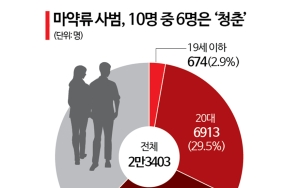
- The "90% Reality" Dominating Teens: Experts Shocked by Record-High Figures, Calling It "Just the Tip of the Iceberg" ⑨
-
Over the past decade, the number of teenage drug offenders has surged nearly tenfold. Whereas drug-related crimes were once considered the deviation of certain groups such as the privileged or those working in nightlife industries, now not only ordinary people but even classrooms are no longer safe. There have been a considerable number of cases where synthetic cannabis liquid was smoked in classrooms, and high school students have been directly involved in drug trafficking. According to the prosecution on May 19, the number of teenage (aged 19 or younger) drug offenders apprehended last year totaled 674. This represents more than a fivefold increase compared to the 128 cases in 2015. Compared to 30 cases in 2005, the figure has soared by more than 22 times. In 2023, the year the Ministry of Justice declared a war on drugs, as many as 1,477 teenagers were arrested. However, it is difficult to conclude that the number of teenage offenders simply increased based on the 2023 figure alone.
-
26.05.19 07:01
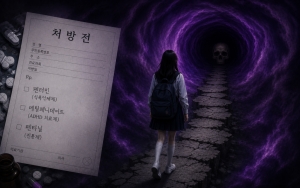
- ⑧ Medical Narcotics Exploit Legal Loopholes as "Weight Loss Pills"
-
In South Korea, 2 out of every 5 people are prescribed medical narcotics. Lax medical oversight has turned prescriptions into passes that can lead teenagers toward drug addiction. Reckless prescriptions of so-called "weight loss drugs" or "study enhancement drugs" are tempting young people with their effects, rather than warning them about the dangers of addiction. Due to the abuse and misuse of drugs within the boundaries of legality, the number of medical narcotics prescribed over the past five years has reached almost 9.5 billion pills. According to a compilation of investigative authorities and medical experts on May 19, medical narcotics are increasingly becoming the first gateway through which teenagers are exposed to narcotics. Appetite suppressants containing phentermine are colloquially known as "diet butterfly pills" due to their butterfly-shaped tablets. Methylphenidate-based drugs, used to treat Attention Deficit Hyperactivity Disorder (ADHD), are referred to as "focus-enha
-
26.05.19 07:00

- "I Hated Myself as Much as I Craved It"... Even a Mother's Tears and Brilliant Dreams Were Shattered ⑦
-
'At an age when we should have been dreaming, we bought hallucinations; at a time when we should have been planning for tomorrow, we faced death.' This is the confession of five young people who encountered drugs during their teenage years, as told to The Asia Business Daily. Some were introduced to drugs by seniors they admired, while others turned to drugs after enduring relentless academic stress. The outcome was uniformly devastating: crushing debt, hallucinations, the agony of organ paralysis, and even the deaths of loved ones. Here, we share the belated stories of those whose futures were entirely seized. Their accounts serve as both a warning for those tempted by dangerous curiosity and a desperate plea for help. Case 1. Repeated Drug Use, Surrendering the SoulA (21) is still stuck in time—seventh grade, that day. Although she was one of the top students, bullying twisted her outlook. The bullying eventually spread to the friend who stood by her side. One day, she lost that frie
-
26.05.18 07:06
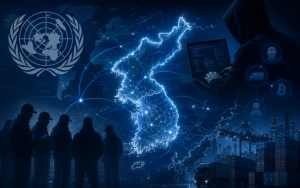
- ⑥UNODC: "Transnational Criminal Organizations Target South Korea"
-
The United Nations Office on Drugs and Crime (UNODC), which leads the global fight against drug-related crimes, has warned that "transnational criminal groups are targeting high-income countries such as South Korea." UNODC analyzed that the increase in demand for drugs is the result of a strategy by criminal organizations to expand supply and increase the number of people exposed to drugs. The Asia Business Daily requested a diagnosis from the UNODC to analyze the rapidly changing trends in domestic and international drug-related crimes. UNODC responded with an integrated analysis from an expert panel composed of crime analysts and policy strategists for the East Asia and Pacific regions. UNODC classified the drug crisis facing high-income countries in East Asia, including South Korea, as a "supply-driven market expansion," and expressed concern about the destructive impact it could have on the overall economy. Drug Cartels Target High-Income Countries Like South KoreaIn response to a