
In Depth
Change The Flow Of Money
-
26.04.28 15:00
- ⑥"Am I Responsible for Losses?" Ambiguous Indemnity Criteria Halt Financial Flows
-
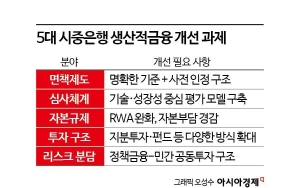
Commercial banks have unanimously pointed out that the scope and criteria for liability exemption related to investments in innovative companies remain ambiguous, urging the establishment of more concrete and effective guidelines. To revitalize productive finance, they recommend that improvements to the exemption system be accompanied by a multifaceted set of institutional enhancements, including capital regulation relaxation, the development of risk-sharing mechanisms with policy finance, the promotion of equity investment, and the introduction of tax incentives. "Ultimately, Responsibility Lies with Results"… Initiative Support Hindered by Ex Post Evaluation CultureAccording to a survey conducted by The Asia Business Daily on April 28 targeting KB Kookmin Bank, Shinhan Bank, Hana Bank, Woori Bank, and NH NongHyup Bank, all five major commercial banks identified the lack of clarity in liability exemption criteria and scope as a common challenge. An official from Commercial Bank A sta
-
26.04.27 19:03
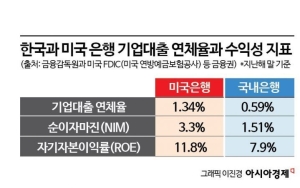
- ⑤Double the Delinquency Rate but Also Double the Profitability... The 'High Profit Secret' of U.S. Banks That Take Risks
-
Editor's Note The Lee Jaemyung administration has declared a fundamental shift toward "productive finance." The core of this strategy is to redirect the flow of funds?currently concentrated in real estate?toward high-tech and strategic industries. As the global battle for technological supremacy has expanded into a "capital war," the United States, China, Japan, and Europe are combining state capital with private finance to pour astronomical sums into strategic sectors. In contrast, criticism has mounted that Korean finance remains stuck in a conservative structure centered on real estate-secured lending. There are growing concerns that continued distortions in resource allocation may cause Korea to fall behind in technology competition. In response, the government has launched the 150 trillion won "National Growth Fund," which combines policy and private finance, initiating a structural transformation. This article examines the necessity of productive finance, the limitations of priva
-
26.04.27 16:00
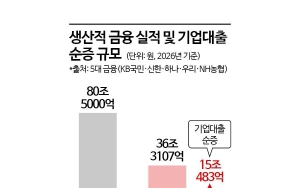
- ④"500 Trillion in 5 Years" ? Top 5 Financial Groups Inflate Productive Finance Results... Urgent Need for Stronger Technology Assessment and Screening
-
Editor's NoteThe Lee Jaemyung administration has declared a major shift toward "productive finance." The key is to redirect capital currently concentrated in real estate toward advanced and strategic industries. As the global technology hegemony race expands into a "capital war," the United States, China, Japan, and Europe are combining state capital and private finance to funnel astronomical sums into strategic industries. In contrast, Korean finance is still criticized for remaining stuck in a conservative, real estate-collateral-centered structure. There are growing concerns that continued misallocation of resources could lead to Korea falling behind in technological competition. To address this, the government has launched the "National Growth Fund"?a policy-private finance hybrid worth 150 trillion won?to kickstart structural transformation. This series explores the necessity of productive finance, the limitations of private finance, and the policy challenges that must be addresse
-
26.04.26 11:00
![National Growth Fund Helps Overcome 'Death Valley'... Inside the All-Solid-State Battery Mass Production Hub [Change the Flow of Money] ¨ç](https://cwcontent.asiae.co.kr/asiaresize/319/2026042418223540000_1777022555.jpg)
- National Growth Fund Helps Overcome 'Death Valley'... Inside the All-Solid-State Battery Mass Production Hub [Change the Flow of Money] ①
-
Editor's Note The Lee Jaemyung administration has declared a major shift toward "productive finance." The core of this policy is to redirect capital, which has been concentrated in real estate, toward advanced and strategic industries. As the global technological hegemony race expands into a "capital war," countries such as the United States, China, Japan, and those in Europe are pouring astronomical sums into strategic industries by combining state capital with private finance. In contrast, there is harsh criticism that Korea's financial sector remains stuck in a conservative structure centered on real estate collateral loans. There are growing concerns that continued distortions in resource allocation could leave Korea behind in technological competition. In response, the government has launched the 150 trillion won "National Growth Fund," combining policy and private finance, to kick-start this structural transformation. This series examines the necessity of productive finance, the
-
26.04.26 11:00
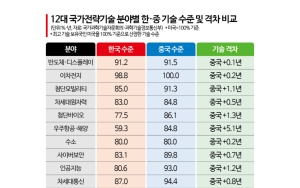
- ③ Korea Trails China in Advanced Technology While Capital Remains in Real Estate... Financial Structure Must Be Reformed to Fix 'Distorted Resource Allocation'
-
Editor's Note The Lee Jaemyung administration has declared a major shift toward "productive finance." The key policy is to redirect capital concentrated in real estate toward advanced and strategic industries. As the global competition for technological supremacy evolves into a "capital war," the United States, China, Japan, and Europe are combining state capital with private finance to pour astronomical amounts into strategic sectors. In contrast, Korea's financial sector is criticized for remaining stuck in a conservative, real estate-collateralized lending structure. There are growing concerns that continued distortions in resource allocation could cause Korea to fall behind in the technology race. In response, the government has launched the 150 trillion won "National Growth Fund," which merges policy finance with private capital as a first step toward structural transformation. This article examines the necessity of productive finance, the limitations of private sector finance, an
-
26.04.26 11:00
![¨è[Interview]](https://cwcontent.asiae.co.kr/asiaresize/319/2026042408590838884_1776988749.jpg)
- ②[Interview] "Growth Momentum Fueled by the National Growth Fund... The 'K-Certification' Attached to Rebellion"
-
Editor's Note The Lee Jae-myung administration has declared a major shift toward "productive finance." The key is to redirect capital currently concentrated in real estate into advanced and strategic industries. As global competition for technological supremacy expands into a "capital war," the United States, China, Japan, and Europe are pouring astronomical sums into strategic sectors by combining state capital with private finance. In contrast, Korea's financial sector has remained stuck in a conservative, real estate-collateralized system. There are growing concerns that continued distortion in resource allocation could cause Korea to fall behind in the technology race. In response, the government has launched the 150 trillion won "National Growth Fund," combining policy finance and private capital to drive structural change. This series examines the necessity of productive finance, the limitations of private finance, and the policy challenges that must be addressed going forward.