In Depth
US Tariffs Season 2
-
26.04.03 10:34
- US Becomes Largest Export Market, but Dual Burden of Market Diversification Persists
-
One year has passed since the United States began imposing high tariffs in April of last year. Companies such as Samsung Electronics, SK hynix, and Hyundai Motor Group have poured trillions of won into the U.S. in an effort to overcome tariff barriers. However, even after a year, uncertainties such as the threat of additional tariffs persist. Domestic companies are now facing the dual challenge of not only having to navigate their largest export market?the United States?but also bearing the burden of market diversification. Hyundai Motor Expands U.S. Local Production... Domestic Employment Cuts Unavoidable According to the business community on April 3, Hyundai Motor Group was one of the companies that responded most proactively after the Trump Administration imposed tariffs last year. The United States is a key market, accounting for about 25% of Hyundai Motor Group’s total sales. To mitigate the impact of high tariffs on imported cars, the company committed to investing in the U.S. m
-
26.04.03 10:30
- Will It Be Tailored to Trump?... All Eyes on Powerful Section 301 Investigation
-
"In the world of international trade, it is akin to codifying a kind of 'law of force,' allowing one country to unilaterally pressure the other. (For international trade, it was the law of the frontier)." Alan Wolff, Senior Fellow at the Peterson Institute for International Economics (PIIE) and former Deputy Director-General of the World Trade Organization (WTO), assessed Section 301 of the U.S. Trade Act, enacted in the 1970s, in his analysis report last month titled "Why Did President Trump's Tariff Attempt Gain Legitimacy?" Literally referring to it as "the law of the frontier," Wolff was alluding to the kind of powerful law that existed in the American West during the 19th century, when fists often took precedence over the law. In the current global environment, this can be interpreted as a mechanism that favors U.S. unilateral pressure over resolving disputes through multilateral norms. Experts are divided on the extent to which other countries’ positions will be reflected in the
-
26.04.03 10:30
- Turning Risk Into Opportunity: Leveraging Korea's Strengths in Semiconductors and Nuclear Power for Tangible Gains
-
The possibility remains that the United States, under the administration of President Donald Trump, may once again raise global tariff risks, including pursuing an increase in global tariffs to 15%. Experts agree that the Korean government and companies should shift their response paradigm from a defensive posture to a perspective of 'cooperative partnership.' Experts emphasized that rather than merely striving to prevent the imposition of tariffs, Korea should move toward 'reciprocal negotiations' that demand concrete benefits from the United States. Given that Korea has demonstrated good faith through measures such as enacting a special law on investment in the U.S. and relaxing regulations on network usage fees, they argued that Korea should confidently demand specific advantages from the U.S. as well, such as tariff refunds, cooperation in building nuclear submarines, and resolving visa issues. Kim Taehwang, a professor in the Department of International Trade at Myongji University
-
26.04.03 10:30
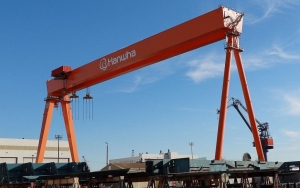
- Automobiles and Shipbuilding Find Breakthroughs for Growth Over the Next Half-Century
-
One year after the United States announced its reciprocal tariffs, downward pressure on the overall domestic industry has intensified. However, the outlook varies sharply by sector. While major export industries to the US, such as automobiles and steel, are struggling against tariff barriers, there are signs of a contrasting trend in some sectors, such as shipbuilding, where cooperation with the US is actually expanding. According to the industry on April 3, the US’s efforts to revive its shipbuilding industry are accelerating the global reorganization of shipbuilding supply chains. The shipbuilding sector has a low proportion of direct exports to the US, so the impact of tariffs is limited. At the same time, there is a rapid increase in demand for cooperation centered on allied nations. An official in the shipbuilding industry said, "Since our structure does not involve direct deliveries to the US, but rather orders placed mainly by Northern European and Middle Eastern shipping compan
-
26.04.03 10:30
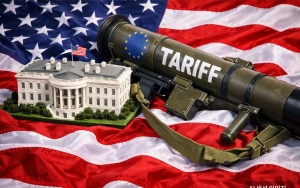
- One Year of Tariff Boomerang... The Mirage of American Manufacturing Revival
-
The United States' strong tariff barriers have reshaped the global economic landscape over the past year. However, contrary to the original goal of "reviving American manufacturing," these measures have led to paradoxical outcomes, including China's shrewd circumvention of exports, the defection of allied nations, and a rise in domestic prices. Even if President Trump's tariff policy is maintained through Section 301, it is expected that his slogan of "Make America Great Again (MAGA)" will be difficult to realize. ◆Trump Tariffs: "More Supply Chain Realignment Than Manufacturing Reshoring"Major international media outlets have assessed that over the past year, the Trump Administration’s tariff policy has resulted in supply chain realignment rather than a return of U.S. manufacturing. The Wall Street Journal (WSJ) reported on April 2 (local time) that "due to tariffs, American companies are diversifying their production bases to cut costs, rather than relocating factories to the U.S." T
-
26.04.03 10:30
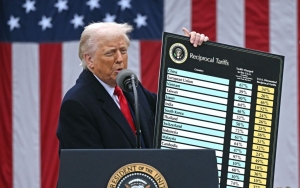
- Trump's Unilateral 'Transactional Diplomacy' Threatens Again with Stronger Section 301
-
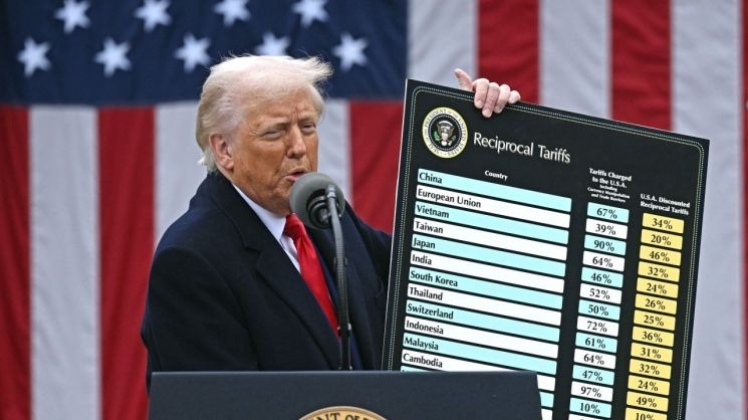
It has been one year since U.S. President Donald Trump declared the imposition of reciprocal tariffs (April 2, 2025). With a brief grace period given to pressure negotiations, and by ignoring international trade practices to maximize America’s short-term interests through so-called “transactional diplomacy,” the global trade order has been reshaped. Faced with higher tariff barriers, Korean companies have encountered the difficult challenges of high-cost local investment and supply chain relocation. They have also had to grapple with various issues such as unfavorable exchange rates and a decline in the quality of the local workforce. In some sectors, such as shipbuilding and the defense industry, the expansion of Korea-U.S. cooperation has provided new breakthroughs. It was the U.S. Supreme Court that put a stop to President Trump’s unrestrained course of action. The court drew a clear line by ruling that the unilateral imposition of tariffs was illegal, ushering in a new phase in the