In Depth
Abandoned Industrial Complex
-
24.11.15 10:01

- ⑩ "The Solution to Unsold Units is Fostering Key Industries and Supporting Resident Companies"
-
Experts have unanimously pointed out that the chronic unsold inventory in local industrial complexes is due to overly complacent demand surveys, despite the fact that companies do not move to the provinces because of a lack of workforce. It has been argued that to solve the persistent problem of unsold industrial complexes, it is necessary to foster key industries and provide full support to tenant companies. On the 15th, experts interviewed by Asia Economy on the topic of unsold industrial complexes all cited workforce issues. Professor Kim Sang-bong of Hansung University’s Department of Economics responded to the question, “Why do local industrial complexes suffer from unsold inventory because they fail to attract tenant companies?” by saying, “The problem is that there is no merit at all.” Professor Kim added, “Young people prefer to go to Seoul rather than work in the provinces,” and questioned, “In such a situation, would large companies go to industrial complexes in the provinces
-
24.11.14 08:01
- ⑧ Rusty Factory Filled with Artworks
-
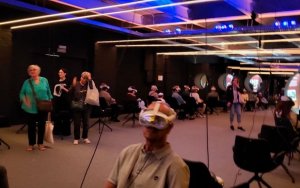
A dark space illuminated by blue neon signs. About 20 people sat on chairs, wearing large headsets that covered half of their faces, all staring straight ahead simultaneously. Despite it being a weekday morning, the place was bustling with a diverse crowd ranging from young children to university students and elderly people with white hair. In front of their eyes, world-famous artworks were unfolding. Although the space was empty except for the chairs, virtual reality (VR) technology transformed this place into the Louvre Museum and the Museum of Modern Art in New York. On the 25th of last month, at the IDEAL Centre d'Arts Digitals in Barcelona, Spain. It is the first digital art center in Southern Europe offering 'immersive media art' by combining art, technology, and music. It opened in 2019 after renovating an old cinema that was inaugurated in 1917. The approximately 2,000㎡ area is used to exhibit digital artworks and provide a space where artists can focus on their creations. The
-
24.11.14 08:00

- ⑦ We Play Next to the Factory... Yeongguk Industrial Complex Becomes a Hotspot
-
"I came last week and it was so much fun that I came again." At an indoor playground in Manchester, UK, Josh Allen (14), who slid down a 2-meter-high inflatable slide, said to an Asia Economy reporter on the 15th of last month with an innocent smile. The interview was brief. When his younger sibling, who came along, chased after him holding a large ball, Allen shouted loudly, "You have to dodge!" Their mother, Tracy Allen, watched the children play from a caf? set up for tourists and smiled warmly. She revealed that they live in Inverness, Scotland, six hours away by car, and said, "We found this place through an internet search, but since the kids really love it, this is already our third visit." This indoor playground, which has become a landmark in the Manchester area, is located in the Trafford Industrial Estate in the UK. Although it is hard to imagine just by looking at the 3,715㎡ (about 1,124 pyeong) interior of the playground, once you exit the facility, there is a tire shop di
-
24.11.13 08:01

- ⑥ Warning from the President of the German Public Waterworks Association: "It Cost 7 Trillion to Restore Polluted Rivers"
-
"It took 30 years to restore a river once polluted by an industrial complex. The budget alone was 5 billion euros (about 7.5 trillion KRW)." Ulrich Patzel, chairman of the German Emscher River Association, sighed and answered this way when asked how difficult the Emscher River restoration policy?known as "Germany's most expensive environmental policy"?was. Germany, which experienced reckless industrial complex development and consequent environmental pollution earlier than any other country, had to spend enormous costs and time to return the river to a clean state. Patzel emphasized that since it is difficult to reverse the adverse environmental effects once an industrial complex is built, a cautious approach is necessary. When I met Chairman Patzel in Essen, Germany, on the 17th of last month, he pointed to a map of German rivers set up behind his office during the interview and explained, "It was a headache for Germany because not only polluted river water but also various wastewater
-
24.11.13 08:00
- ⑤ Walking the Trail, Suddenly at the Industrial Complex... "People Must Stay Day and Night"
-
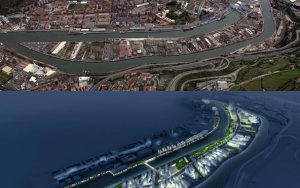
"An area once littered with scrap metal has now transformed into a vast park." Mr. Yon (66), a resident met at a waterfront park in Bilbao, Spain, said, "This park is a precious space where Bilbao residents rest and enjoy leisure." Along the Nerbion River promenade filled with evening glow on a weekday afternoon, people running or walking their dogs passed by continuously. He added, "Until a few years ago, this place was lined with abandoned factories and steel warehouses," and said, "It's astonishing how much it has changed." Bilbao, visited by Asia Economy on the 24th of last month, is a port city located in the Basque region of northern Spain, where steel and shipbuilding industries flourished until the 1970s. The large-scale steel mills, mines, and shipyards clustered near the Nerbion River reflected Bilbao's status as "the wealthiest city in Spain." Bilbao began to decline starting in the 1980s. As steel resources were depleted and it lost out in competition with companies like Po
-
24.11.12 08:01

- ④ A Fox Appeared in the Factory Forest... Europe’s Largest Industrial Complex with Over 40% Green Space Ratio
-
"The fox was actively foraging." Adrian Lloyd Jones, who oversees the environmental sector at the industrial complex in Wrexham, Wales, UK, smiled broadly upon confirming that the fox was alive. The traces of the fox were discovered after pushing through dense bushes for about 10 minutes. His shoes were already covered in mud, and the hems of his pants were stuck with burdock burrs. Feathers and bone fragments, likely from birds, were scattered along the forest path. The fox, the top predator in the food chain and the only one capable of hunting birds in the area, had just finished its meal. On the 14th of last month, Asia Economy visited the Wrexham industrial complex, where scenes reminiscent of dense forest areas were unfolding. Located in the northeast of Wales, the Wrexham industrial complex spans 550 hectares, making it the largest site in Europe. It houses over 340 companies, including the global cereal company Kellogg’s, and is responsible for employing more than 10,000 people
-
24.11.12 08:00

- ③ Ministry of Land Invested 900 Billion Won in Remodeling... Green Spaces Decrease and No Place to Rest
-
As the government and local governments focus on building new industrial complexes, existing industrial complexes are rapidly declining. Old factories, insufficient green spaces, poor living conditions, and almost nonexistent convenience and cultural facilities have driven companies and workers away. Although regeneration projects were hastily initiated, most were limited to improving roads and transportation infrastructure. Critics argue that policies that increased industrial zones by reducing green spaces and commercial areas have accelerated the aging of industrial complexes. On the 12th, Asia Economy obtained the Ministry of Land, Infrastructure and Transport’s “Status of Remodeling and Regeneration Projects for Aged Industrial Complexes” through Kim Tae-seon, a member of the National Assembly’s Budget and Accounts Special Committee from the Democratic Party. This document clearly reflected such issues. According to the data, since 2000, the government has carried out remodeling a
-
24.11.11 13:01
- ②Regulations Lifted, Boom in Developments... Ultimately Unsold Units and Aging Facilities
-
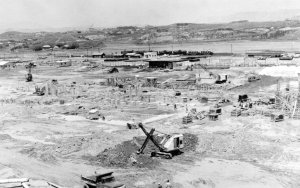
The fundamental cause of millions of square meters of land designated as domestic industrial complexes being left idle can be found in oversupply. Industrial complexes have been supplied for decades far beyond the level nationally required. Once regulations on industrial complexes were lifted, local government heads rushed to develop industrial complexes, claiming they would revive the local economy. The complacent belief that simply creating industrial complexes would attract companies and spur economic growth, combined with shortsighted policies focused only on removing visible regulations without long-term policy planning, is pointed out as the reason behind the current problems of unsold lots and aging facilities. According to the government on the 11th, industrial complexes have driven the Korean economy since the groundbreaking of the Ulsan Industrial Center (now Mipo National Industrial Complex) in 1962. They received full support from the Park Chung-hee administration, which ai
-
24.11.11 13:00
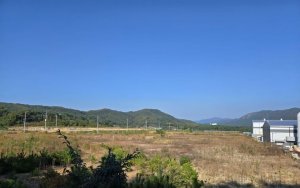
- ① Four-lane Road 'Empty'... Land 5.5 Times Yeouido Has No Owner
-
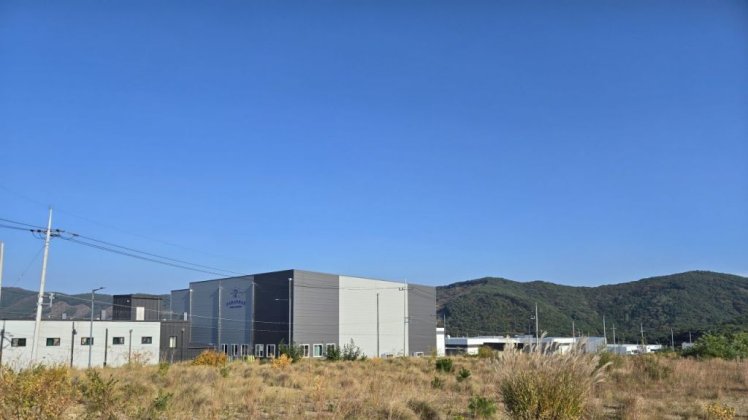
Editor's NoteThere is abandoned land in Korea. Its area alone is 24.49 million square meters, which is 5.44 times the size of Yeouido. Nothing is done on this land. It is simply left unattended. This is the story of 'industrial complexes.' Industrial complexes have been the main drivers of Korea's rapid economic growth since the development of the Ulsan Industrial Complex in the 1960s. However, due to their haphazard establishment, they are now suffering from chronic unsold lots. While focusing solely on building new industrial complexes, existing ones are facing serious aging problems. Asia Economy explores the current status of domestic industrial complexes and seeks directions for the development of Korean industrial complexes through overseas cases in the 'Abandoned Industrial Complexes' series. On the 31st of last month, I exited the Muchangpo tollgate in Boryeong, Chungnam, and arrived at the Ungcheon General Industrial Complex in about one minute by car. There was only a large