In Depth
2023 Tax Reform
-
23.07.27 19:40
- Bio Association "Welcomes Expansion of Tax Credit for Biopharmaceuticals"
-
The bio industry has expressed its welcome for the government's policy direction to designate biopharmaceuticals as a 'national strategic technology' and expand tax credits. The Korea Bio Association issued a statement on the 27th regarding the government's '2023 Tax Law Amendment,' saying, "We actively welcome the announcement of the subordinate law amendment to the Restriction of Special Taxation Act, which adds eight technologies and four facilities in the biopharmaceutical field as national strategic technologies and commercialization facilities." The Bio Association commented on the amendment, "It will be a groundbreaking opportunity to reverse the overall sluggish domestic investment atmosphere and expand companies' will and investment in biopharmaceutical development," adding, "We deeply appreciate the efforts of related ministries, including the Ministry of Economy and Finance and the Ministry of Trade, Industry and Energy, who swiftly gathered diverse opinions from related ass
-
23.07.27 18:01

- YeoGyeongHyup "Laying the Foundation for Long-Lasting Women-Owned Businesses"
-
The women's business community evaluated this year's tax law amendment bill as "laying the foundation for women-owned businesses to become long-lasting enterprises that span generations." The Korea Women Entrepreneurs Association stated in a press release on the 27th, "We greatly welcome the '2023 Tax Law Amendment Bill' announced by the government, which focuses on revitalizing economic vitality." The association said, "The government's strong commitment to recovering the livelihood economy and preparing for the future is evident in measures such as easing tax burdens related to business succession and raising the non-taxable limit for workers' childbirth and childcare allowances," adding, "We expect this to also contribute to creating a sustainable future society by supporting the establishment of family-friendly corporate cultures." Furthermore, the association added, "The extension of the income tax reduction period for employees of small and medium-sized enterprises and the exte
-
23.07.27 17:04
- Venture Industry "Expect Recovery of Contracted Venture Investment Market"
-
The venture industry expects the government's '2023 Tax Reform Proposal' to invigorate corporate growth, strengthen investment momentum, and expand job opportunities. On the 27th, the Korea Venture Business Association evaluated that "the tax support for 'activating private funds' to revitalize startups and ventures can guide private capital into the venture investment market, raising expectations for the recovery of the recently contracted venture investment market." However, the venture industry stated, "We hope that the increase in the corporate investor tax credit benefits for private venture funds (up to 15%), which we have been requesting, will be reflected in future discussions in the National Assembly." Regarding the strengthening and expansion of tax support for strategic industries such as K-content and bio sectors, it is expected to provide institutional support for activating private investment and enhancing competitiveness of ventures and startups. The Korea Venture Busin
-
23.07.27 16:46

- Mid-sized Enterprises: "Significant Progress in Reducing Tax Burden on Business Succession"
-
The mid-sized business sector evaluated that the reflection of several issues they have continuously requested, such as the easing of tax burdens on business succession, in the '2023 Tax Law Amendment' is a significant institutional advancement achieved under difficult circumstances. The Korea Federation of Mid-sized Enterprises (KFME) released a statement on the 27th, saying, "Amid growing concerns about the economy, such as worsening trade balance and declining tax revenues, we agree with the direction and content of the 2023 Tax Law Amendment, which encompasses comprehensive tasks to overcome the current economic crisis and establish a sustainable growth foundation by boosting economic vitality and restoring people’s livelihoods." KFME stated, "It is very desirable to reaffirm the value of private-led growth through strengthening corporate competitiveness to promote investment and employment, while reducing the burden on low-income and middle-class citizens. At the same time, expand
-
23.07.27 16:28
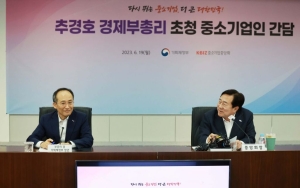
- Junggi Central Association "Welcomes... Opens Path to Fostering Long-Lasting Companies"
-
The small and medium-sized enterprise (SME) sector has expressed a 'welcoming' stance regarding this year's tax law amendment proposal. The Korea Federation of SMEs stated in a press release on the 27th, "The SME sector welcomes the government's '2023 Tax Law Amendment Proposal,' which focuses on revitalizing the economy centered on the private sector." This tax law amendment proposal includes extensions of the installment payment period for gift tax on business succession, expansion of low-rate gift tax brackets, and relaxation of restrictions on business type changes in line with industrial trend changes. These were suggestions made by the SME sector during a meeting held last month on the 19th between Deputy Prime Minister and Minister of Economy and Finance Choo Kyung-ho and SME representatives. The Korea Federation of SMEs explained, "Given the rapid aging of SME CEOs and the reality that 84% of SMEs prefer planned pre-succession, the government's announcement to improve tax sup
-
23.07.27 16:00
- Driving Regional Balanced Development... Tax Support Backing Opportunity Development Zones
-
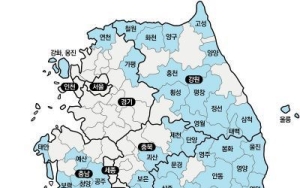
Tax benefits to promote balanced regional development will also be strengthened. Tax incentives will be provided for companies relocating to local areas under the ‘Opportunity Development Zones,’ and the tax reduction period for regional special zones will be extended. According to the government’s ‘Tax Law Amendment Bill’ on the 27th, a tax support plan for Opportunity Development Zones will be newly established under the Restriction of Special Taxation Act (RSTA). First, tax benefits will be granted to relocating companies to alleviate their tax burden when moving into Opportunity Development Zones. It is expected that reductions in real estate acquisition tax and capital gains tax will be provided. For companies operating workplaces within the special zones, income tax or corporate tax reductions will be implemented to support business operations within the zones. To promote private investment in the zones, the Opportunity Development Zone Fund to be established will have tax suppor
-
23.07.27 16:00

- Expansion of Income Deduction for Long-term Mortgage Loan Interest... Promoting Housing Stability
-
Starting next year, the maximum limit for income deduction on interest repayment of long-term housing mortgage loans will be raised from 18 million KRW to 20 million KRW. The annual payment limit for income deduction on the Housing Subscription Savings will also be expanded from 2.4 million KRW to 3 million KRW. On the 27th, the government announced the '2023 Tax Law Amendment' containing these details. The aim is to reduce the burden on low- and middle-income households by increasing the income deduction limits related to housing and to restore the livelihood economy. The income deduction limit for interest repayment on long-term housing mortgage loans, applicable to workers with no home or one home, will increase from the current 3 million to 18 million KRW to 6 million to 20 million KRW. This is expected to help low-income earners who have purchased their homes through long-term loans, so-called 'Yeongkkeul' (borrowing to the limit). Specifically, for repayment periods of 15 years
-
23.07.27 16:00
- National Strategic Technology 'Bio-pharmaceuticals' Added... Up to 50% R&D Support
-
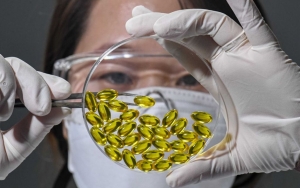
The government will include biopharmaceutical-related technologies and facilities in the national strategic technologies. Once designated as a national strategic technology, companies in the related fields can receive tax credits of up to 50% on research and development (R&D) expenses. The government plans to significantly strengthen tax support for the bio industry to prevent the outflow of key talent and foster it as a future core industry by creating world-class clusters. According to the '2023 Tax Reform Plan' announced by the Ministry of Economy and Finance on the 27th, biopharmaceutical-related technologies and facilities will be included in national strategic technologies and commercialization facilities. National strategic technologies refer to technologies that are strategically important for the national economy, security, and the creation of new industries. Currently, under the Restriction of Special Taxation Act, this includes semiconductors, secondary batteries, vaccines,
-
23.07.27 16:00

- Capital Gains Tax Surcharge Relief Measures Ultimately Excluded
-
The reform plan for the heavy taxation on real estate capital gains tax, which had attracted significant market attention, was ultimately excluded from this year's tax law revision. It appears that the decision to postpone judgment on whether to abolish it was made considering the sharp decline in tax revenue due to the plunge in real estate transactions, market conditions, and the likelihood of parliamentary approval. The '2023 Tax Law Revision' announced by the government on the 27th did not include the reform plan for the heavy taxation on real estate capital gains tax. Under the current Income Tax Act, a heavy tax rate is applied when transferring real estate held for less than two years or owned by multi-homeowners. The basic capital gains tax rate ranges from 6% to 45%, but for owners of two homes in designated adjustment areas, an additional 20 percentage points are added to the basic rate, and for those owning three or more homes, an additional 30 percentage points are added.
-
23.07.27 16:00

- Finally Abolishing the Inflation-Linked System That Raises Beer Prices
-
The government will abolish the ‘beer and takju specific tax price linkage system,’ under which taxes automatically increase every year according to the consumer price inflation rate, and introduce a ‘flexible tax rate’ system where the government applies tax rates only when necessary. The price linkage system, designed to mechanically raise taxes annually, was judged to have given the liquor industry an excuse to raise prices. According to the government’s ‘2023 Tax Reform Proposal’ on the 27th, the government will amend the Liquor Tax Act to abolish the current specific tax price linkage system applied to beer and takju and switch to a flexible tax rate system. The specific tax is a system where taxes are levied in proportion to the quantity of liquor or the amount of alcohol contained. Korea maintained an ad valorem tax system based on liquor prices for over 50 years since 1968, but introduced a specific tax only for beer and takju in 2020 to resolve tax inequality issues with impor