Park Hongkeun Vows to Break Crisis Chain and Complete Grand Design for Korea's Centennial Vision
Opening Remarks at National Assembly Confirmation Hearing
Emphasis on Paradigm Shift in Fiscal Policy

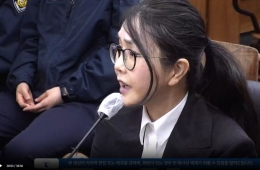
Park Honggeun, a member of the Democratic Party of Korea nominated as the Minister of Planning and Budget, is answering questions from reporters while on his way to the hearing preparation office set up at the Korea Deposit Insurance Corporation in Jung-gu, Seoul on March 3, 2026. Photo by Dongjoo Yoon
View original imagePark Hongkeun, nominee for Minister of Planning and Budget, stated, "As the leader of Korea's future strategy, I will directly confront the five major risks: industrial transformation driven by artificial intelligence (AI) and other technologies, demographic shifts, the climate crisis, regional extinction, and polarization, to achieve grand national unity."
At the confirmation hearing held by the National Assembly's Committee on Fiscal and Economic Planning on March 23, Park expressed his commitment to breaking the chain of structural and complex crises and finalizing a "grand design" to establish Korea's long-term national vision.
He emphasized, "A national strategy must transcend partisan interests and presidential terms and should be the result of a broad social consensus." He added, "By gathering the wisdom of all sectors—including the legislature and civil society—I will establish a 'great milestone' that embodies the hopes of the people." His vision is to organically link a long-term strategy spanning 20 to 30 years, medium-term national agendas and fiscal plans in five-year increments, and annual budgets. He also pledged to set priorities for policies and standards for resource allocation based on mid- to long-term strategies, serving as Korea's "strategic brain" to translate these into actual policies.
Regarding the role of the Ministry of Planning and Budget, he stressed the need for a paradigm shift in fiscal policy. Park stated, "Our current fiscal system is rooted in four major fiscal reforms from the Participatory Government era: establishing the National Fiscal Management Plan, introducing a top-down budgeting system, managing fiscal performance, and building a digital budget accounting system." He continued, "Now, 20 years later, we will implement 'Fiscal Reform 2.0' to ensure the fiscal system can effectively support a more proactive fiscal role."While previous reforms established the framework of fiscal policy, Fiscal Reform 2.0 aims to maximize fiscal efficiency in line with the trends of our time.
First, he said, "We will break away from the traditional practice of simply allocating budgets and establish a genuine 'top-down budgeting system' for strategic resource allocation based on national priorities." He added, "While respecting the expertise and autonomy of each ministry, we will enforce a rigorous 'performance-based evaluation' to ensure not a single won is wasted."
He also announced plans to solidify the revenue base and review inefficiencies across both central and local government finances, conducting comprehensive expenditure restructuring—regardless of whether expenditures are mandatory or discretionary. Park emphasized, "We will reduce unnecessary spending but will not hesitate to invest in initiatives that lead Korea's future."
In addition, he said, "We will make focused investments in growth engines such as artificial intelligence (AI), semiconductors, and bio industries, while quickly responding to the increasing diversity of welfare demands." He pledged, "Through warm and competent fiscal management, I will establish a dynamic virtuous cycle of active fiscal policy, improved performance, and economic growth."
Regarding the direction of the supplementary budget in light of the Middle East crisis, Park stressed the need for swift action to support livelihoods. He said, "Rising fuel costs go beyond mere price statistics and are a matter of survival for ordinary people and small business owners." He pledged, "We will quickly draft and submit a supplementary budget to the National Assembly to minimize the impact on livelihoods, the economy, and industry."
In a written response previously submitted to the National Assembly, he stated, "It is not desirable for supplementary budgets to become a routine fiscal tool," but also stressed, "In times of complex structural crises, it is necessary for fiscal policy to play a proactive role to enable rapid responses." He also mentioned providing support for victims of rental fraud and for the arts and culture sector.
Hot Picks Today
 "It Was Fantastic" Jensen Huang's Daughter Seal...
- "Korea Is Great": Visitors Spent an Extra $435 Each... Want to Stay Longer, But ...
- "You'll Regret Not Buying Now"... Minister Urges Travelers to Purchase Airline T...
- To Withdraw His Late Sister’s $300 Deposit, 50-Year-Old Indian Man Brings Her R...
- 'Maternity Leave for Second Child' Interrupted... 1997-born White House Spokespe...
With Park's confirmation hearing expected to proceed smoothly, the nearly three-month vacancy in the leadership of the ministry since its establishment is also likely to be resolved. After the official appointment by the Presidential Office, it is possible that the supplementary budget will be announced as early as this week. The ruling party and government aim to submit the supplementary budget proposal to the National Assembly by the end of this month.
© The Asia Business Daily(www.asiae.co.kr). All rights reserved.