Seo Samseok: "Severe Healthcare Gaps in South Jeolla... Unified National Medical School Urgently Needed"
17 Counties Classified as Medically Underserved; Only Region Without a Medical School Nationwide
Calls for Allocation of Over 100 Student Slots

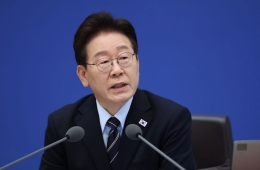
Samseok Seo, Supreme Council Member of the Democratic Party of Korea, strongly urged the government to establish a unified national medical school in South Jeolla Province, highlighting the region's shortage of medical personnel and critical care gaps.
At the 186th Supreme Council meeting held on November 24, Seo stated, "South Jeolla has the highest medical demand in the country, yet its medical infrastructure is severely lacking," adding, "The establishment of a new medical school is an urgent demand from the residents that can no longer be postponed."
South Jeolla shows the highest level of medical demand nationwide, with 26.1% of its population aged 65 or older, 7.52% registered as disabled, and 4.4% diagnosed with dementia. However, 17 out of its 22 cities and counties are classified as medically underserved areas, and the number of essential medical specialists per 1,000 residents is only 0.29-the lowest in the country. This figure is more than ten times lower than in the Seoul metropolitan area (1.86) and Seoul itself (3.02).
The outflow rate of severe trauma and emergency patients to other regions is 51.2%, more than double the national average of 19.9%. Only 53.8% of residents can reach a tertiary general hospital within 180 minutes, about 20 percentage points lower than the national average. Other key indicators, such as the decrease in public health doctors, preventable trauma mortality rate, and maternal mortality ratio, further demonstrate the vulnerability of South Jeolla's healthcare system.
Seo emphasized, "South Jeolla is the only region among the 17 provinces and metropolitan cities nationwide without a medical school. This is not just an educational issue but a matter of fundamental rights to fill the gap in regional healthcare." Currently, the integration review for the unified national medical school in South Jeolla is underway between Mokpo National University and Suncheon National University, drawing attention as a case of integration between local glocal universities.
He stated, "To open the school by 2027, the Ministry of Health and Welfare must allocate at least 100 student slots, the Ministry of Education must apply the 'flexible integration' special regulation, and essential procedures such as quota allocation and preliminary evaluation certification must proceed swiftly." He also stressed, "Each of the two campuses must be accompanied by the establishment of a tertiary general hospital with at least 500 beds."
Regarding the recent passage by the National Assembly's Health and Welfare Committee of a legislative bill to introduce a 'regional doctor system' for training and deploying doctors in medically underserved areas, Seo emphasized, "For the system to be effective, there must be a local foundation to train doctors directly in the region-in other words, the establishment of the unified national medical school in South Jeolla is essential."
Hot Picks Today
 "Stocks Are Not Taxed, but Annual Crypto Gains Over 2.5 Million Won to Be Taxed Next Year... Investors Push Back"
- "Don't Throw Away Coffee Grounds" Transformed into 'High-Grade Fuel' in Just 90 Seconds [Reading Science]
- Signed Without Viewing for 1.6 Billion Won... Jamsil and Seongbuk Jeonse Prices Jump 200 Million Won in a Month [Real Estate AtoZ]
- "Groups of 5 or More Now Restricted"... Unrelenting Running Craze Leaves Citizens and Police Exhausted
- "Even With a 90 Million Won Salary and Bonuses, It Doesn’t Feel Like Much"... A Latecomer Rookie Who Beat 70 to 1 Odds [Scientists Are Disappearing] ③
Seo reiterated, "The healthcare situation in South Jeolla is dire. This is already the third time I have raised the issue of healthcare disparity at the Supreme Council," and urged, "The government and the National Assembly must make a decision without further delay to guarantee the residents' right to health."
© The Asia Business Daily(www.asiae.co.kr). All rights reserved.