Wanju County to Hold Groundbreaking Ceremony for "Mankyung River Fish Railway" on October 1
Establishing a New Landmark
Aiming for Completion by November Next Year
Wanju County in North Jeolla Province will hold the groundbreaking ceremony for the "Mankyung River Fish Railway" at 4:30 p.m. on October 1 at the site of the former Mankyung River Railway Bridge in Samnye-eup.
According to the county on September 25, this groundbreaking ceremony is expected to serve as a new starting point symbolizing the future of Wanju, its residents, and visitors, marking the beginning of Wanju's great progress.

The "Mankyung River Fish Railway Development Project" was launched to innovate the tourism industry and establish a new landmark representing North Jeolla Province. It is a collaborative project between Wanju County, North Jeolla Province, and Jeonju City, which began in earnest after Wanju County proposed it to Jeonju City in 2023.
The county will construct a 405-meter pedestrian walkway and an observation rest area on top of the former Mankyung River Railway Bridge, while Jeonju City will build essential infrastructure such as parking lots and access roads in the Hwajeon-dong area. Through the cooperation of the two local governments, the plan is to create an integrated cultural and tourism hub that transcends administrative boundaries and to foster it as a representative tourism center for North Jeolla Province.
The Mankyung River originates from Bamsaem in Dongsang-myeon, Wanju County, and flows through major cities and counties in North Jeolla Province, including Wanju, Iksan, and Gimje, before reaching the West Sea. The river’s source is recognized as one of the "Eight Scenic Views of Wanju" and holds significant symbolic meaning as a river of life that embodies the region’s rich ecology and culture.
Notably, the former Mankyung River Railway Bridge was constructed in 1928 during the Japanese colonial period to transport rice, which was exploited from the Samnye area, to Gunsan Port. It is currently designated as National Registered Cultural Heritage No. 579 and serves as a symbolic site that commemorates the painful history of the local community.
After train operations ceased in 2011, the bridge was left unused for some time. However, in 2016, Wanju County repurposed decommissioned trains to create the Bibijeong Art Train, transforming the railway into a unique tourism resource that combines art and the railway. Since then, it has become one of Wanju’s most popular attractions, drawing numerous visitors. Bibijeong, recognized as the eighth of the "Eight Scenic Views of Wanju," is a famous spot where visitors can enjoy panoramic views of the Mankyung River and the railway bridge from the observatory, making it highly popular among tourists.
Once the "Mankyung River Fish Railway" is completed, tourists will be able to walk along the railway, enjoy the scenic beauty of the Mankyung River, and appreciate the sunset at Bibijeong from the observation rest area. The project aims for completion by November next year and will create a new space connecting Bibijeong and the Mankyung River Railway Bridge, developing it into a core tourism belt in Wanju where history, ecology, and art converge.
In addition, by linking the project with the Samnye Theme Park-currently being developed as part of the Samnye Three-Color Village Project-the county plans to expand cultural and artistic programs and ecological experience content. This initiative is expected to serve as a catalyst for Wanju County to become a leading city for cultural tourism in South Korea, moving beyond the creation of a simple tourist attraction.
County Governor Yoo Heetae stated, "The Mankyung River Fish Railway is more than just a tourism infrastructure project; it is a symbolic space connecting the past, present, and future. It will embody the vitality of the Mankyung River, which originates from Bamsaem in Dongsang, Wanju, and mark the beginning of great progress for Wanju as it enters an era of 100,000 residents."
Hot Picks Today
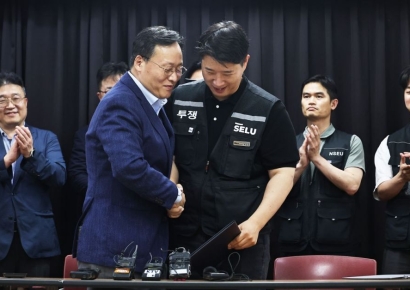 Up to 600 Million Won for Semiconductors, 160 Million Won Bonus for Loss-Making Non-Memory… Samsung Electronics Labor and Management Reach Tentative Deal on Unprecedented Performance Compensation (Comprehensive)
- "Could I Also Receive 370 Billion Won?"... No Limit on 'Stock Manipulation Whistleblower Rewards' Starting the 26th
- "From a 70 Million Won Loss to a 350 Million Won Profit with Samsung and SK hynix"... 'Stock Jackpot' Grandfather Gains Attention
- [Exclusive] 450 Billion Won Korean Investment at Risk as Canadian PE Moves to Acquire US Ascend for $99.2 Million
- "Who Is Visiting Japan These Days?" The Once-Crowded Tourist Spots Empty Out... What's Happening?
He added, "Through mutually beneficial cooperation with Jeonju City and close collaboration with North Jeolla Province, we will develop this into the nation’s most prominent ecological and cultural tourism destination. We will create a Wanju that its residents can be proud of and that people across the country most want to visit."
© The Asia Business Daily(www.asiae.co.kr). All rights reserved.