Domestic Industries See "Positive Signal" in US-UK Trade Deal... Uncertainty Remains
"If Tariffs Are Lowered to UK Levels, Auto Industry Performance Could Be Offset"
Steel Industry: "Difficult to Receive the Same Benefits"
As President Donald Trump of the United States has reached trade agreements with the United Kingdom in the automotive and steel sectors, attention in South Korea?where tariff negotiations are still ongoing?is focused on the possibility of “adjustments.” However, given that the UK is a country with a trade deficit with the US, there are significant contextual differences, which means considerable uncertainty remains regarding the prospects for negotiations with South Korea.
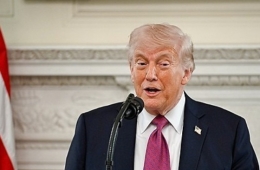
Previously, on May 8 (local time), President Trump announced the conclusion of a trade agreement under which the UK would make efforts to increase imports of US products such as beef, ethanol, and agricultural goods, in exchange for the US reducing some tariffs on UK products. The UK also agreed to purchase $1 billion (approximately 14.03 trillion won) worth of Boeing aircraft from the US. For the existing 25% tariff on automotive products, the rate for UK-made vehicles will be reduced to 10% for up to 100,000 units per year. The 25% tariff on steel and aluminum products will not be applied to UK-made goods. However, the 10% national base tariff, which has been in effect since last month, will remain unchanged.

This negotiation with the UK is the first sign of possible adjustment between the two countries since the US declared a “tariff war” by imposing high reciprocal tariffs on May 2. Interpreting this as a potential guideline for Korea-US negotiations, the domestic automotive industry is quietly hopeful. Representatives from South Korea and the US are expected to continue negotiations on trade policies, including automotive tariffs, at the APEC Ministerial Meeting to be held in Jeju starting May 15.
The domestic automotive industry believes that if tariffs on Korean automobiles are lowered to around 10%?as with the UK?the short-term decline in profitability caused by tariffs could be avoided. Previously, the Trump administration also took a step back on tariffs for imported auto parts, allowing a deduction of 3.75% of the vehicle price for imported parts tariffs.
Lim Eunyoung, a researcher at Samsung Securities, analyzed, “If the tariff on vehicles exported to the US is lowered to 10%, and a tax refund is given for 3.75% of the value added to vehicles produced in the US, while the Korean won continues to depreciate by around 2.5%, the impact of tariffs on the performance of Hyundai Motor and Kia can be sufficiently offset.”
Hot Picks Today
 "It Was Fantastic" Jensen Huang's Daughter Seal...
- "Korea Is Great": Visitors Spent an Extra $435 Each... Want to Stay Longer, But ...
- "You'll Regret Not Buying Now"... Minister Urges Travelers to Purchase Airline T...
- To Withdraw His Late Sister’s $300 Deposit, 50-Year-Old Indian Man Brings Her R...
- 'Maternity Leave for Second Child' Interrupted... 1997-born White House Spokespe...
The steel industry also interprets the direction of this agreement positively, but there is a prevailing view that the differences in circumstances with the UK must be taken into account. An industry official stated, “This is a positive signal that similar negotiations may be possible for South Korea in the future,” and explained, “Within the industry, there is hope that negotiations will progress for Korea as they did for the UK, leading to tariff relief on steel products.” Another official commented, “In the case of the UK, steel exports to the US are minimal compared to Korea, which likely made such a decision possible. It is expected to be difficult for Korea to receive the same benefits.” The official also said, “With increasing volatility such as changes in US Treasury yields and inflation, it will be important to monitor policy changes toward other countries.”
© The Asia Business Daily(www.asiae.co.kr). All rights reserved.