"Protect It With Your Own Money"... Europe Ignites Over Trump's Withdrawal [Global Focus]
Shaken U.S.-Europe Alliance
"A New Era in International Relations"... Europe Struggles to Respond
379 Trillion Won and 10 Years Needed for Europe to Defend Itself
Since the inauguration of the Donald Trump administration, the long-standing alliance between the United States and Europe has been shaken. Europe has found it inevitable to stand alone, breaking away from the cooperative framework with the U.S., due to President Trump's unexpected moves of targeting traditional allies such as Europe and Canada while cozying up to so-called ‘rogue states’ like Russia.
!["Protect It With Your Own Money"... Europe Ignites Over Trump's Withdrawal [Global Focus]](http://www.asiae.co.kr/news/img_view.htm?img=2025030416163253839_1741072591.png)
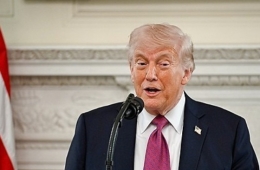
President Trump, who champions ‘America First,’ has overturned previous U.S. administration positions and boldly attacked allies with ‘tariff bombs’ to demonstrate power. At the same time, he has shown close cooperation with Russia, which had been isolated by allied countries in the international community. During efforts to negotiate an end to the Russia-Ukraine war, he bypassed Europe and Ukraine to sit at the negotiating table with Russia, raising concerns in Europe. Furthermore, at the first cabinet meeting on the 26th of last month, he drew a line by stating that after the end of the Russia-Ukraine war, the U.S. would "not provide security guarantees" to Ukraine and would "let Europe handle it."
Trump’s close aides are also shaking European politics. Elon Musk, CEO of Tesla, called UK Prime Minister Keir Starmer a "national disgrace," and ahead of the German federal election, he supported the far-right Alternative for Germany (AfD) party. U.S. Vice President JD Vance also expressed support for AfD.

"A New Era in International Relations"... U.S. Pulls Back from Europe
This is far from the multilateral diplomacy of the previous Joe Biden administration, which led international agendas in cooperation with allies. Moreover, it is the exact opposite of the historical U.S. approach since World War II, which involved large-scale support for Europe, promotion of European integration, and leading the world order to check China and Russia.
Alex Younger, former head of the UK’s Secret Intelligence Service (MI6), recently appeared on BBC and said, "We have entered a new era where international relations are not determined by rules and multilateral institutions but by powerful individuals and deals."
Until now, the North Atlantic Treaty Organization (NATO) alliance was led by the U.S., but President Trump, since his presidential candidacy, criticized NATO allies for ‘free-riding’ and drew a line. He warned that if defense costs were not properly paid, he would even consider withdrawing from NATO. In February last year, he shocked Europe with a bombshell statement that even if Russia attacked NATO allies who paid less for defense, "he would encourage Russia to get what it wants."
Although he did not take the extreme step of actually withdrawing from NATO, signs of quietly pulling back from Europe have been detected. According to a Wall Street Journal (WSJ) report on the 20th of last month, U.S. Secretary of Defense Pete Hegseth informed European defense ministers of plans to withdraw some troops from Europe. According to the Washington Post (WP) on the 19th of last month, Hegseth ordered an 8% annual cut in defense budgets over five years, with the Indo-Pacific Command and Northern Command budgets left intact, but the European Command budget included in the cuts. The political media outlet Politico reported that the U.S. State Department is considering closing nine consulates in France, Germany, and Italy.
The background to the Trump administration’s moves is a strategy to strengthen military deterrence in the Indo-Pacific to counter China while reducing its presence in Europe. The conservative think tank Heritage Foundation’s policy proposal book ‘Project 2025,’ known as the ‘blueprint for the second Trump administration,’ also hints at the possibility of redeploying U.S. troops from Europe to other regions.
In response, voices in Europe have emerged expressing concerns not only about the weakening of NATO’s military power but also about the possibility of the U.S. failing to fulfill its NATO collective defense obligations. Article 5 of the NATO treaty stipulates that an armed attack against one member is considered an attack against all members. This has been the key to deterring Russia, a military power bordering vulnerable Eastern European countries. Although President Trump stated at a joint press conference after meeting Prime Minister Starmer on the 27th of last month that he supports collective defense obligations, concerns remain. There is fear that a second Ukraine could emerge.
Europe Meets Trump and Strengthens Military... Struggling to Respond
Europe hurriedly took action. French President Emmanuel Macron visited the U.S. on the 24th, followed by Prime Minister Starmer on the 27th, both meeting President Trump. At a joint press conference, President Macron called Trump "Dear Donald" four times, and Prime Minister Starmer promised to increase defense spending, delivered a letter from King Charles III of the UK, and extended a state invitation, creating a warm atmosphere. However, they ultimately failed to bridge the gap on key issues such as security support.
Politico Europe assessed that "(President Trump’s) tough stance was a realistic warning to European allies who had hoped for a breakthrough ahead of Ukrainian President Volodymyr Zelensky’s White House visit on the 28th."
In response, the idea of ‘European self-reliance’ is gaining traction, especially in Germany. The Trump administration’s pressure on NATO allies to increase defense spending to 5% of GDP also influenced this. The UK and France are discussing dispatching peacekeeping forces to Ukraine.
Friedrich Merz, leader of the Christian Democratic Union (CDU) and a leading candidate for the next German chancellorship, met with Chancellor Olaf Scholz on the 25th of last month to discuss defense spending. According to Bloomberg, Merz and the ruling Social Democratic Party (SPD) are pushing for a special defense budget of 200 billion euros (about 304 trillion won).
At a press conference after winning the election on the 24th of last month, Merz said, "Europe has five minutes until midnight," and warned, "If forces pushing from ‘America First’ to ‘America Alone’ gain power, (Europe) will face difficulties." He added, "What is clear is that this administration does not care about Europe’s fate," and said, "My top priority is to strengthen Europe as quickly as possible and achieve true independence from the U.S. step by step."
The UK currently plans to increase defense spending from 2.3% of GDP to 2.5% by 2027. This would mean an annual increase of 13.4 billion pounds (about 25 trillion won) in defense budgets starting in 2027.
Additionally, Denmark increased its defense spending from 1.1?1.3% of GDP in 2022 to 2.37% last year. Latvia, which borders Russia, announced plans to raise its defense budget from the current 3.45% of GDP to 5% by 2028.
!["Protect It With Your Own Money"... Europe Ignites Over Trump's Withdrawal [Global Focus]](http://www.asiae.co.kr/news/img_view.htm?img=2025030408300952591_1741044610.jpg)
"379 Trillion Won Needed Without U.S."... "10 Years to Self-Defense"
However, this is insufficient. According to a joint report released on the 21st by European think tank Bruegel and the Kiel Institute for the World Economy, without U.S. support, European countries would need an additional 250 billion euros (about 379 trillion won) annually, equivalent to 3.5% of GDP, for defense spending. If U.S. troops stationed in Europe withdraw, a total of 300,000 troops would need to be added, along with at least 1,400 tanks, 2,000 infantry fighting vehicles, and 700 artillery pieces?more than the combined armies of Germany, France, Italy, and the UK.
The weekly news magazine The Economist pointed out that "it could take Europe 10 years to defend itself without U.S. help."
The Atlantic alliance rift caused by security issues is also spilling over into the economy. On the 26th, President Trump announced a 25% tariff on European imports and criticized the European Union (EU) as being "formed to screw the U.S." In response, the EU Commission stated, "The EU will respond firmly and immediately to unjustified barriers to free and fair trade, including when tariffs are used to challenge legitimate and non-discriminatory policies."
Hot Picks Today
 "It Was Fantastic" Jensen Huang's Daughter Seal...
- "Korea Is Great": Visitors Spent an Extra $435 Each... Want to Stay Longer, But ...
- "You'll Regret Not Buying Now"... Minister Urges Travelers to Purchase Airline T...
- To Withdraw His Late Sister’s $300 Deposit, 50-Year-Old Indian Man Brings Her R...
- 'Maternity Leave for Second Child' Interrupted... 1997-born White House Spokespe...
Natalie Tocci, director of the Italian Institute of International Affairs, told The New York Times (NYT), "There is no doubt that there is an intention to destroy Europe starting with Ukraine," and said the Trump administration views Europe not just as a competitor but as an economic and even ideological threat.
© The Asia Business Daily(www.asiae.co.kr). All rights reserved.