Tensions Rise Before Resident Strike... Government Emphasizes "Strict Response" to Training Hospitals
Non-Face-to-Face Meeting with Directors of 221 Training Hospitals
After the announcement of the increase in medical school admissions, the government responded as medical organizations showed signs of collective action.
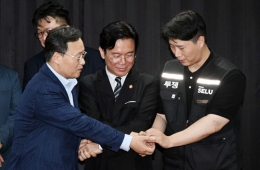
![Minister of Health and Welfare Cho Kyu-hong held a non-face-to-face meeting with the directors of 221 training hospitals (institutions) at 8 a.m. on the 7th in the conference room of the National Organ, Tissue, and Blood Management Agency. [Image source=Ministry of Health and Welfare]](http://www.asiae.co.kr/news/img_view.htm?img=2024020710462757955_1707270388.jpg)
Minister of Health and Welfare Cho Kyu-hong held a non-face-to-face meeting with the directors of 221 training hospitals (institutions) at 8 a.m. on the 7th in the conference room of the National Organ, Tissue, and Blood Management Agency. [Image source=Ministry of Health and Welfare]
View original imageOn the morning of the 7th at 8 a.m., Cho Kyu-hong, Minister of Health and Welfare, held a non-face-to-face meeting with the directors of 221 training hospitals (institutions) at the National Organ, Tissue, and Blood Management Agency conference room. This meeting was held in response to the announcement of the increase in medical school admissions, which led medical organizations to threaten collective action. They discussed countermeasures against the collective action of residents in training hospitals and gathered opinions from the field. In particular, it was emphasized that collective action by residents disrupts the operation of training hospitals and poses a serious threat to the lives and health of the public, requiring strict response according to laws and principles.

First, active cooperation was requested from training hospitals in responding to residents' strikes. Training hospitals were urged to thoroughly supervise and manage residents' duties and ensure the uninterrupted operation of emergency rooms, intensive care units, operating rooms, delivery rooms, and dialysis rooms, establishing an emergency medical system to maintain essential medical services. They were also asked to continuously monitor participation in collective actions within hospitals and promptly share this information with the Ministry of Health and Welfare.
The Ministry of Health and Welfare plans to prepare emergency medical support measures to ensure smooth medical operations on the ground in anticipation of residents' collective actions.
Hot Picks Today
![[Breaking] Samsung Electronics Management: "The Principle That Rewards Are Given Where There Are Results Has Been Upheld"](https://cwcontent.asiae.co.kr/asiaresize/93/2026052014513970767_1779256299.png) [Breaking] Samsung Electronics Management: "The Principle That Rewards Are Given Where There Are Results Has Been Upheld"
[Breaking] Samsung Electronics Management: "The Principle That Rewards Are Given Where There Are Results Has Been Upheld"
- "It Has Now Crossed Borders": No Vaccine or Treatment as Bundibugyo Ebola Variant Spreads [Reading Science]
- "From a 70 Million Won Loss to a 350 Million Won Profit with Samsung and SK hynix"... 'Stock Jackpot' Grandfather Gains Attention
- "Stocks Are Not Taxed, but Annual Crypto Gains Over 2.5 Million Won to Be Taxed Next Year... Investors Push Back"
- "Who Is Visiting Japan These Days?" The Once-Crowded Tourist Spots Empty Out... What's Happening?
Minister Cho stated, "South Korea is currently facing a crisis in regional and essential medical care. We are pushing for medical reform with an urgent mindset that if we do not reform now, we cannot protect the lives and safety of future generations," and added, "The government will strictly respond to any actions that threaten patient lives and safety." He also urged training hospitals to make every effort to prevent any disruption in essential medical services at medical sites.
© The Asia Business Daily(www.asiae.co.kr). All rights reserved.