[Column] 'Political' Finance Worse Than 'Government Control'
Finance has traditionally been an area with significant government (官) intervention. It operates under a strict licensing system, tightly defining business areas and monitoring soundness. The qualification requirements for major shareholders are stricter than in any other field. This is a natural measure since it holds the nation's money. Additionally, finance is called the lifeblood of the economy. Along with budgets and tax systems, it is also a key policy tool of the government. This is why outdated 'government-controlled finance' can be criticized but cannot disappear.
Recent 'political finance' is different. The decision for tight government control and intervention came from a political perspective. The special Bogeumjari Loan supply is a representative example. Since last year, Lee Chang-yong, Governor of the Bank of Korea, has emphasized that high interest rates are unavoidable and that it is now time to prepare for a soft landing. He also warned the 'Yeongkkeul-joek' (those who borrow to the maximum) to bear the losses from reckless borrowing investments themselves. However, the government has supplied more than 40 trillion won in special Bogeumjari Loans this year, encouraging 'debt investment.' This was mixed with political calculations that a drop in housing prices would affect approval ratings.
We cannot stop suspecting that recent flood of financial policies also involve 'politics.' Moreover, the president is taking direct command. President Yoon Seok-yeol has recently repeatedly criticized the banking sector directly. At the Cabinet meeting on the 27th of last month, he said, "It seems like banks are acting as 'servants' to the reality where small business owners and self-employed people work themselves to death and give all their earnings to repay loan principal and interest." On the 1st, at the Emergency Economic and Livelihood Meeting, he pointed out that banks are abusing their dominant position in a monopolistic structure.
The banks responded within just two days. Hana Bank announced a 100 billion won support plan for low-income people on the 3rd. Woori Bank is preparing a similar support plan. Insurance companies and card companies are also feeling the pressure. Measures such as loan maturity extensions and interest support for self-employed and small business owners who survived by borrowing during the COVID-19 crisis will help in the short term. However, these are only stopgap measures and contradict President Yoon’s policy stance emphasizing 'market economy.'
Hot Picks Today
 Up to 600 Million Won for Semiconductors, 160 Million Won Bonus for Loss-Making Non-Memory… Samsung Electronics Labor and Management Reach Tentative Deal on Unprecedented Performance Compensation (Comprehensive)
- "Could I Also Receive 370 Billion Won?"... No Limit on 'Stock Manipulation Whistleblower Rewards' Starting the 26th
- "From a 70 Million Won Loss to a 350 Million Won Profit with Samsung and SK hynix"... 'Stock Jackpot' Grandfather Gains Attention
- Opening a Bank Account in Korea Is Too Difficult..."It Costs 150,000 Won Just to Open a Child's Account or Check Card" [Foreigner K-Finance Status]②
- "Who Is Visiting Japan These Days?" The Once-Crowded Tourist Spots Empty Out... What's Happening?
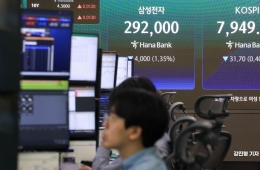
The short-selling ban announced the day before is the pinnacle of 'political finance.' The short-selling ban card, usually played only in market shock situations, was brought out even though there is no financial crisis. Especially, this is the exact opposite of the financial authorities’ consistent stance that "short selling is a global standard, and banning it would reduce the competitiveness and credibility of the domestic stock market." Incidentally, the short-selling ban period is until June next year. Ahead of the general election in April next year, the government and ruling party, conscious of individual investors’ votes, pressured the financial authorities to abandon their previous logic. When finance is inconsistent and decisions are incomprehensible, we can only call it 'political finance.'
![[Image source=Yonhap News]](http://www.asiae.co.kr/news/img_view.htm?img=2023110608540041380_1699228440.jpg)
© The Asia Business Daily(www.asiae.co.kr). All rights reserved.
!["Please Help": How Much Do Those Bowing 90 Degrees Really Earn? [Data Pick]](https://cwcontent.asiae.co.kr/asiaresize/307/2026052010120870131_1779239528.png)