"To Accelerate Early Development and Commercialization of SMR, 'Private Sector Participation' Must Be Encouraged"

A claim has been made that the nuclear power-related system needs to be reestablished to encourage private sector participation for the early development and commercialization of SMRs (Small Modular Reactors), which are considered future energy sources.
On the 25th, the Korea Energy Economics Institute held its annual policy seminar on the theme of "Establishing a Rational Energy Mix and Energy Security" at the Korea Advertising Culture Center in Songpa, Seoul.
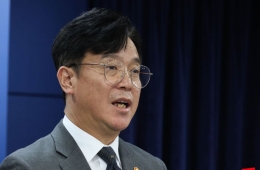
Park Woo-young, head of the Power Policy Research Division at the Korea Energy Economics Institute, who gave the keynote presentation that day, spoke about "Achieving Carbon Neutrality and the Role of SMRs." Director Park stated, "To achieve carbon neutrality, energy sources with zero carbon emissions or technologies that can store carbon are necessary," adding, "Nuclear power generation is a carbon-free power source and realizes the lowest carbon emissions among all low-carbon technologies."
SMRs are nuclear reactors with a power generation capacity of 300 MW or less, smaller in size and capacity than existing large-scale nuclear power plants. They install modules that combine major facilities such as pressurizers, coolant pumps, and steam generators on a smaller site than large nuclear plants. They are evaluated as having high economic feasibility and safety. With zero carbon emissions, they are emerging as an eco-friendly energy source.
Director Park said, "To secure the economic feasibility of SMRs, it is necessary to move away from the project- or plant-centered economic strategies pursued by existing large nuclear plants and shift to a product-based business structure," adding, "Since SMRs are private sector-led projects, it is now time to reorganize policies to allow private operators to manage radiation."
He emphasized that to rapidly commercialize SMRs, it is important to induce active private investment. The United States, which is closest to realizing SMRs, defines SMRs as clean energy sources and is expanding government-level support. Through the Inflation Reduction Act (IRA), tax credits and research and development support are provided for existing and new nuclear power plants. Additionally, programs supporting the establishment of advanced nuclear technology capabilities, including SMRs, are operated for countries developing nuclear technology.
Hot Picks Today
 "Stocks Are Not Taxed, but Annual Crypto Gains Over 2.5 Million Won to Be Taxed Next Year... Investors Push Back"
- "Don't Throw Away Coffee Grounds" Transformed into 'High-Grade Fuel' in Just 90 Seconds [Reading Science]
- Signed Without Viewing for 1.6 Billion Won... Jamsil and Seongbuk Jeonse Prices Jump 200 Million Won in a Month [Real Estate AtoZ]
- "Groups of 5 or More Now Restricted"... Unrelenting Running Craze Leaves Citizens and Police Exhausted
- "Even With a 90 Million Won Salary and Bonuses, It Doesn’t Feel Like Much"... A Latecomer Rookie Who Beat 70 to 1 Odds [Scientists Are Disappearing] ③
Experts participating in the discussion that day also agreed that institutional and market innovation are necessary for the success of the SMR business. Lee Hee-beom, Executive Director in charge of Nuclear Planning at Doosan Enerbility, argued that securing manufacturing technology that can shorten construction periods compared to large nuclear plants is necessary. He also proposed the need to establish a new business model different from the existing ones. Executive Director Lee explained, "If the manufacturing period for SMR equipment can be innovatively shortened, we can dominate the global SMR market," adding, "There is active discussion about new business methods, to the extent that some suggest producing SMRs in advance and selling them, rather than the traditional method of producing after receiving orders, to secure economic feasibility."
© The Asia Business Daily(www.asiae.co.kr). All rights reserved.