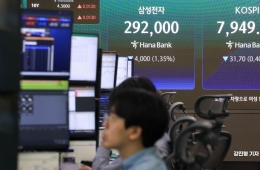
IMF: "ASEAN+3 Unable to Recover Economically... Must Ensure Soundness"
[Asia Economy Reporter Song Seung-seop] Amid ongoing economic uncertainties in the ASEAN+3 (Korea, China, Japan) member countries, advice has been given to reduce fiscal deficits and secure fiscal soundness. South Korea's economic growth rate for next year is expected to remain in the 1% range due to a slower-than-expected recovery.
On the 21st, finance vice ministers and deputy governors of central banks from ASEAN+3 (Korea, China, Japan) countries held separate video conferences to discuss regional economic trends and policy directions. In the meetings with ASEAN countries, financial cooperation agendas were reviewed and plans for next year were examined. Key figures from the ASEAN+3 Macroeconomic Research Office (AMRO), established by Korea, China, and Japan to analyze Asia's macroeconomy, as well as from the International Monetary Fund (IMF) and the Asian Development Bank (ADB), also participated.
The IMF stated that “the regional economic recovery continued this year,” but also assessed that “it has not fully recovered due to prolonged inflation and vulnerabilities in emerging market debt.” It advised responding to inflation by employing tightening monetary policies tailored to each country's specific circumstances. Regarding fiscal support, it recommended continuing it temporarily and selectively while emphasizing the need to reduce fiscal deficits and secure fiscal soundness.
AMRO judged that economic uncertainties in the region remain due to surging energy prices, delayed economic recovery in China, and concerns over a U.S. recession. It also slightly downgraded growth forecasts for the ASEAN+3 region. AMRO lowered this year’s regional growth forecast from 4.7% in April to 3.5%. The growth outlook for next year dropped from 4.6% to 4.4%. During the same period, South Korea’s forecast was revised down from 3.0% to 2.6% for this year, and from 2.6% to 1.9% for next year.
Kim Sung-wook, Director General of International Economic Affairs, who attended as South Korea’s chief representative, expressed at the meeting the need for close policy coordination among member countries to minimize downside risks and strengthen economic fundamentals. Director Kim said, “International organizations should closely monitor regional economic trends, outlooks, and risk factors, and member countries should communicate about economic conditions and policy directions to prepare for swift cooperation. To enhance fiscal soundness, flexible and selective policy mixes focusing on supporting vulnerable sectors and groups should be implemented.”
Measures to strengthen financial cooperation among regional countries were also proposed. It was agreed to allow the use of third-country currencies when receiving liquidity support through the Chiang Mai Initiative Multilateralization (CMIM) system. CMIM is a type of currency swap that provides liquidity support to member countries during crises, but until now, requests and support were only possible in U.S. dollars. Additional discussions on the surcharge interest rate borne by the requesting country will take place after next year. Currently, the surcharge rate increases by 0.5 percentage points every six months if the funding request period is extended.
Hot Picks Today
 Up to 600 Million Won for Semiconductors, 160 Million Won Bonus for Loss-Making Non-Memory… Samsung Electronics Labor and Management Reach Tentative Deal on Unprecedented Performance Compensation (Comprehensive)
- "Could I Also Receive 370 Billion Won?"... No Limit on 'Stock Manipulation Whistleblower Rewards' Starting the 26th
- "From a 70 Million Won Loss to a 350 Million Won Profit with Samsung and SK hynix"... 'Stock Jackpot' Grandfather Gains Attention
- [Current State of Foreigner K-Finance]③"The Essence Is Ultimately Communication... Lending and Financial Education Must Go Hand-in-Hand"
- "Who Is Visiting Japan These Days?" The Once-Crowded Tourist Spots Empty Out... What's Happening?
![[Image source=Reuters Yonhap News]](http://www.asiae.co.kr/news/img_view.htm?img=2022101210234965597_1665537830.jpg)
© The Asia Business Daily(www.asiae.co.kr). All rights reserved.
!["Please Help": How Much Do Those Bowing 90 Degrees Really Earn? [Data Pick]](https://cwcontent.asiae.co.kr/asiaresize/307/2026052010120870131_1779239528.png)