Even First-Year Middle School Students Face Criminal Punishment... Juvenile Delinquents Age Lowered by One Year to 13
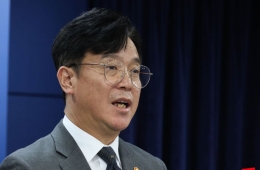
![Minister of Justice Han Dong-hoon is announcing a comprehensive plan for juvenile crime on the afternoon of the 26th at the Ministry of Justice within the Government Complex Gwacheon. [Image source=Yonhap News]](http://www.asiae.co.kr/news/img_view.htm?img=2022102613565583271_1666760215.jpg)
Minister of Justice Han Dong-hoon is announcing a comprehensive plan for juvenile crime on the afternoon of the 26th at the Ministry of Justice within the Government Complex Gwacheon. [Image source=Yonhap News]
View original image[Asia Economy Reporter Kim Hyung-min] From now on, students in the 1st to 2nd year of middle school who are 13 years old will also face criminal punishment if they commit a crime. Juvenile divisions will be established in prosecution offices with many juvenile cases, and programs for preventing and rehabilitating juvenile crime will be strengthened.
The Ministry of Justice announced on the 26th a "Comprehensive Measures on Juvenile Crime" containing these details.
The government plans to amend the Criminal Act and Juvenile Act to lower the upper age limit for criminally non-responsible juveniles from the current "under 14 years old" to "under 13 years old," reducing it by one year. Criminally non-responsible juveniles are youths aged 10 or older but under 14 who commit crimes and receive protective measures such as community service or transfer to juvenile detention centers instead of criminal punishment. After the legal amendment, 13-year-olds will no longer be classified as criminally non-responsible juveniles.
However, to minimize disadvantages related to schooling or employment, restrictions on criminal record inquiries for crimes committed at age 13 will be considered. Juvenile-related criminal justice procedures will also be improved.
In the Incheon and Suwon District Prosecutors' Offices, which handle many juvenile cases, the establishment of dedicated juvenile divisions (tentative name) is being promoted. The expertise of prosecutors specializing in juvenile cases will also be enhanced.
To reduce the issuance of fines, which have limited correctional and rehabilitative effects, summary indictments will be avoided as much as possible. There are also alternatives to improve trial procedures. When juvenile protection case hearings are initiated by "notification," a system will be established for the court to notify the prosecutor. Currently, this system does not exist, resulting in cases where juveniles who have received protective measures are additionally criminally prosecuted. If protective measures are deemed unfair, prosecutors will be allowed to appeal so that victims' opinions can be reflected.
Additionally, considering the management gap because juveniles discharged after serving their full term at juvenile detention centers cannot be placed under probation, long-term probation can be imposed on dispositions involving long- and short-term juvenile detention center transfers, specifically types 9 and 10.
The types of additional probation measures will be diversified to include treatment and rehabilitation at specialized drug treatment institutions and protection at child welfare facilities. Dedicated personnel will also be increased from the current 228 to 287.
The number of juvenile classification examiners, who analyze the causes of juvenile crime and provide protective measure opinions to juvenile division judges, will be expanded from one to three.
Not only in prisons but also in detention centers where pretrial detainees are held, adult offenders and juvenile offenders will be strictly separated. For "high-risk juveniles" who are likely to commit crimes, minimal judicial intervention will be maintained, but excessive protective measures ranging from long-term probation (type 5) to juvenile detention center transfer (type 10) will be abolished.
![Minister of Justice Han Dong-hoon visited the Anyang Juvenile Detention Center in Gyeonggi Province on June 22 as part of his policy field visit schedule, inspecting the juvenile protection site together with members of the "TF for Realistic Adjustment of the Age Criteria for Juvenile Offenders." <br>[Image source=Yonhap News]](http://www.asiae.co.kr/news/img_view.htm?img=2022102613575783273_1666760277.jpg)
Minister of Justice Han Dong-hoon visited the Anyang Juvenile Detention Center in Gyeonggi Province on June 22 as part of his policy field visit schedule, inspecting the juvenile protection site together with members of the "TF for Realistic Adjustment of the Age Criteria for Juvenile Offenders."
[Image source=Yonhap News]
The government also announced practical prevention and recidivism prevention measures.
All living quarters in the 10 juvenile detention centers that rehabilitate juvenile offenders will be converted into small individual rooms with four or fewer occupants by 2024, and the proportion of one- to two-person rooms will be expanded in the long term. Currently, juveniles live in large shared rooms housing 10 to 15 people.
The daily meal allowance per person will increase from 6,554 won to 8,139 won. To strengthen education for middle and high school juvenile detainees, educational content will be enhanced in collaboration with the Ministry of Education.
Juvenile inmates in correctional facilities will be required to take the qualification exam course, and new classes such as university entrance preparation will be established to support advancement to higher education.
A juvenile-specific correctional facility with an educational environment specialized in rehabilitation will be established in the metropolitan area. The only existing facility, the aging Gimcheon Juvenile Correctional Institution, will also be remodeled to strengthen academic education. Juvenile offenders will be included in the employment support targets of the Korea Legal Aid Corporation, which currently focuses on adult offenders.
Hot Picks Today
 "Stocks Are Not Taxed, but Annual Crypto Gains Over 2.5 Million Won to Be Taxed Next Year... Investors Push Back"
- "Don't Throw Away Coffee Grounds" Transformed into 'High-Grade Fuel' in Just 90 Seconds [Reading Science]
- Signed Without Viewing for 1.6 Billion Won... Jamsil and Seongbuk Jeonse Prices Jump 200 Million Won in a Month [Real Estate AtoZ]
- "Groups of 5 or More Now Restricted"... Unrelenting Running Craze Leaves Citizens and Police Exhausted
- "Even With a 90 Million Won Salary and Bonuses, It Doesn’t Feel Like Much"... A Latecomer Rookie Who Beat 70 to 1 Odds [Scientists Are Disappearing] ③
Han Dong-hoon, Minister of Justice, said, "We have prepared comprehensive measures covering not only the age issue but also strengthening correction and rehabilitation to address the challenging problem of juvenile crime," adding, "We will promptly proceed with follow-up measures such as budget allocation and legal amendments for implementation."
© The Asia Business Daily(www.asiae.co.kr). All rights reserved.