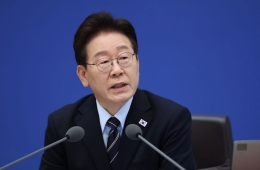
Provincial Assembly Member Jeong Gyuheon: "Cooking Workers Became Full-Time. They Should Provide School Meals Even During Vacations"
What’s the Point of Improving School Meal Workers’ Conditions and Raising Prices? The Quality of Students’ Meals Comes First

[Asia Economy Yeongnam Reporting Headquarters, Reporter Song Jong-gu] “What good is it to improve the treatment of meal service workers and raise meal prices? Improve the quality of the food students eat and provide meals even during vacations.”
There is a claim that policy changes related to school meals, such as raising meal prices and improving the treatment of cooking workers, should lead to improved meal quality and continuation of meals during vacations, drawing attention to the response of the Gyeongnam Office of Education.
On the 18th, at the 2nd plenary session’s 5-minute free speech, Gyeongnam Provincial Council member Jeong Gyu-heon stated, “The recent policy changes decided at the Education Administration Council, including the increase in school meal prices and the conversion of cooks and kitchen assistants to full-time positions by 2025, should lead to an improvement in meal quality.”
Council member Jeong pointed out that the 2023 meal price was significantly increased by 12%, and among metropolitan governments except Jeollanam-do, which guarantees 365 working days for cooking workers, Gyeongnam guarantees the most working days and has also announced the conversion to full-time positions.
Jeong also raised concerns about the reliability of the school meal satisfaction survey conducted by the Office of Education, presenting school meal menu data from various schools in Changwon City that he personally visited and sampled over the past few months. He suggested the need to review whether the satisfaction survey functions as a proper indicator, as some students prefer semi-processed or ready-made foods.
Jeong proposed three measures that drew attention: ▲ all students and teachers in the province must participate in the meal satisfaction survey, which should be conducted anonymously and online rather than on paper ▲ schools scoring below average in the satisfaction survey should form a meal task force under the principal’s leadership ▲ for schools where satisfaction does not improve compared to the previous year, the Office of Education should directly intervene and provide consulting not only to nutrition teachers and dietitians but also to cooks and kitchen assistants.
Hot Picks Today
 "Stocks Are Not Taxed, but Annual Crypto Gains Over 2.5 Million Won to Be Taxed Next Year... Investors Push Back"
- "Don't Throw Away Coffee Grounds" Transformed into 'High-Grade Fuel' in Just 90 Seconds [Reading Science]
- Signed Without Viewing for 1.6 Billion Won... Jamsil and Seongbuk Jeonse Prices Jump 200 Million Won in a Month [Real Estate AtoZ]
- "Groups of 5 or More Now Restricted"... Unrelenting Running Craze Leaves Citizens and Police Exhausted
- "Even With a 90 Million Won Salary and Bonuses, It Doesn’t Feel Like Much"... A Latecomer Rookie Who Beat 70 to 1 Odds [Scientists Are Disappearing] ③
Jeong said, “The provincial Office of Education should implement school meals during vacations,” adding, “With cooking workers converted to full-time positions, conditions have been created to provide meals to care classrooms, after-school classrooms, and attached kindergartens operating during vacations. There is no reason not to utilize this.”
© The Asia Business Daily(www.asiae.co.kr). All rights reserved.