Subsidiary IPO 'Halted' After Physical Division... "Supply and Demand Burden Expected to Ease"
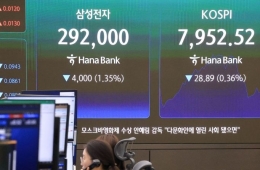
LG Energy Solution's January IPO Causes 3.5% KOSPI Drop
Government's 5-Year Corporate Listing Restriction on Physical Division Expected to Take Effect
[Asia Economy Reporter Ji Yeon-jin] An analysis suggests that the government's shareholder protection measures regarding physical division of listed companies will alleviate market supply and demand burdens.

According to a report by Hanwha Investment & Securities on the 12th, under the government's announced shareholder protection measures related to physical division and subsidiary listings, companies undergoing physical division will find it more difficult to list subsidiaries as easily as before, and the burden of IPO supply in the stock market is expected to decrease.
Earlier, the Financial Services Commission announced shareholder protection measures for physical division on the 5th. First, disclosure requirements will be strengthened regarding the specific purpose of the physical division (such as restructuring, sale, listing), expected effects, and shareholder protection measures. If shareholders of a listed company oppose the physical division, they will be granted the right to request stock purchase. Additionally, if a subsidiary is to be listed within five years after the physical division, the listing will be restricted if efforts to protect the parent company's common shareholders are insufficient.
Until now, companies have used physical division and listing of split subsidiaries as a means to raise funds for core businesses without losing controlling power of major shareholders, but going forward, it will be more difficult to list subsidiaries.
In particular, this measure applies the strengthened listing review system even if the physical division has already been completed, provided that five years have not yet passed. Kim Su-yeon, a researcher at Hanwha Investment & Securities, explained, "The five-year period considers business continuity, but it also seems to reflect the fact that subsidiaries listed after physical division from 2010 to 2021 took an average of 4.4 years to go public."

Examples of subsidiaries that completed listing after physical division include SK Bioscience and SK IE Technology last year, and LG Energy Solution this year. They took 2 years 9 months, 2 years 2 months, and 1 year 4 months respectively from physical division to listing, which is shorter than the average. Also, as they were large-cap stocks ranked within the top 50 in market capitalization on the KOSPI at the time of listing, they posed a burden on the KOSPI index.
Since September 2017, there have been 96 physical division disclosures on the KOSPI, and except for some scheduled mergers or sales with other companies, these represent future listing candidates. Notably, high asset-value physical division subsidiaries include SK Innovation’s SK Battery and SK E&P, which received assets worth 4.6 trillion KRW and 770 billion KRW, accounting for 22.6% and 4.6% of the parent company’s assets, respectively.
Hot Picks Today
 If They Fail Next Year, Bonus Drops to 97 Million Won... A Closer Look at Samsung Electronics DS Division’s 600M vs 460M vs 160M Performance Bonuses
- Opening a Bank Account in Korea Is Too Difficult..."Over 150,000 Won in Notarization Fees Just for a Child's Account and Debit Card" [Foreigner K-Finance Status]②
- Seongdong Police Station Chief Placed on Standby for Misuse of Official Vehicle... National Police Agency Launches Audit
- Room Prices Soar from 60,000 to 760,000 Won and Sudden Cancellations: "We Won't Even Buy Water in Busan" — BTS Fans Outraged
- "Who Is Visiting Japan These Days?" The Once-Crowded Tourist Spots Empty Out... What's Happening?
Kim, the researcher, pointed out that if these companies list as before, it will burden existing parent company common shareholders and the KOSPI. He said, "It is worth recalling that LG Energy Solution, which acquired assets worth 10 trillion KRW during its physical division from LG Chem in 2020, had a market capitalization of 113 trillion KRW on its listing day in January 2022, and the KOSPI fell by 3.5% that day," adding, "With strengthened disclosure and subsidiary listing review measures to be completed by October this year, and the introduction of stock purchase rights by January 2023, it is expected that the strengthened shareholder protection will ease the supply and demand burden caused by physical division and subsidiary listings by companies."
© The Asia Business Daily(www.asiae.co.kr). All rights reserved.
!["Please Help Us": How Much Do Those Bowing 90 Degrees These Days Actually Earn? [Data Pick]](https://cwcontent.asiae.co.kr/asiaresize/307/2026052010120870131_1779239528.png)